Your guest Wi-Fi is a front door, so choose the lock carefully. A café owner, a hotel general manager, and a school IT lead can type the same search and need very different doors. On Cisco Meraki networks, the choice usually comes down to how guests authenticate, a shared WPA2 key, individual IPSK or EasyPSK keys, or a full captive portal with social login or vouchers. This list walks through seven approaches and shows which sectors each one serves best. If you want a practical starting point for venue security, security for your tour business is a useful reminder that the guest network is part of the business, not just the internet bill.
1. Splash Access
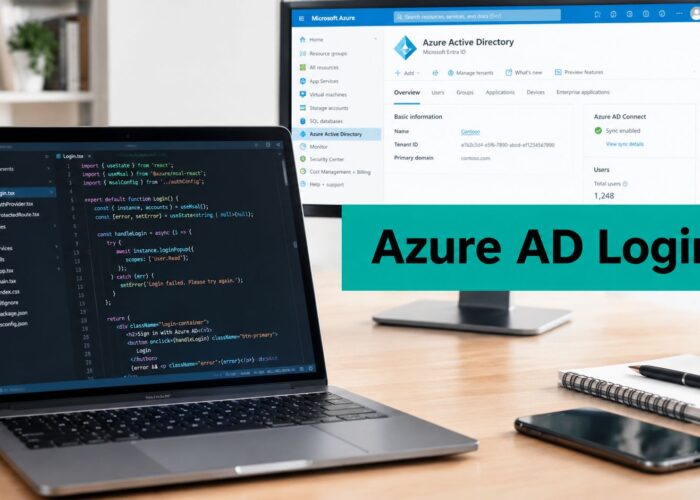
A venue on Cisco Meraki that needs guest Wi-Fi to do more than show a login screen can get a lot from Splash Access. It is built around Meraki captive portals, and it supports WPA2, IPSK/EasyPSK, QR-based keys, SAML, and Azure AD flows. That makes it a practical fit for education, retail, BYOD corporate, hotels, healthcare, senior living, and co-working sites.
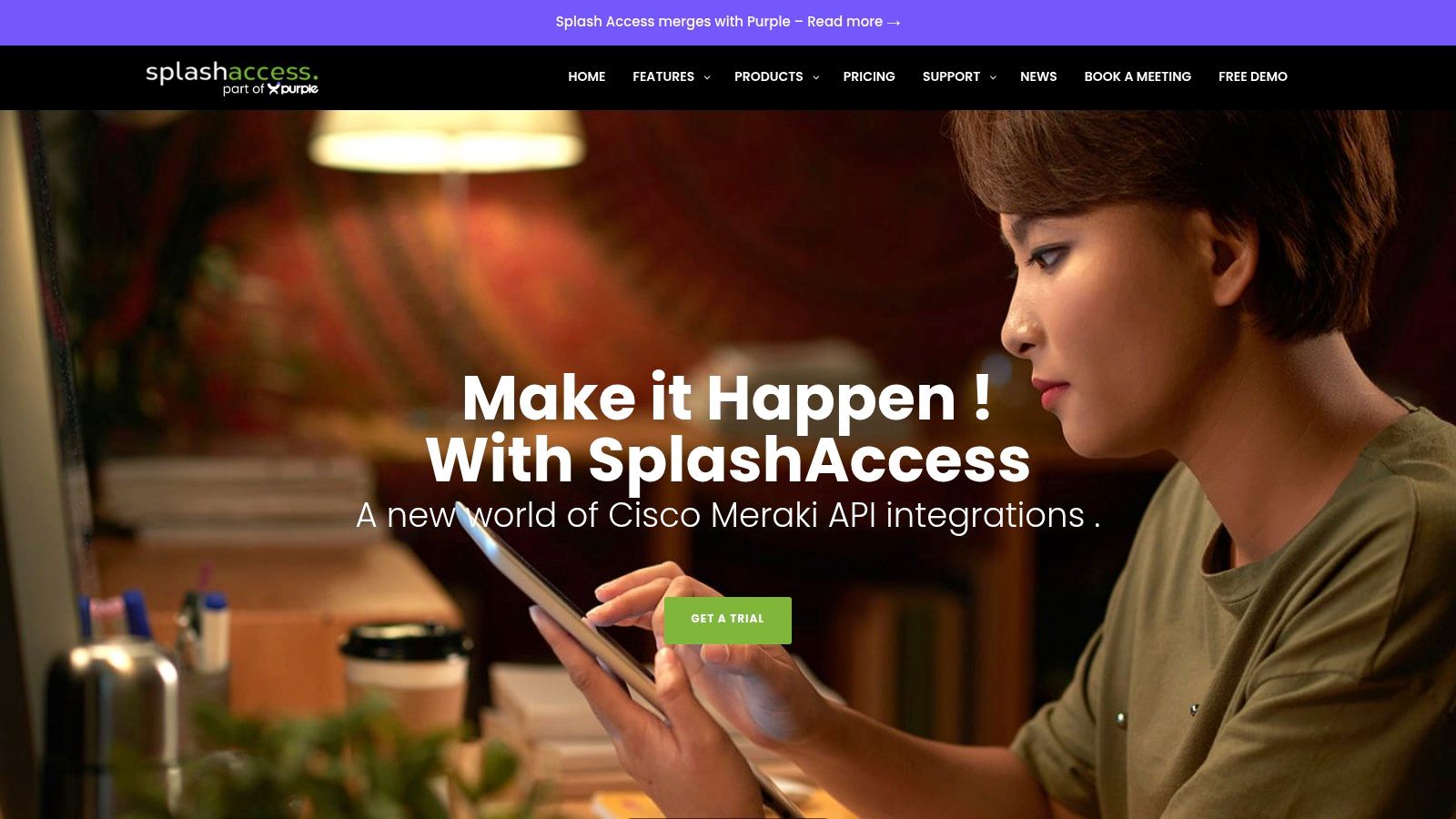
Onboarding is only the starting layer. Operations and revenue tools sit on top of it. You get voucher printing, private IPSKs, business VLAN allocation, Opera Micros integration for hotels, built-in billing for paid access, and location tools like MV Sense camera analytics and Meraki AP analytics. That matters when the Wi-Fi has to help the business, not just greet visitors.
Where it works best
- Hotels and resorts: PMS-aware guest flows, billing, and branded onboarding suit front-desk teams.
- Retail and multi-site venues: Geo-fenced coupons, Wallet coupons, Mailchimp, Twilio, and Facebook integrations support repeat visits and promotions.
- Education and BYOD corporate: SAML and Azure AD make identity-led access more practical than a loose open guest network.
- Healthcare and senior living: The Meraki-centric setup keeps the experience controlled while still supporting guest access.
Practical rule: if the network team wants a portal that handles authentication, marketing, and reporting in one place, Splash Access fits well. If the venue only needs a basic login screen, it is more platform than necessary.
The trade-off is straightforward. You need Cisco Meraki in the stack, which narrows the hardware path, but it also gives you a tighter operational model. Splash Access does not publish pricing, so demos, trials, or quotes are part of the buying process.
2. Cloud Analytics and Engagement Platforms
A hotel group with one brand across ten properties, or a retail chain with different hardware at each site, often needs the same captive portal everywhere. Cloud guest Wi-Fi platforms are built for that job. They keep the login flow consistent, collect consent cleanly, and give marketing and operations teams a single place to review visitor behavior. For a café with one access point and a basic guest page, that is probably more platform than needed.
The value shows up when the Wi-Fi has to earn its keep. These systems are useful for teams that care about footfall, dwell time, and return visits, because they turn guest access into usable reporting instead of a dead-end login screen. They also tend to handle privacy requirements better than ad hoc setups, which matters in retail, hospitality, education, and co-working. The trade-off is simpler policy control. If you need tightly tuned network rules, another product family may fit better.
What to look for
- Branded onboarding: The portal should match the venue and the brand, not a generic router page.
- Consent management: Privacy text and data handling need to be built in, so staff are not patching them together later.
- Cross-site consistency: Multi-location operators need the same guest journey at every branch.
- Visitor analytics: Chains need location-level insight without adding another reporting tool.
The Wireless Broadband Alliance notes that worldwide public Wi-Fi hotspots rose from 64.2 million in 2015 to 432.5 million in 2020, and that nearly 70% of surveyed organizations were involved in, or planning, a city-wide deployment in 2024 or 2025. That growth explains why centralized portals and analytics now sit in the middle of network planning, not just marketing. For venue groups spread across hotels, retail sites, and campuses, a cloud platform can be the least painful way to keep onboarding consistent.
Cisco Meraki often becomes the practical anchor here, especially when the network team wants one control layer across locations. In environments that need stronger identity handling, IPSK/EasyPSK can sit alongside this kind of portal strategy, giving staff and recurring users a cleaner path than a shared password. That combination matters in education, healthcare, and BYOD corporate networks, where guest access, managed devices, and internal policy have to coexist.
The trade-off is cost discipline. Quote-based pricing is common, and the richer engagement features can be too much for small sites that only need a few staff-approved login paths.
3. Enterprise Network Access Control Guest Modules
Enterprise NAC guest modules suit teams that already treat access control as part of network operations. They fit campuses and larger organizations where guest onboarding has to work alongside sponsor approval, role-based policy, and account lifecycle management. If your staff already speaks NAC, RADIUS policy, and enforcement roles, the setup feels familiar.
The trade-off is tighter control for more admin work. A sponsor approves access, the policy engine enforces it, and guest records stay inside the same security model as staff access. That is a different operating style from a lightweight splash page that only collects a name and email.
A hospital lobby, a university lecture hall, and a regional office all face the same basic question, who should get on the network, for how long, and under whose approval? NAC guest modules answer that with policy, not just a form.
Why teams choose this path
- Sponsor approvals: Useful for hospitals, universities, and large offices that want a human check before access starts.
- Role-based access: Helps when visitor groups need different network treatment, such as short visits, contractors, or recurring guests.
- Lifecycle control: Accounts can be created, adjusted, and removed through a formal process.
- RADIUS backbone: Fits organizations that already run centralized identity and network policy.
Cisco Meraki often becomes the practical anchor in this space, especially for multi-site teams that want one control layer across branches. In education, healthcare, and BYOD corporate networks, it pairs well with IPSK/EasyPSK when recurring users need a cleaner path than a shared password, while guest access still follows policy.
The cost side matters. Quote-based pricing is common, and the richer control set can feel heavy for smaller venues that only need a few staff-approved login paths.
The UK government wireless network security standard is clear on the baseline, guest WLANs should be separated from internal WLANs, and successful guest authentications should be logged. Enterprise guest modules are built to support that model.
A sponsor workflow only works if approvals are faster than the help-desk calls it replaces.
For buyers, the question is operational fit. If the organization already runs NAC well, guest modules can be a clean extension of existing policy. If it does not, the system can become another tool that only one specialist fully understands.
4. Certificate-Based Onboarding for BYOD Corporate Networks
A BYOD office or school usually needs more than a branded guest page. It needs device identity, predictable access, and a process that does not push every login to support. Certificate-based onboarding fits that job well because it can give employees, contractors, and students a controlled trust model instead of one shared password for everyone.
The practical value shows up fast in mixed-device environments. Personal laptops, tablets, and phones can be handled under policy, so IT is not guessing which device belongs where. For corporate teams, that means fewer ad hoc credentials and clearer access rules. For schools, it means staff and student access can follow policy instead of shortcuts.
The strength is that web authentication can sit beside device provisioning, not replace it. That matters in offices and campuses where the guest portal is only one part of how access gets assigned.
A few trade-offs are easy to miss. These platforms usually assume an administrator who understands device identity, policy, and deployment detail. If a venue only wants a simple branded sign-in, this category will feel too technical. If the goal is closer to IPSK and EasyPSK thinking for BYOD corporate and education networks, it is a better fit.
What makes it useful
- Certificate-based provisioning: Better than shared credentials for managed device access.
- Guest sponsorship: Keeps temporary access tied to a human owner.
- Self-registration: Cuts down manual requests for IT.
- Planning clarity: Documented license models make budget discussions easier.
Cisco-heavy environments often use this model as part of a wider identity stack. Cisco Meraki Azure AD integration guide is a practical example of how identity can connect into the portal flow. Cisco documentation also makes the RADIUS side clear. For captive portals, RADIUS authentication is highly recommended, and in Cisco Spaces workflows it can become mandatory when you need smooth internet provisioning, session-duration controls, or bandwidth controls. That is why identity-led guest access fits this category so well.
The trade-off is complexity. These systems work best when the team already has some discipline around identity and policy. If the organization wants a lighter guest experience, another option may be easier to operate.
5. Hospitality Gateway Portals with PMS and Billing Integration
A hotel guest may need to charge Wi-Fi to the room, a conference attendee may need a code tied to the event, and a resort may want front desk staff to keep control without touching router settings. Hospitality gateway portals handle that mix by pairing a cloud portal with an on-site gateway for policy control, bandwidth shaping, high availability, firewalling, and billing. That setup fits operations where guest access has to match booking status and service rules.
Multi-property hospitality usually gets the most value from this model, especially when the portal has to stay aligned with property management and payment workflows. Smaller sites can run on software alone, but gateway-based systems hold up better when local networks are busy or uneven. For venue managers, that extra hardware is the trade-off for tighter control at the edge.
Pairing the portal with 10Seat's hospitality software overview shows how property management and guest access are converging into one operational stack. The splash access payment gateway overview also matters here, since paid access often sits inside the same guest journey, especially in mixed-use properties where different visitor types need different rules.
Why hospitality teams buy this model
- Cloud portal plus gateway: Central policy, local enforcement.
- Billing integration: Useful where Wi-Fi is part of room or venue revenue.
- PMS connections: Keeps guest access in step with bookings and stay rules.
- High availability: Helps avoid front-desk disruption if service drops.
The main drawback is hardware lock-in. You depend on the vendor's gateway, which narrows flexibility, and pricing often runs through integrators or partners. For resorts, serviced apartments, and larger hotels, that structure can be worth it because operations stay predictable.
Treat the portal as a governance layer. Traffic security still depends on the wireless design underneath it. NIST and UK government guidance both point to the same operational idea, logged authentications, recorded changes, and monitored guest traffic belong in a managed deployment. That makes resilience, auditability, and clean handoff between front desk and network team just as important as the splash page design.
6. Voucher and Pay-Per-Use Guest Access
Voucher-led Wi-Fi fits places that need a clear beginning and end to access. A café can hand over a code, a co-working desk can issue one at check-in, and a hotel front desk can print it with the stay details. Staff explain the process once, and guests know exactly how long the connection should last.
That control matters in venues that want guest Wi-Fi to carry some revenue, or keep free access tightly managed. The trade-off is speed. If buying or issuing the code feels slow, the queue appears at reception or the sales counter. In retail, that friction usually hurts adoption more than the price itself.
For a venue manager, the key question is who handles the handoff. If it sits with the front desk or a host team, the workflow needs to be short and easy to repeat. If IT has to step in every time, the model stops feeling practical.
What to watch
- Printed or issued vouchers: Works well for short visits and desk-based service.
- Access durations: Easy to match to meetings, events, or timed guest sessions.
- Sponsor codes: Useful when staff need to grant access without creating full accounts.
- Billing gateway: Needed if paid Wi-Fi should feel straightforward to guests.
For venues already running Meraki, the Cisco Meraki voucher system guide is a useful reference for tightening the voucher workflow. It points to the kind of setup front-desk teams can use without calling IT for every guest.
Voucher access suits hotels, co-working spaces, education, healthcare waiting areas, and event venues where authentication needs a clear handoff. It is a weaker fit for café or retail environments that depend on quick, low-touch entry. The more the portal feels like a transaction, the more guests question whether the Wi-Fi is worth the extra step.
Keep the logic simple. If staff need a cheat sheet, the guest journey is already too complicated.
7. Social Login and Social Wi-Fi Portals
A guest walks in, wants Wi-Fi fast, and does not want another password to manage. Social login fits that moment well. The guest taps a familiar account, accepts the terms, and gets online with little friction. In cafés, retail, campus common areas, and similar public spaces, that usually means better adoption than a longer registration flow.
The trade-off is control. Social Wi-Fi can give marketing teams useful sign-in data for followers, page likes, and remarketing lists, but not every guest wants to use a social account for internet access. That makes it a better fit for places where the venue wants both convenience and audience building, and where the guest base is comfortable trading a little privacy for quicker access.
For buyers, the key decision is who the portal serves first. Hotels may want it as a light guest option at check-in. Retail teams may use it to support repeat visits and local campaigns. Education, healthcare waiting areas, co-working spaces, and BYOD corporate networks usually need tighter identity control, so social login works best as one option inside a broader captive portal setup rather than the only door.
The social login support page shows how social login can sit beside other authentication methods in a captive portal flow. That matters because a venue can keep Cisco Meraki or IPSK and EasyPSK as the practical anchor for stricter access paths, while still offering a low-friction social entry point where it makes sense.
Privacy still needs care. Consent text has to be clear, and data handling needs to match what the guest agreed to. Social login helps with access and engagement, but it does not secure the traffic on its own. Treat it as part of the wider wireless design, not as the whole security model.
Top 7 Captive Portal Features Comparison
| Solution | Implementation (🔄) | Resource requirements (⚡) | Expected outcomes (⭐📊) | Ideal use cases | Key advantages (💡) |
|---|---|---|---|---|---|
| Splash Access | Moderate–High, needs Meraki integration and API work | Cisco Meraki APs/MV cameras, possible custom dev, reseller/hardware support | High ⭐, secure onboarding, real‑time footfall/dwell analytics 📊 | Hotels, retail, campuses, healthcare, senior living, co‑working | Deep Meraki native integration, monetization tools, verticalized packages |
| Cloud Analytics & Engagement Platforms | Low–Medium, cloud overlay with simpler deployment | Cloud subscription, integration with existing multi‑vendor WLAN | Medium–High ⭐, consolidated visitor analytics & marketing impact 📊 | Multi‑site retail and hospitality brands | Strong privacy/consent controls, multi‑vendor compatibility |
| Enterprise NAC Guest Modules | High, requires NAC policy design and ongoing ops | NAC licenses, RADIUS/identity infra, skilled administrators | High ⭐, enterprise policy enforcement and sponsor workflows 📊 | Large campuses and enterprises with existing NAC practice | Role‑based access, sponsor workflows, tight policy control |
| Certificate‑Based Onboarding (BYOD) | High, PKI and automated provisioning complexity | PKI/certificate services, device management, admin skill | High ⭐, strong device identity and secure BYOD onboarding 📊 | Corporate offices, education networks with BYOD focus | Certificate‑driven security, predictable licensing models |
| Hospitality Gateway Portals (PMS & Billing) | Medium–High, on‑site gateway plus cloud orchestration | Vendor gateway hardware, PMS/payment integrations, integrator support | High ⭐, resilient guest access, integrated billing and PMS data 📊 | Hotels, resorts, multi‑dwelling properties | HA/QoS gateway with established PMS and payment links |
| Voucher & Pay‑Per‑Use Guest Access | Low–Medium, straightforward but requires payment flows | Billing gateway, voucher system (printing/issuance), POS ties | Medium ⭐, direct revenue from Wi‑Fi, controlled access time 📊 | Hotels, cafés, co‑working spaces, event venues | Simple monetization, easy front‑desk operation |
| Social Login & Social Wi‑Fi Portals | Low, simple integrations and portal configuration | Social platform integrations, consent management tools | Medium ⭐, high connection rates and audience growth 📊 | Cafés, retail, campus common areas where reach matters | Very low friction onboarding, builds social marketing lists |
Pick the Door That Fits Your Guests and Your Network
Match the option to your sector. Retail and co-working often need quick social or voucher access, schools and BYOD offices usually need identity-linked keys such as IPSK or EasyPSK, and hotels and healthcare sites should weigh billing and uptime closely. If you're running Cisco Meraki, the strongest choice is usually the one that makes authentication, segmentation, and administration feel routine for staff instead of fragile.
The best captive portal software is the one your guests can use and your team can support. That means checking the login flow on real devices, testing it in the venue, and making sure consent wording, audit logs, and fallback options all hold up before launch. Run a trial with real guests, involve the people who will manage it every day, and don't let the splash page be the only thing you evaluate.
Splash Access gives Cisco Meraki operators a practical way to handle guest Wi-Fi, captive portals, and authentication without losing control of the network. It brings together IPSK, EasyPSK, vouchers, social login, Azure AD, and billing in one place, which makes it a strong fit for hospitality, retail, education, and BYOD corporate environments. Visit Splash Access to see how it can support your guest network and turn the login flow into something more useful for both IT and the business.