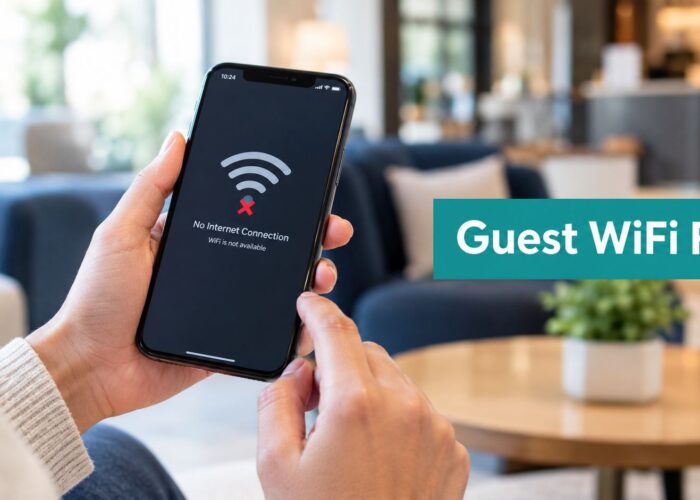
A nurse is trying to update a chart on a tablet. A specialist has arrived from another site and needs temporary access. A patient's family wants basic guest Wi-Fi while they wait for news. Meanwhile, a care coordinator is chasing updates from pharmacy, therapy, and social work because everyone is working on the same case from different angles.
That scene feels familiar because the problem usually isn't a lack of expertise. It's a lack of coordination.
A multidisciplinary team in healthcare exists to fix exactly that. It brings clinicians and support staff together around one patient, one plan, and one shared goal. But in modern care settings, people alone can't carry the load. Teams need secure access to records, reliable messaging, fast device onboarding, and Wi-Fi that separates staff traffic from guest traffic without creating friction.
When that foundation is missing, collaboration slows down. When it's designed well, MDT working feels less like a relay race with dropped batons and more like a connected system.
If you're reviewing how specialist services are organized, Find out about our clinical experts offers a useful example of how diverse expertise is presented around coordinated patient care.
Your Guide to Multidisciplinary Healthcare Teams

An MDT often becomes visible at the exact moment a hospital feels most stretched. One patient may need input from a primary physician, nurse, pharmacist, therapist, dietitian, and discharge planner. Each person knows their job. The trouble starts when updates live in different systems, access rights are inconsistent, and the patient hears five separate versions of the plan.
That confusion isn't just frustrating. It creates delays, duplicate work, and avoidable handoffs.
A better model looks different. The team still includes different disciplines, but they work from a shared pathway. They coordinate decisions, keep the patient at the center, and reduce the back-and-forth that makes care feel fragmented.
In practice, the strength of an MDT isn't having more voices in the room. It's making sure those voices are connected to the same plan.
For healthcare administrators, this has become partly a clinical design question and partly a network design question. If staff roaming between wards can't authenticate smoothly, if visiting clinicians can't be onboarded securely, or if guest Wi-Fi spills into operational traffic, collaboration starts breaking at the infrastructure layer. That's why conversations about MDTs now sit close to conversations about Cisco networking, Cisco Meraki wireless, captive portals, authentication, and BYOD policy.
What Exactly Is a Multidisciplinary Healthcare Team
A multidisciplinary healthcare team is not just a group of professionals who happen to treat the same patient. The difference is coordination.
According to Meridian University's explanation of multidisciplinary teams, the value comes from parallel, discipline-specific assessment combined with a shared care pathway. Each team member looks at the patient through their own specialty, but treatment planning is coordinated around a common therapeutic goal, with a designated coordinator overseeing the process to reduce fragmented decision-making.

Think of it like a pit crew
A race car pit crew is a useful analogy. One person changes tires. Another checks fuel. Another handles mechanical adjustments. They don't argue over who does everything. They perform distinct tasks at the same time, based on one shared objective.
Healthcare works the same way when an MDT is functioning properly.
A physician may focus on diagnosis and treatment options. A nurse may track day-to-day response and practical barriers. A pharmacist may catch medication interactions. A therapist may identify mobility or speech issues. A social worker may surface home risks, family needs, or discharge obstacles. A dietitian may adapt nutritional support to the care plan.
The patient shouldn't have to stitch those pieces together alone.
What an MDT is and what it isn't
An MDT is patient-centered. The plan is adjusted to the person's needs rather than forcing the person into a fixed template.
An MDT isn't a loose email chain between departments. It also isn't "everyone has equal input all the time" in a vague sense. Good MDTs have role clarity, shared goals, and someone coordinating timing, referrals, and follow-up.
A simple way to test whether you really have an MDT is to ask these questions:
- Shared goal: Can every team member state the same main treatment objective?
- Clear coordinator: Does one person track progress, referrals, and unresolved issues?
- Single care pathway: Are decisions connected, or is each discipline acting in isolation?
- Patient fit: Is the plan customized to the patient's needs, circumstances, and preferences?
Practical rule: If the patient has to repeat the same story to every department and reconcile conflicting advice, the team is probably multidisciplinary in name only.
Why administrators should care
MDTs reduce fragmentation, but only if the environment supports them. Shared records, secure device access, and dependable connectivity matter because coordination now happens across tablets, mobile handsets, laptops, and clinical systems. That is why the clinical definition of an MDT increasingly overlaps with network segmentation, identity-based access, and reliable wireless coverage.
The Clinical and Operational Wins of an MDT Model
The MDT model is no longer just a good-sounding idea. It has real clinical and operational value.
A literature review on multidisciplinary oncology care linked MDT implementation to better patient outcomes, lower adverse events, shorter hospital stays, faster discharges, improved communication, reduced readmissions, and lower morbidity and mortality, alongside higher patient and family satisfaction. That matters because it connects teamwork to outcomes administrators watch closely every day.
What those wins look like on the ground
For a hospital or clinic, this can show up in very practical ways:
- Faster handoffs: Teams make decisions with the right specialists involved earlier.
- Fewer delays: Coordinators can spot missing diagnostics, referrals, or discharge barriers sooner.
- Clearer patient communication: Families hear a more unified message instead of piecing together updates from separate departments.
- Smoother throughput: When care plans are aligned, discharge planning often becomes more predictable.
The same oncology review describes workflow-specific value too. Nurse specialists often coordinate appointments, confirm that diagnostic workups are completed on time, and maintain direct communication with patients and families. That detail matters because MDTs succeed through day-to-day operating discipline, not just high-level cooperation.
MDTs also strengthen rehabilitation and recovery
This model isn't limited to acute hospital care. It fits rehab, outpatient recovery, chronic disease management, and post-acute planning. If you're looking at how combined care disciplines can support recovery, this overview of comprehensive rehab treatments in Deerfield is a practical example of how patients benefit when services are approached in an integrated manner.
Patient engagement also becomes easier when communication doesn't stop at the bedside. Many providers are rethinking digital touchpoints, education, and access as part of broader care coordination, allowing a connected patient engagement strategy to support the clinical model rather than sitting off to the side as a separate IT project.
Better care coordination often looks ordinary from the outside. Fewer callbacks, fewer missed steps, faster answers, and less confusion for families. That's exactly why it matters.
The Tech Backbone for Seamless Team Collaboration
An MDT can have excellent clinicians and still struggle if the underlying network is clumsy. Modern collaboration depends on a technical foundation that gives the right people the right access at the right time, without exposing clinical systems to unnecessary risk.
That is where Cisco and Cisco Meraki fit naturally into the conversation. In healthcare, broadcasting Wi-Fi is not the only challenge. The challenge is separating user groups, authenticating them correctly, and keeping movement between spaces and devices smooth enough that care teams don't work around the network.

Why one network can't serve everyone the same way
A hospital or clinic usually has several user groups on the same campus:
- Clinical staff need dependable access to operational systems.
- Contractors and visiting specialists need temporary but controlled connectivity.
- Patients and families need guest Wi-Fi that is simple and separate.
- Medical and IoT devices need predictable network behavior and tighter control.
- Staff using personal devices need BYOD access without putting core systems at risk.
If all of those users hit the same wireless experience, IT either creates friction or creates exposure. Usually both.
Captive portals for guests and families
Guest Wi-Fi matters more than many healthcare teams expect. Families waiting during treatment, outpatients in reception, and long-stay visitors all want quick access. A captive portal gives you a controlled front door. Instead of handing out one shared password, you can present terms, usage guidance, branding, and a simple onboarding flow.
In some environments, social login and social Wi-Fi can make sense for guest access, especially where the goal is convenience and low-friction onboarding. In healthcare, many organizations still prefer a more neutral guest journey, but the same captive portal framework remains useful because it keeps guest traffic separate from operational access.
IPSK and EasyPSK for controlled access
The harder problem is not guest access. It's controlled access for users and devices that don't fit neatly into a single staff SSID.
IPSK and EasyPSK become especially helpful. Instead of giving every device the same pre-shared key, you can assign unique or role-based credentials. That supports stronger separation and cleaner lifecycle management.
For example:
- A traveling specialist can receive access appropriate to their role.
- A therapist using a personal tablet can join a BYOD workflow without landing on the same policy as a medical workstation.
- A shared clinical device can be tracked under a clearer access method than a broad common password.
- Temporary users can be added and removed without resetting access for everyone else.
With Cisco Meraki wireless, that kind of policy-driven access is far easier to manage than the old approach of one password for an entire building.
Shared systems only work when access is predictable
An MDT depends on common visibility. Shared records, secure messaging, and digital workflows all break down when users lose connectivity or hit confusing authentication barriers. That's why identity and workflow now overlap so tightly.
Healthcare groups exploring deeper platform connections often benefit from thinking about electronic medical record integration as part of the access conversation. If systems are integrated but staff can't authenticate smoothly where care happens, the integration doesn't deliver much value.
Choosing the Right Wi-Fi Access for Different Healthcare Users
| User Type | Typical Need | Recommended Solution | Why It Works |
|---|---|---|---|
| Clinical staff | Reliable access to care systems across wards and rooms | Secure staff SSID with role-based authentication | Supports consistent roaming and controlled access |
| Visiting specialists | Fast onboarding without broad internal exposure | Time-bound authenticated access using managed credentials | Reduces admin burden while limiting unnecessary access |
| Patients and families | Simple internet access in waiting and inpatient areas | Guest Wi-Fi through a captive portal | Keeps guest traffic separate and easy to manage |
| BYOD staff devices | Access on personal phones or tablets without open exposure | IPSK or EasyPSK policy model | Improves control at the device or role level |
| Medical and IoT devices | Stable, restricted connectivity | Dedicated segmented wireless policy | Helps isolate device traffic from user traffic |
A good wireless design for MDTs feels invisible to clinicians. The right device connects, the right policy applies, and the user doesn't need IT to intervene every shift.
Solving the People and Process Challenges
Many organizations assume MDTs struggle because people resist collaboration. Sometimes that's true. More often, the team is working inside a vague process.
The important correction is simple. MDTs are not automatically better; they work best when governance is explicit, roles are clear, and there is a single process for accountability. The Social Care Institute for Excellence notes key structural components such as an identified leader, shared records, and joint meetings in its report on factors that promote and hinder joint and integrated working. That points to process design, not just team composition, as the key driver of effectiveness.
Where teams usually get stuck
Confusion tends to cluster around a few recurring questions:
- Decision authority: Who makes the final call when specialists disagree?
- Escalation: What happens when the agreed plan stops working?
- Access: Who should be able to see, update, or share information?
- Timing: When do cases require a formal team review instead of ad hoc communication?
If those answers aren't written down, staff create their own informal rules. That leads to uneven decisions and avoidable tension.
Technology can reinforce governance
Network design transcends its role as a side issue. Authentication policies shape how work happens.
A broad shared credential tells staff that everyone is treated the same. An IPSK model tells them access follows role, device, and context. That is a form of governance. It defines who can connect, from what device, and under what policy. In practical terms, it's the digital version of clear lanes in a care process.
The same logic matters in senior living and long-term care, where clinicians, residents, family members, and support staff all have different communication needs. Planning for those environments often benefits from looking at a guide to senior living technology solutions, because many of the same governance issues appear there in a different setting.
One leader, one record, one accountable process
The strongest MDTs usually share three traits:
- Named leadership: Someone owns coordination, not just meeting invitations.
- Shared information flow: The team works from common records and current updates.
- Defined accountability: Every action item has an owner and a follow-up path.
Clear access policy reduces one kind of conflict before it starts. People argue less about process when the system already reflects their role.
Secure Collaboration Beyond Healthcare Walls
The core MDT challenge isn't unique to hospitals. It appears anywhere different groups need to collaborate securely on the same site.
In education, you may have faculty, administrative staff, students, guests, and campus devices all using the same wireless environment. A university BYOD model needs the same kind of separation healthcare needs. Different users, different privileges, one managed infrastructure.
In retail, the pattern looks different but the logic is the same. Corporate users need protected access, store associates need operational connectivity, and shoppers want quick guest Wi-Fi. Captive portals, social Wi-Fi, and flexible authentication help keep those experiences cleanly separated.
The common thread across sectors
Cisco Meraki is popular in these environments because cloud-managed networking makes it easier to apply policy by user type, device type, and use case. A hospital may use that to support clinicians and patients. A school may use it for classrooms and dorms. A retailer may use it for staff tools and customer guest access.
Security expectations also travel across sectors, especially where personal information is involved. For healthcare-adjacent teams reviewing compliance context, this summary of the HIPAA Enforcement Rule is a useful reference point.
Organizations looking at this from the infrastructure side often connect these ideas through accelerating growth in healthcare with Cisco Meraki, because the same access control principles scale across care sites, offices, campuses, and public-facing venues.
Your MDT Implementation and Technology Checklist
An MDT initiative works best when clinical design and access design move together. If one is mature and the other is improvised, staff feel the mismatch quickly.
The checklist below keeps both sides in view.

A practical rollout list
Define team roles clearly
Name the coordinator, clarify specialist responsibilities, and write down decision authority for common conflicts.Set one shared patient pathway
Make sure referrals, reviews, and follow-up steps connect to a single care plan rather than separate departmental routines.Map communication channels
Decide which updates belong in shared records, which need direct escalation, and which can sit in routine meeting review.Segment wireless access by user group
Separate staff, BYOD, guests, and devices. In many environments, Cisco Meraki with captive portals and IPSK-style controls can support this cleanly.Create a simple guest Wi-Fi journey
Patients and families shouldn't need staff intervention for basic connectivity. A captive portal helps contain guest traffic while keeping onboarding easy.Measure both care and operational performance
Healthcare Improvement Scotland's evidence review found that interprofessional collaboration was associated with improvements in clinical measures such as HbA1c and blood pressure, along with medication outcomes, care processes, and patient satisfaction in its review of multidisciplinary team support in primary care. Those categories give administrators practical KPI areas to monitor.Review access problems like workflow problems
If clinicians keep opening tickets for Wi-Fi, authentication, or device onboarding, treat that as a collaboration issue, not just an IT issue.
What to watch after launch
Use a short review rhythm and ask:
- Are care teams following one plan or drifting back into silos?
- Are staff devices connecting under the intended policy?
- Is guest access staying separate and simple?
- Are families and patients receiving clearer communication?
- Are there fewer access-related interruptions during care delivery?
If you're comparing solution approaches in live care settings, this healthcare portfolio overview can help you visualize how connectivity and patient-facing access come together in practice.
The best MDT rollout doesn't feel like a major technology program to frontline staff. It feels like fewer delays, fewer workarounds, and a clearer path through the day.
If you're planning a better MDT environment, Splash Access helps organizations build secure guest Wi-Fi, captive portals, Cisco Meraki authentication workflows, and IPSK-based access experiences that support real-world healthcare collaboration without adding friction for staff, patients, or visitors.