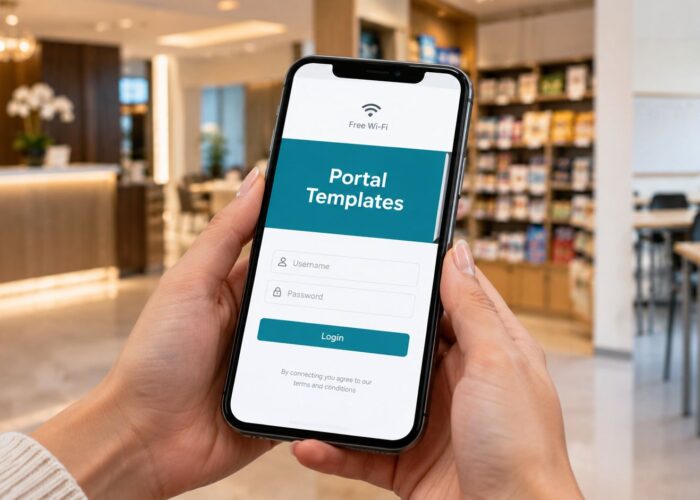
A hotel guest joins the lobby Wi-Fi, taps a splash page offering premium bandwidth for $5, and enters card details on a phone while standing beside the front desk. The guest sees a successful payment and expects immediate access. Behind that simple interaction, the venue has to protect payment data, authenticate the user, apply the right network policy, and handle disputes without exposing the cardholder environment.
That same pattern appears in shopping centers, campuses, co-working spaces, and corporate BYOD networks. Guest Wi-Fi authentication and secure payment processing are connected systems, not separate projects. A captive portal can control access, but it can also become the point where payment data, identity information, marketing consent, and network privileges meet.
Why Secure Payment Processing Matters for Guest Wi-Fi
The hotel example becomes complicated when the payment flow isn't designed as part of the network architecture. If a captive portal collects card details directly, the hotel may create unnecessary exposure across the splash page, application server, payment integration, logs, support tools, and downstream systems. A payment gateway that uses hosted fields or tokenized transactions can keep the card number away from most of that environment, while the Meraki network handles access enforcement separately.
That separation protects more than compliance. It limits the impact of a compromised portal, reduces the number of systems that employees can accidentally expose, and gives the support team a cleaner way to answer a guest who says, “I paid, but my Wi-Fi didn't activate.” The portal should receive a payment result or token reference, then apply a defined access policy. It shouldn't become a general-purpose storage location for card data.
Practical rule: A guest Wi-Fi portal should know whether a transaction succeeded and what access policy to apply. It usually shouldn't need to know the guest's full card number.
Hospitality venues feel the risk immediately because a failed payment can become a front-desk complaint, a refund request, and a poor guest experience at the same time. Retail environments face a similar issue when Wi-Fi access is tied to coupons, loyalty enrollment, or paid services. Education networks add student privacy, residence-hall access, and large populations of unmanaged devices. Corporate BYOD and co-working spaces must distinguish invited guests from employees without making a shared password the permanent key to the building's network.
The business case is therefore broader than “pass a security assessment.” Secure payment processing supports confidentiality, integrity, and controlled access around a service that guests use in public spaces. The history of payment security shows why that discipline matters. PCI DSS v1.0 was released in 2004, and the standard later became a global baseline for protecting cardholder data. The practical principles behind that standard apply to the payment page even when the service being purchased is Wi-Fi.
A venue also needs to explain its privacy and data-handling choices clearly. A useful primer on why confidentiality matters in connected services helps frame the conversation for managers who think of Wi-Fi as a convenience rather than a security-sensitive service. The strongest deployments make payment, identity, consent, and network access understandable to both staff and guests.
Core Components of Secure Payment Processing
Secure payment processing depends on several controls working together. Encryption protects stored information, TLS protects data in transit, tokenization limits the value of retained payment data, and PCI DSS sets operating requirements for the environment. In a guest Wi-Fi deployment, these controls must also connect cleanly to captive portal authentication and network authorization.
Encryption and TLS protect different moments
Encryption for data at rest and TLS for data in transit serve different purposes, and both are necessary. A payment-enabled captive portal should encrypt sensitive records held temporarily, integration data, administrative exports, and any other retained information.
TLS protects the connection between the guest's device, the portal, and the payment gateway. It reduces the risk of interception and tampering while the browser submits payment details. TLS does not secure application logic, administrator access, or the systems at either endpoint. Those controls require separate configuration and review.
Keep the portal's data collection narrow. Social login, voucher codes, SMS verification, or corporate directory authentication may establish access eligibility without turning the Wi-Fi platform into a repository for payment information. Separating identity data from payment data also makes troubleshooting easier when a guest authenticates successfully but payment approval fails.
Tokenization narrows the payment footprint
Tokenization replaces the primary account number with a payment token that has less value if intercepted. The venue can use that token to associate an approved transaction with a guest session, while the payment provider or token vault controls access to the underlying card data.
PCI guidance says tokenization can reduce or eliminate the need for a merchant to retain the PAN after the initial transaction. It does not remove the tokenization service from compliance consideration. The token-generation and detokenization environment remains in PCI scope, so the vault, permissions, API paths, and administrative access still require protection.

PCI DSS sets the operating standard
PCI DSS is an operating framework, not a single security product. It covers 12 technical and operational requirements for protecting cardholder and sensitive authentication data wherever that data is stored, processed, or transmitted. PCI DSS v1.0 arrived in 2004, version 1.1 followed in 2006 under the PCI Security Standards Council, and PCI DSS v4.0 was published in March 2022. Version 3.2.1 retired on March 31, 2024, making v4.0 the current mandatory standard for organizations handling payment data. These milestones are documented in the history of PCI compliance.
For a venue manager, the practical question is where card data enters, travels, and stops. A hosted payment page can reduce exposure, but the captive portal, identity provider, API integration, logs, administrator accounts, and Meraki configuration still need review. Teams comparing physical and digital payment workflows can find cashless terminal best practices before standardizing the wider guest experience.
Document the handoff from payment approval to Meraki access authorization. The payment gateway integration should return only the information required to activate the selected service, record the event, and support a controlled refund or dispute process. In production, explicit status handling matters. A timeout, duplicate callback, or delayed authorization should not grant access indefinitely or leave a paid guest disconnected. This design is easier to manage than allowing every portal component to handle raw card data.
Fraud Prevention and Chargeback Management
Fraud prevention requires metrics that operate independently of compliance checks, with their own ownership and response process. In a guest Wi-Fi deployment, the team must connect payment risk to the access decision, because a fraudulent transaction can create both a chargeback and unauthorized network use.
One fraud-network benchmark reported an average fraudulent chargeback rate of 0.08% across its network, while a separate industry survey cited 2.6% of e-commerce orders leading to chargebacks due to fraud. These figures use different measurement methods, so they are not directly comparable. They do show why a venue should establish its own baseline. Compare the hotel's card-not-present premium Wi-Fi flow with its card-present and other digital channels.

Measure the flow by channel
A blended fraud figure hides where the failure occurs. Segment authorization and fraud data by:
- Transaction channel: Separate card-present activity from card-not-present captive portal payments.
- Payment method: Compare cards, wallets, and other supported methods instead of treating every transaction alike.
- Geography: Review unusual location combinations, particularly where guest identity and payment location do not align.
- Access outcome: Confirm that successful payments create the intended Wi-Fi authorization, and that failed payments do not leave active sessions behind.
This segmentation helps identify whether the issue sits in the gateway, portal, Meraki authorization workflow, or guest account. Tokenization limits the value of intercepted card data. Anomaly detection can flag repeated attempts, unusual session behavior, and mismatched payment and access patterns.
Suppress avoidable disputes
Dispute suppression begins before the cardholder contacts the bank. Use a recognizable billing descriptor, display service terms before payment, issue clear receipts, and link each payment event to its Wi-Fi session. Staff need a controlled way to confirm whether access was delivered, how long it lasted, and whether a refund is appropriate.
A benchmark summary described healthy chargeback performance as under 0.5%, with materially higher risk as ratios approach 0.75% to 0.9%. Because the source and methodology are not specified here, treat those figures as directional rather than as a venue target. Processors and card networks monitor dispute ratios, and poor performance can create penalties or payment account instability. The response should combine proportionate authentication, tokenized payment, anomaly review, and a documented dispute workflow rather than blocking every unfamiliar guest.
For teams reviewing web payment exposure, practical guidance on safeguarding payments from skimming complements the network design. Protect the payment page and the surrounding portal process, including scripts, callbacks, and access authorization. Venues connecting payment activity to point-of-sale operations should also review POS and EPOS integration considerations alongside the captive portal workflow.
Authentication Methods for Captive Portal Payments
Authentication determines who receives network access and what the venue can reasonably trust about the session. Payment confirms a transaction, but it shouldn't automatically serve as the only identity control. A guest may need a simple social Wi-Fi login, while an employee or student device may need a unique network credential that remains valid beyond one browser session.
Match the method to the venue
Social login works well when a hotel, retailer, or public venue wants a fast mobile onboarding experience and permission-based marketing opt-in. Published guest Wi-Fi portal data reports 30% to 45% opt-in for social login, compared with 15% to 25% for email forms, and mobile completion of 3 to 8 seconds for social login versus 15 to 30 seconds for email forms, as described in social Wi-Fi login data. These figures should guide testing, not replace consent design. A fast form still needs clear terms and an understandable explanation of what data the venue collects.
Email forms provide a direct contact channel but introduce more typing, validation, and abandoned sessions. Voucher codes suit events, hotel packages, and front-desk-issued access because staff can revoke or limit the code. SMS verification adds a phone-based step, which can help with identity assurance but creates delivery, roaming, and privacy dependencies.
Cisco Meraki environments can support portal designs that combine employee sponsorship, SMS, social networks, QR codes, and corporate directories such as Microsoft Azure and Google. The Cisco Meraki authentication options show why one method rarely fits every guest population.
Use IPSK for known users and devices
IPSK, also called EasyPSK in some deployments, gives each user or device a unique pre-shared key instead of relying on one shared Wi-Fi password. That model fits corporate BYOD, co-working spaces, student housing, and education networks, where administrators need to revoke one credential without disrupting every other device. It also supports clearer attribution than a common password.
A captive portal remains more suitable for retail, hospitality, and public guest access, where visitors need browser-based onboarding. The two methods can coexist on Cisco Meraki networks. Use a portal for transient guests and IPSK or EasyPSK for managed populations with longer-lived access requirements.
| Method | Opt-in Rate | Completion Time | Best For |
|---|---|---|---|
| Social Wi-Fi login | 30% to 45% | 3 to 8 seconds | Hotels, retail, public venues |
| Email form | 15% to 25% | 15 to 30 seconds | Marketing-led guest access |
| Voucher code | Not specified | Not specified | Events, hotel packages, staffed access |
| SMS verification | Not specified | Not specified | Identity checks where phone access is practical |
| Corporate directory | Not specified | Not specified | Employees, campuses, managed BYOD |
| IPSK or EasyPSK | Not specified | Not specified | Corporate BYOD, education, student housing |
Those reported figures are from the published social login comparison, while the qualitative fit for IPSK and EasyPSK follows unique pre-shared key guidance. For SMS-based guest verification, a venue can evaluate a Twilio SMS verification workflow as part of its broader authentication review.
Vendor Selection and Cisco Meraki Integration
A guest can pay successfully yet remain offline when the payment callback, captive portal, and Meraki authorization rule fall out of sync. Select a vendor that connects the payment gateway, identity system, portal, and wireless policy without making staff compare separate dashboards for every complaint.
Define the payment boundary before testing features. Confirm support for hosted payment fields, tokenization, PCI DSS v4.0 documentation, controlled refunds, and transaction logs that do not expose the PAN. Then test failure paths: the browser may lose connectivity after payment, the gateway may approve a charge before the callback arrives, or a refund may leave a Meraki access policy active. Production testing must show how each condition is detected and corrected.
Test the Cisco Meraki workflow
A practical evaluation should include:
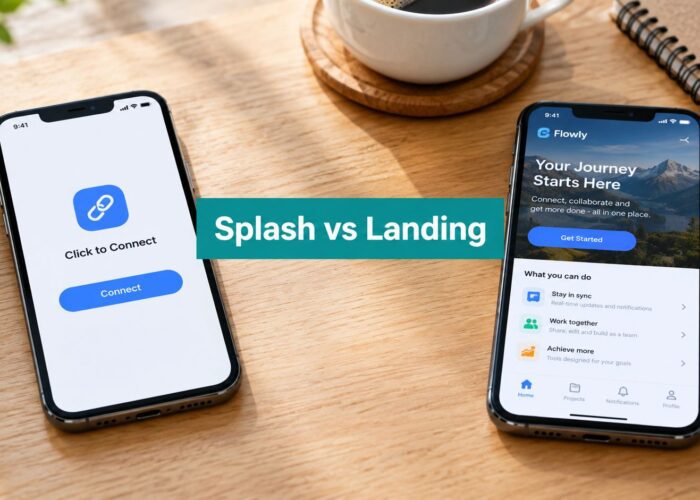
- Splash page behavior: Check phones, tablets, and laptops, including captive portal detection that is interrupted or retried.
- Authorization timing: Verify that a successful payment activates the correct Meraki policy without asking the guest to pay again.
- Identity options: Test social Wi-Fi, QR-code onboarding, employee sponsorship, SMS, Azure AD, Google, and SAML only where they match the venue's users and support process.
- API resilience: Check retries, idempotency, timeouts, and safe recovery when the payment gateway or portal API is unavailable.
- Operations: Give front-desk, help-desk, and finance staff the status they need without exposing unnecessary payment data.
Splash Access is one option for this deployment model. Its platform provides Cisco Meraki captive portals, secure WPA2 and IPSK authentication, customizable splash pages, QR-code onboarding, API-driven workflows, marketing integrations, and a built-in billing gateway. Hospitality teams can also assess its Opera Micros integration when Wi-Fi service must align with property operations.

Mobile presentation affects both payment completion and support volume. The portal should display the price, service duration, terms, and payment status in one readable flow, without requiring zooming or a desktop layout. Test social login and IPSK paths alongside payment, because an authenticated user can still receive the wrong network policy. Before launch, document who handles gateway changes, Meraki API updates, certificate failures, delayed callbacks, refunds, and incident escalation.
Compliance Checklist and Sector-Specific Best Practices
PCI DSS provides 12 technical and operational requirements, but a useful checklist must connect each requirement to a real owner and system. A venue should document its cardholder data flow, define the systems in scope, and verify that payment, portal, wireless, identity, logging, and support processes match the documented design.
A practical 12-requirement review
Use the requirements as a working review rather than a one-time questionnaire:
- Requirements 1 and 2: Build secure network controls and remove unnecessary default settings across payment and portal infrastructure.
- Requirements 3 and 4: Protect stored account data and secure transmission across the guest device, portal, gateway, and integrations.
- Requirements 5 and 6: Defend against malware and develop or change payment-connected software through controlled processes.
- Requirements 7 and 8: Apply least privilege, unique identities, and strong authentication for staff, vendors, and service accounts.
- Requirements 9 and 10: Restrict physical access and log or monitor relevant system activity.
- Requirements 11 and 12: Test security controls, maintain policies, and keep an incident response process that includes payment and network teams.
Tokenization can narrow PCI scope by removing the PAN from merchant systems after the initial transaction. The tokenization service itself remains in scope because it generates and may redeem tokens, so teams must isolate the vault and control every path into it.

Adapt controls to the sector
Hotels and resorts should separate guest Wi-Fi, staff systems, payment services, and property-management integrations. A payment approval should activate a defined access package, not grant broad internal network access. Front-desk staff need controlled refund and access-revocation procedures.
Retail and shopping centers should account for busy card-present environments alongside card-not-present portal payments. Segment analytics by channel, protect promotional QR codes, and prevent a coupon or free-access workflow from becoming an unmonitored route into the network.
Education and student housing need different policies for students, staff, visitors, and managed devices. IPSK or EasyPSK can support individual credentials for longer-term populations, while a captive portal handles visitors. Campus teams should coordinate payment security with identity, residence, and incident-response teams.
Healthcare and senior living must keep payment systems separate from systems holding protected health information. The security design should be reviewed alongside applicable privacy obligations, including HIPAA where relevant, without assuming that one compliance framework satisfies the other.
Corporate offices and co-working spaces should use employee sponsorship, directory authentication, or unique keys for known users, then isolate guest access from corporate BYOD resources. Teams reviewing privacy and wireless deployment together can consult Meraki and GDPR considerations as part of their governance work.
Beyond Technical Controls and Human-Factor Threats
A payment page can use TLS, tokenization, and strong access controls while the business remains vulnerable to a convincing phone call or email. European payments research says phishing and social engineering continue to increase, targeting consumers and merchants as well as executives, employees, payment service providers, and payment infrastructure. Malware and ransomware remain part of the same threat environment, so the payment workflow needs people-focused controls.
Recent merchant fraud data makes the gap visible. Refund abuse was the top fraud attack for 47% of merchants, first-party misuse disputes increased for 62%, and refund or policy abuse rose for 57%, according to the cited merchant survey in the European payments threats and fraud trends report. Fraud isn't limited to stolen card numbers. It can involve account takeover, CEO fraud, manipulated refunds, and internal approval abuse.
Operational test: Ask who can change a payment status, issue a refund, alter a Wi-Fi entitlement, or approve an exception. Then require independent verification for sensitive actions.
Real-time payments, cross-border transactions, QR-code rails, and AI-driven fraud detection add more moving parts. J.P. Morgan's discussion of payment trends in 2026 highlights digital identity approaches that combine verified information with behavioral analysis. Faster, more automated payments require clear consent, transaction limits, logging, human accountability, and a way to disable risky automation.
Treat the captive portal as a business workflow, not just a web page. Train staff to verify refund requests through trusted channels, limit administrative privileges, record approvals, and rehearse what happens when payment approval and network authorization disagree. Those controls close the gap that encryption alone can't address.
Splash Access provides Cisco Meraki captive portals with payment gateway integration, social Wi-Fi and social login options, WPA2 and IPSK authentication, QR-code onboarding, and workflows for hospitality, retail, education, healthcare, and corporate BYOD environments. Visit Splash Access to evaluate a payment-enabled guest Wi-Fi design that keeps authentication, network access, and card handling under clear operational control.