A resident moves into a student dorm, a family member checks into a senior residence, or a visitor opens a laptop in a retail lounge and expects one thing right away. The WiFi should work. Not eventually. Not after a confusing series of redirects. It should feel simple, safe, and almost invisible.
That expectation changes how I think about any checklist for independent living skills. In connected spaces, independence isn't only about cooking, budgeting, or getting dressed on time. It also depends on whether people can join a network without asking the front desk for help, whether their personal devices stay secure, and whether the system respects privacy while still giving operators the control they need.
That matters across education, retail, and BYOD corporate environments. Students need fast onboarding for phones, tablets, game consoles, and laptops. Retail guests want branded guest WiFi with social login or social wifi options that don't feel invasive. Corporate visitors need access that doesn't put internal systems at risk. Senior living teams need a setup that supports autonomy instead of creating technical friction every day.
The broader need is real. The World Report on Disability cited by PEATC notes that 15% of the world's population, or over 1 billion people, lives with disabilities. In practice, that means digital access design is not a niche concern. It's part of modern operational planning.
This list approaches the topic from the IT side. It isn't a resident life-skills worksheet. It's a practical checklist for independent living skills applied to Cisco, Meraki, captive portals, authentication, and support workflows that help people move through a space with less dependence on staff.
1. Guest Wi-Fi Network Setup and Management
A lot of WiFi problems start before anyone logs in. The SSID plan is messy, guest traffic sits too close to internal systems, and nobody has decided how different user groups should connect. If you run education, retail, healthcare, senior living, or corporate sites, separate networks aren't optional. They're the first layer of independence and the first layer of protection.
Cisco Meraki makes this easier because the dashboard gives you one place to define SSIDs, firewall rules, traffic shaping, splash behavior, and client visibility. For a student dorm, that often means one experience for resident BYOD devices and another for visitors. For a retail site, it usually means branded guest wifi with a captive portal while POS and staff devices stay isolated. For senior residences, it means residents can get online quickly without exposing care systems or admin devices.
Build around user groups
I usually look for four network audiences first:
- Residents or primary users: These people need reliable repeat access for personal devices, often across multiple sessions.
- Short-term guests: Visitors need simple onboarding, often through voucher access, email, QR code, or social login.
- Staff devices: Staff traffic belongs on a separate policy with tighter control and different monitoring.
- Operational equipment: Printers, displays, cameras, and IoT devices should never ride along with open guest traffic.
That sounds basic, but plenty of sites still run one password across everything. It feels easy on day one and becomes a support problem for months.
What works in practice
Meraki access points paired with Splash Access can give each venue a cleaner starting point. A hotel can show a branded splash page. A university can segment dorm traffic. A senior living facility can create a low-friction onboarding path for residents and a separate guest experience for family members.
Practical rule: If a front-desk team has to explain WiFi access more than a few times per shift, the network design is doing too much work in the wrong place.
A few habits improve daily operations fast:
- Separate SSIDs with intent: Name networks clearly by audience, not by internal jargon.
- Apply bandwidth policies early: Streaming and gaming can overwhelm shared spaces if you leave all clients uncapped.
- Use location-aware policies: Different floors or zones often need different behavior, especially in dorms and mixed-use buildings.
- Review Meraki analytics regularly: Usage patterns tell you where onboarding fails and where congestion starts.
2. Captive Portal Configuration and Customization
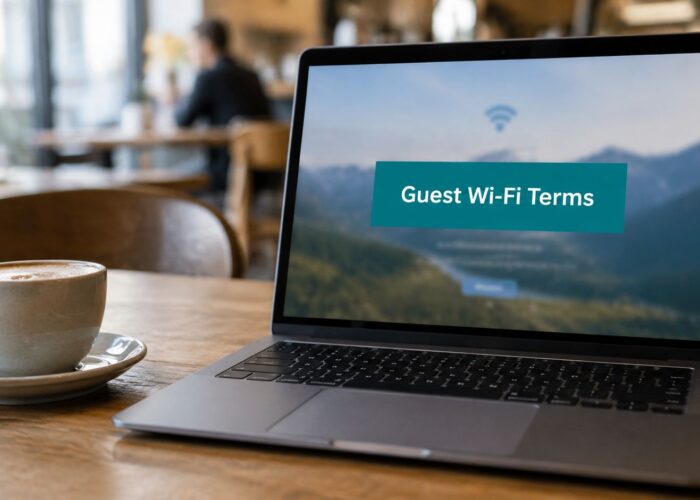
The captive portal is your front door. People notice it immediately, and they judge the whole network by how it behaves. A clunky login flow makes users think the WiFi is broken, even when signal strength is perfect.
A good portal does three jobs at once. It authenticates the person, explains the terms clearly, and gets them online without delay. In retail, it can also support social wifi and light-touch marketing. In education or senior living, it should remove confusion, not create it.

Keep the login flow short
I've seen operators overload splash pages with branding, promotions, forms, and legal copy. It usually backfires. People came for connectivity, not a maze.
Better portal design usually includes:
- One clear call to action: Email login, voucher, room code, Azure AD, SAML, or social login.
- Mobile-first layout: Users often first encounter guest WiFi on a phone.
- Readable consent language: Privacy and acceptable use terms should be easy to scan.
- Fast fallback paths: If social login fails, users need a second option that doesn't require staff intervention.
Retail centers often use social wifi to support repeat visitor recognition and promotional follow-up. Corporate guest environments usually lean toward more formal identity methods. Senior living and healthcare settings often do best with very simple portal choices and large, readable buttons.
Match the portal to the venue
A portal should reflect the setting. A campus network can use directory-aware flows. A hotel can align the design with room and loyalty messaging. A shopping center can rotate local promotions by location. With Cisco Meraki and Splash Access, those branded experiences are easier to manage across multiple sites without rebuilding from scratch every time.
The best captive portal is the one users barely remember, because it got them connected with almost no effort.
What doesn't work is over-design. Heavy graphics, too many required fields, and odd browser behavior create support tickets immediately. Test every portal on iPhone, Android, laptop, and tablet before rollout. If it only works nicely on one device class, it isn't finished.
3. User Authentication and Access Control Management
A resident moves into a senior living community with a phone, tablet, smart TV, and video doorbell app. A student arrives at a dorm with a laptop, gaming console, and printer. In both cases, independent living depends on the same thing. People need to get online quickly, stay connected on their own devices, and avoid calling the front desk every time something drops.
Authentication shapes that experience more than many teams expect. A shared WiFi password looks simple on day one, then turns into a support problem. Passwords get passed around, old devices stay connected after move-out, and one credential change can disrupt an entire floor or building.
Cisco Meraki gives facility teams better options. In student housing, BYOD workplaces, and mixed-use residences, IPSK and EasyPSK often provide the right balance between control and convenience. Each resident, guest, or device can have a distinct credential and policy, without forcing every user into a full enterprise device-management workflow.
Where IPSK and EasyPSK fit best
IPSK works well in environments where people bring personal devices that IT does not own. You can assign a private key per user or per device, then revoke that single key if a phone is lost, a resident moves out, or a contractor no longer needs access. Everyone else stays online.
EasyPSK reduces friction for properties that need simpler onboarding but still want cleaner control than one building-wide password. That makes it useful for:
- Student housing: Multiple personal devices per resident, including consoles and streaming hardware.
- Corporate BYOD: Different access rules for staff, visitors, and contractors.
- Senior living: Persistent access for residents who should not have to re-authenticate constantly.
- Co-working spaces: Fast member onboarding with clearer separation between tenants.
The trade-off is administrative discipline. Unique credentials improve accountability and reduce broad disruption, but they also require a process for issuing, expiring, and revoking access. Meraki helps because policy changes can be managed centrally instead of property by property.
Access policy should match how people actually live
Authentication is part of service delivery. If a family member visiting a resident has to borrow staff credentials, the system is poorly designed. If a dorm resident opens a help desk ticket every time a gaming console reconnects, the policy is fighting the environment instead of supporting it.
Good access control starts with distinct user groups. Residents, short-term guests, staff, contractors, and admins should not all hit the network the same way. Their sessions should also age differently. A visitor may need access for one afternoon. A resident may need stable access for months across several devices.
Azure AD and SAML are strong fits in education and corporate settings where identity already lives in a directory. In residential and senior care environments, those tools are useful for staff access, but resident access often needs something lighter. That is the practical design question. Use directory-based sign-in where it helps, and use simpler device or user-based credentials where repeated prompts would create confusion or support calls.
One rule for every user group usually fails.
The best authentication plan supports independence without giving up control. Residents get easy access on the devices they use. Staff keep clear policy boundaries. Facility managers get a network that is easier to operate, easier to audit, and less likely to break daily routines.
4. Network Security and Data Protection Implementation
A resident taps Join on a tablet in the apartment. At the same moment, a nurse updates a chart, a front desk team member runs a card payment, and a maintenance sensor reports a fault from the boiler room. If those systems can all see each other, the network is not supporting independent living. It is creating operational risk.
Security has to protect the facility without making everyday access harder than it needs to be. In practice, that means building clear boundaries between resident and guest traffic, staff systems, payment environments, care platforms, and building operations. Cisco Meraki gives IT teams a practical toolset for this. VLAN segmentation, Layer 3 and Layer 7 firewall rules, group policies, content filtering, and centralized event logs all matter because mixed-use properties rarely have one device type, one user group, or one risk profile.

Security controls that hold up in real buildings
The strongest design usually starts with a few controls done well and kept current.
Set up these first:
- Traffic segmentation: Separate resident, guest, staff, admin, POS, IoT, and building management networks.
- Device isolation: Prevent guest and resident devices from talking directly to each other unless a use case requires it.
- Modern encryption: Use current wireless security standards, while accounting for older resident devices that may still need a transitional policy.
- Firmware updates: Keep access points, security appliances, and switches on a defined update schedule with a rollback plan.
- Log monitoring: Review failed authentications, unusual roaming behavior, repeated portal loops, and blocked traffic that points to policy mistakes or abuse.
There is a trade-off here. Tighter controls reduce exposure, but overly aggressive filtering, certificate prompts, or forced reauthentication can create confusion for residents who rely on a device for telehealth, classes, family contact, or accessibility tools. Good policy design accounts for that. Staff systems should have stricter controls and shorter tolerance for risk. Resident access should stay stable, predictable, and easy to use.
Backend control should lower front-line friction
I usually get called in after a property has added exceptions for months or years. A shared passphrase still exists for old devices. One printer sits on the wrong subnet because it was "temporary." A smart TV in common space can see devices it should never reach. The result is familiar. More support tickets, more workarounds, and less confidence in the network.
A better pattern is simple. Lock down infrastructure paths, define who can reach what, and keep those rules documented in Meraki dashboards and change records. Residents and guests should get internet access without hitting technical roadblocks every few days. Facility managers should be able to answer a basic security question quickly, trace an event, and show that sensitive systems are kept apart by design.
That is what secure independent access looks like in a modern residence.
5. Guest Data Collection and Customer Analytics
A resident walks into the lounge after dinner, opens a tablet for a telehealth visit, and gets online without asking staff for help. Across the building, a student starts a video class in a study nook that always fills up at 7 p.m. Those moments look simple on the surface. For the IT team and facility manager, they depend on collecting the right network signals and ignoring the rest.
Guest WiFi analytics should support independent access, not turn the network into a surveillance project. The practical goal is to gather enough information to improve coverage, onboarding, space planning, and support response. That means focusing on operational data with a clear use case.
Cisco Meraki analytics and location tools help answer questions that matter in real buildings. Which common area reaches capacity first. Where users abandon the captive portal. Which wing reports slow performance during the same evening window. Whether complaints come from weak RF design, overloaded access points, or a confusing sign-in flow.
Use data to improve operations
The strongest analytics programs connect each metric to a facility decision. If a lounge shows long dwell time and rising device counts, that may justify another AP, better channel planning, or more seating with power nearby. If new users drop off at the same portal step, the issue may be copy, font size, language support, or a social login option that creates more friction than it saves.
I usually advise teams to sort data into three buckets. Service improvement, support troubleshooting, and reporting for management. If a data point fits none of those, it probably should not be collected.
Useful actions often include:
- Refining AP placement: High-use zones may need a different coverage pattern or capacity design.
- Improving portal completion: Drop-off data often points to unclear instructions, poor mobile formatting, or an unnecessary form field.
- Adjusting staffing windows: Check-in teams can prepare for predictable peaks during move-in, visiting hours, or evening resident use.
- Planning shared spaces: Consistent occupancy patterns can guide decisions about seating, charging access, and device-friendly common areas.
Trade-offs emerge in these situations. Retail and mixed-use properties may want repeat visitor recognition and campaign attribution. Senior living, transitional housing, and education sites usually need a narrower approach because trust, privacy, and ease of access matter more than marketing detail.
Be transparent about collection
Residents, guests, and family visitors are more likely to complete authentication when the request feels reasonable. Ask for the minimum information needed to provide access and support the service model. For many properties, that means an email address, a room or visitor code, or a simple acceptance of terms.
Avoid collecting data just because the portal makes it possible. A long registration form may give the marketing team more fields, but it also creates more failed logins, more front-desk questions, and less confidence in the network. In independent living environments, every extra step can become a barrier for someone trying to reach a clinician, class portal, employer, or family member.
Clear consent language matters just as much as the form itself. State what is collected, why it is collected, how long it is kept, and who can access it. Clean, limited data with a clear purpose is easier to defend, easier to manage, and far more useful than a bloated guest record nobody on staff can explain.
6. Payment Processing and Billing Integration
Most independent living environments should offer a solid free access tier for baseline connectivity. That's usually the right move in student housing, senior living, waiting areas, and standard guest scenarios. Still, some operators need billing options. Premium bandwidth, event access, temporary passes, and bundled services all come up in practice.
The billing side has to feel boring. That's a compliment. If payment flows are confusing, users assume the network is unreliable or the venue is trying to trap them into an upsell.

Keep paid access simple
A good billing setup usually follows a simple pattern. Free access handles normal use. Paid options are clearly labeled, easy to understand, and tied to real added value like faster speeds, longer duration, or package-specific access.
That approach works for:
- Hotels and serviced residences: Premium tiers for heavy streaming or business use.
- Co-working spaces: Day passes, hourly access, or bundled member services.
- Events and retail activations: Temporary premium connectivity for attendees or vendors.
- Family visitor scenarios: Optional access extensions where venue policy supports it.
Avoid the usual billing mistakes
The biggest problems come from unclear pricing, weak confirmation flows, and poor handoff after payment. If someone pays and still lands back on the login screen, support immediately becomes a manual cleanup exercise.
Use a billing gateway that sends a clear confirmation and applies access automatically. If you're integrating payments into a captive portal, make sure the language is readable, the payment methods are familiar, and the session logic doesn't create duplicate purchases.
A network shouldn't ask residents or guests to become troubleshooting experts just to buy access. The system needs to resolve entitlement cleanly in the background.
7. Marketing Integration and Campaign Execution
Guest WiFi is one of the few channels where a user is already physically present when you reach them. That's why retail teams like social login, social wifi, geofenced offers, and branded splash pages. But if you treat the login page like an ad wall, people will feel it instantly.
The better approach is light, relevant, and timed to context. A retail guest who connects near a food hall might appreciate a location-based offer. A hotel guest may welcome amenity prompts after access is already granted. A corporate visitor probably wants almost no marketing at all.
Useful marketing feels local and restrained
Cisco Meraki integrations and Splash Access workflows can support location-aware messaging, segmented audiences, and follow-up links to tools like Mailchimp, Facebook, or Twilio. That flexibility is valuable, but restraint matters more than the feature list.
Good campaign behavior usually looks like this:
- First-time users get orientation: Explain the service and offer one relevant next step.
- Repeat users get lighter messaging: Don't force the same promo every visit.
- Location-specific content stays relevant: Match messaging to where the user is.
- Time-sensitive offers stay short: A small prompt often performs better than a crowded page.
If the login journey feels like a marketing funnel first and a utility second, users stop trusting it.
Different sectors need different tone
Retail can be more promotional. Education should focus on service, support, and campus relevance. Senior living environments should prioritize clarity and family communication over campaigns. Corporate settings often need branding with almost no overt marketing at all.
What doesn't work is copying one splash page strategy across every venue. The right voice for a shopping center is usually the wrong one for a residence or a BYOD office.
8. Network Monitoring and Performance Optimization
At 7:30 p.m., the residence looks fine on paper. Every access point is online. The dashboard is green. Then the complaints start. A student cannot join a video call. A resident's smart TV buffers. A family member trying to reach a parent on WiFi calling gets dropped twice. Uptime alone does not tell you whether the network is supporting independent daily life.
Effective monitoring must focus on user experience, not just device status. In a dorm, a senior living community, or a mixed-use residence, the essential question is simple. Can people get online easily and stay connected long enough to study, stream, message family, use a portal, or attend telehealth appointments without fighting the network?
Cisco Meraki helps because the dashboard puts client counts, application use, event logs, roaming behavior, and AP health in one operational view. That saves time during triage. Staff can check whether the problem is weak coverage, overloaded capacity, authentication retries, DNS delay, or one troublesome device type instead of treating every complaint as "slow internet."
Watch experience under load
Trouble usually shows up during predictable peaks. Evening streaming hours, move-in weekends, visiting hours, class transitions, and community events all stress the network in different ways. A floor plan that performs well at 2:00 p.m. can fail at 8:00 p.m. if too many devices share the same access point or if backhaul capacity is too tight.
In independent living settings, that trade-off matters. Pushing for maximum coverage with fewer APs can leave dead spots solved but capacity unresolved. Adding more APs without channel planning can create interference and sticky-client issues. Good performance work means tuning for the actual resident pattern, not the ideal lab pattern.
Practical monitoring habits
The teams that handle this well usually keep the process simple and repeatable:
- Set a baseline: Record normal client counts, throughput, latency, and authentication success by time of day.
- Review peak periods weekly: Check what happens during the hours residents depend on the network most.
- Separate signal problems from capacity problems: Full bars do not mean the AP has enough airtime for everyone connected to it.
- Track repeated failures by place and device type: A pattern in one lounge, one wing, or one generation of smart TVs usually points to a fixable design issue.
- Use alerts carefully: Too many alerts train staff to ignore them. Alert on conditions that need action, such as AP outages, WAN instability, or unusual authentication failure spikes.
One more point gets missed often. Monitoring is not only about outages. It is also about friction. If residents keep reconnecting, failing captive portal redirects, or roaming poorly between hallways and rooms, the network is technically available but operationally weak.
When performance tuning is done well, support tickets drop, front-desk frustration drops with them, and residents can handle more of life online without asking staff for help. That is the essential benchmark.
9. Compliance, Privacy, and Regulatory Management
A resident scans the QR code in the lobby, reaches the guest portal, and stalls on a dense privacy notice with tiny text and unclear consent options. At that point, the problem is no longer legal wording on a page. It is a failed access experience.
For independent living environments, compliance has to support daily digital access. The checklist from the operator side includes privacy notices, accessibility, retention rules, audit readiness, and clear ownership of resident and guest data. In a senior residence, student dorm, or mixed-use community, weak policy design creates real friction for people who are trying to handle ordinary tasks online without staff help.
Cisco Meraki gives teams useful control over SSIDs, splash pages, group policies, and event logs, but the platform does not make policy decisions for you. Someone still has to define what data is collected through the captive portal, how long authentication and connection logs are kept, who can review them, and how deletion or subject access requests are handled. Those choices affect security, trust, and day-to-day operations.
Write policies for the person using the network
Legal review matters. So does readability.
Privacy language on a guest WiFi portal should answer the practical questions first. What information is collected. Why it is collected. Whether the site uses email login, SMS verification, vouchers, payment details, or social sign-in. Whether usage is logged for security. How long records are retained. Where to ask for help.
A workable compliance checklist usually includes:
- Clear consent text: Use plain language that matches the actual authentication flow and data collection settings.
- Accessible portal design: Support readable font sizes, strong contrast, keyboard-friendly controls, and labels that make sense to residents and visitors.
- Defined retention rules: Keep connection and authentication records only for the period your policy and legal obligations require.
- Documented request handling: Staff should know who owns deletion requests, access requests, and complaint escalation.
- Role-based admin access: Limit who can view guest data in Meraki dashboards, payment systems, and CRM tools.
Accessibility deserves the same level of planning as security. If a resident cannot read the portal on a phone, cannot complete the login flow with assistive technology, or cannot tell what they are agreeing to, the network is available on paper and difficult to use in practice.
Turn policy into routine operations
Compliance failures usually come from gaps in execution. A residence manager says one thing, the portal says another, and the retained data says something else. That mismatch creates audit risk and support problems at the same time.
I advise teams to map the full path of guest data before they publish the service. Start at the captive portal. Follow the data into Meraki, any RADIUS or identity provider, payment processor, CRM, analytics tool, and help desk workflow. Then check whether the privacy notice matches that actual path. If it does not, fix the system or fix the notice.
Care settings need one more layer of discipline because staff often help residents connect shared, personal, and assistive devices. Teams that support that environment should also invest in essential security training for care assistants, especially where device support and information handling overlap.
Good compliance work is operational. It gives residents an easy, understandable way to get online, and it gives staff a clear process they can follow under pressure.
10. Staff Training, Support, and System Troubleshooting
The final test of any network isn't the design document. It's what happens when someone can't connect at 8:30 p.m. and the main IT contact has gone home. If front-line staff freeze, the whole carefully built system suddenly feels fragile.
Training doesn't mean turning every receptionist, residence manager, or retail supervisor into a network engineer. It means giving them enough confidence to solve the common problems, recognize the uncommon ones, and escalate cleanly when needed.
Teach the support path, not just the product
Staff usually need a short set of repeatable troubleshooting actions. Check the SSID. Confirm the login path. Verify whether the issue affects one device or many. Look at whether the user should be on guest wifi, a voucher flow, social login, or an IPSK-based network. Confirm whether the account, voucher, or session expired.
That approach is especially important in environments with many non-managed devices. Student dorms, senior residences, and BYOD corporate sites all produce questions that look similar on the surface but have different causes underneath.
Build support around common moments
The Arc data summarized by ElevateAbility noted that only 35% had mastered money management and 49% had mastered meal preparation among the skills discussed in that source. Those aren't network metrics, but they point to a larger operational truth. Support systems need to reduce avoidable dependence wherever possible.
Strong staff support habits usually include:
- Quick-reference guides: One-page instructions beat long manuals during live issues.
- Role-based escalation: Front-line staff handle simple access questions, IT handles policy and infrastructure.
- Change documentation: Every portal update, authentication change, or SSID adjustment should be recorded.
- Periodic refreshers: Staff forget steps if they only see the workflow once.
A reliable guest WiFi system doesn't remove people from the equation. It gives them a cleaner script, fewer emergencies, and better tools when users need help.
The biggest failure point is assuming training is done after launch. It isn't. New staff arrive, devices change, portal flows evolve, and users always find fresh ways to get confused. Good support operations treat training as ongoing maintenance.
Independent Living Skills: 10-Point Checklist Comparison
| Feature | 🔄 Implementation Complexity | ⚡ Resource Requirements | ⭐ Expected Outcomes | 📊 Ideal Use Cases | 💡 Key Tips |
|---|---|---|---|---|---|
| Guest Wi-Fi Network Setup and Management | 🔄 Moderate, SSID design, AP provisioning, segmentation | ⚡ Access points, Meraki licenses, IT setup time | ⭐ Strong, secure guest access and network isolation | 📊 Hotels, retail centers, corporate offices, senior living | 💡 Use captive portals, schedule security audits, set bandwidth caps |
| Captive Portal Configuration and Customization | 🔄 Low–Moderate, design + auth workflows, content updates | ⚡ Portal platform (Splash Access), design/dev resources | ⭐ High, branded UX and reliable data capture (UX-dependent) | 📊 Hotels, retail, events, restaurants | 💡 Keep auth under 30s, test across devices, use QR codes and A/B tests |
| User Authentication and Access Control Management | 🔄 High, directory integration, IPSK/SAML, key lifecycle | ⚡ Identity systems (Azure AD), skilled IT, credential tooling | ⭐ Very High, strong authorization and auditability | 📊 Corporate offices, education, healthcare, co‑working | 💡 Use SSO, automate voucher expiry, regularly audit auth logs |
| Network Security and Data Protection Implementation | 🔄 High, encryption, firewalls, DPI, compliance controls | ⚡ Security appliances, monitoring tools, security expertise | ⭐ Very High, reduced risk and regulatory compliance | 📊 Healthcare, hotels, retail, educational institutions | 💡 Enable WPA2/WPA3, segment sensitive devices, run quarterly audits |
| Guest Data Collection and Customer Analytics | 🔄 Moderate, capture flows, CRM & analytics integration | ⚡ CRM, analytics platform, data analysts | ⭐ High, actionable marketing and operational insights | 📊 Retail/shopping centers, hotels, campuses | 💡 Be transparent on data use, integrate Mailchimp, segment audiences |
| Payment Processing and Billing Integration | 🔄 Moderate, gateway integration + PCI requirements | ⚡ Payment gateway, compliance audits, dev/support effort | ⭐ Medium, monetization potential but variable adoption | 📊 Hotels, airports, co‑working spaces, retail | 💡 Offer free basic tier, display clear pricing, use trusted gateways |
| Marketing Integration and Campaign Execution | 🔄 Low–Moderate, connect marketing tools and workflows | ⚡ Mailchimp/Facebook/Twilio integrations, creative resources | ⭐ High, targeted offers and measurable campaign ROI | 📊 Retail, restaurants, hotels, shopping centers | 💡 Use geo‑fencing, A/B test creatives, avoid over‑communication |
| Network Monitoring and Performance Optimization | 🔄 Moderate, baseline testing, alerts, traffic analysis | ⚡ Monitoring dashboard (Meraki), trained network staff | ⭐ High, proactive fixes and capacity planning | 📊 Hotels, education, corporate, retail | 💡 Set alerts at ~80% utilization, review monthly, throttle heavy apps |
| Compliance, Privacy, and Regulatory Management | 🔄 High, multi‑jurisdiction rules and audit readiness | ⚡ Legal counsel, compliance tools, documentation effort | ⭐ Very High, reduced legal risk and improved trust | 📊 Healthcare, hotels, education, retail | 💡 Publish clear privacy policies, enable opt‑outs, schedule audits |
| Staff Training, Support, and System Troubleshooting | 🔄 Low–Moderate, training, runbooks, escalation procedures | ⚡ Training budget, documentation, ticketing system | ⭐ High, faster resolution and institutional knowledge retention | 📊 All verticals (Hotels, Retail, Education, Corporate, Healthcare) | 💡 Provide quick‑reference guides, quarterly refreshers, partner with vendors |
Empowering Your Environment Through Smarter Connectivity
A strong network does more than move packets. It helps people act independently in spaces where digital access now shapes everyday life. Students need to register devices and get to class materials without hunting for help. Shoppers expect guest wifi that works with a quick social login or a clean branded portal. Corporate visitors want secure access without touching internal systems. Residents in senior living communities need connectivity that supports contact with family, entertainment, telehealth, and personal choice.
I believe a checklist for independent living skills should include the infrastructure behind the experience. In physical spaces, people notice ramps, lighting, signage, and door access. In digital spaces, they notice captive portals, authentication friction, signal consistency, privacy prompts, and how easy it is to reconnect a personal device. If those systems are awkward, the environment pushes people back toward dependence on staff.
Cisco and Meraki give operators a practical foundation for getting this right. Meraki access points, dashboard controls, traffic shaping, segmentation, analytics, and policy tools make it much easier to run one environment with several access models at once. That matters in mixed-use buildings and multi-site organizations where retail guests, residents, staff, students, and contractors all need different treatment. You can support branded guest wifi, stronger access control, and cleaner troubleshooting without building a patchwork of disconnected tools.
Authentication is where a lot of independence either grows or gets blocked. Shared passwords often feel easy but create confusion, security exposure, and repeat support work. IPSK and EasyPSK offer a better route for many BYOD settings because they preserve convenience while giving administrators more control. Captive portals also matter, but only when they stay focused. A portal should authenticate, inform, and get out of the way. If it becomes a cluttered billboard or an obstacle course, it stops serving the user.
The same principle applies to analytics, billing, compliance, and support. Use the data that helps you improve coverage, staffing, and onboarding. Keep payment flows clean if you offer premium options. Write privacy language that normal people can understand. Train front-line staff on the likely issues, not every deep technical detail. In my experience, the best systems aren't the ones with the most features on paper. They're the ones that reduce friction every day for the people using them.
This approach works across education, retail, and corporate sectors because the goal is consistent. Build a digital environment where access feels natural, secure, and dependable. When you do that with Cisco Meraki, thoughtful captive portal design, and the right authentication model, your network stops being just another facility utility. It becomes part of how the space supports independence.
If you're building or refining a guest WiFi experience with Cisco Meraki, captive portals, IPSK, EasyPSK, social wifi, or secure authentication for education, retail, senior living, healthcare, or BYOD corporate environments, Splash Access is worth a closer look. It gives operators a practical way to deploy branded portals, streamline onboarding, strengthen access control, and turn connectivity into a smoother, more independent experience for every user.