You opened the restaurant because you care about food, service, and the room itself. Then reality hits. You need reservations, repeat visits, direct orders, better reviews, and a way to market consistently without turning into a full-time content creator.
That's where a practical marketing plan restaurant approach matters. Not a vague list of “post on social media” ideas. A real operating plan that ties your brand, your channels, your guest data, and your follow-up into one system.
For most owners, the turning point comes when they stop treating guest Wi-Fi as a utility and start treating it as part of the marketing stack. A branded guest wifi experience, built on Cisco and Meraki infrastructure with the right Captive Portals and Authentication Solutions like IPSK and EasyPSK, can do more than get people online. It can help you understand who visits, how often they return, and which messages bring them back. That idea applies well beyond restaurants too, especially in Retail, Education, and BYOD Corporate environments where secure access and useful data need to coexist.
Laying Your Marketing Foundation
Friday service is full, the dining room feels busy, and the week still ends with the same question. Why did certain guests come in, why did some return, and which marketing spend drove covers or direct orders? If you cannot answer that early, marketing turns into guesswork.
A strong foundation starts before you choose channels or promotions. It starts with a clear market position, a short list of business goals, and one system that captures guest behavior consistently. For restaurants using Cisco Meraki with Splash Access, guest Wi-Fi can serve as that system. It gives you a practical way to connect foot traffic, repeat visits, campaign response, and audience trends instead of managing each marketing task in isolation.

Start with your real market position
New restaurant owners often describe the concept in broad terms. “We're for everyone.” “We want to be the neighborhood favorite.” “We focus on quality.” None of that helps with pricing, offers, staffing, or media spend.
A useful position is specific enough to guide decisions:
- Primary occasion: weekday lunch, family dinner, date night, takeout, late-night stop
- Buying reason: speed, comfort, premium ingredients, atmosphere, convenience
- Trade area reality: nearby offices, apartments, schools, hotels, event venues, retail traffic
- Competitive edge: what guests will miss if they choose another spot
That last point matters more than owners expect. If the difference is unclear, discounts start doing too much work.
Practical rule: If a server, host, or manager cannot explain in one sentence why your restaurant is the better choice for a specific guest occasion, the foundation is still too loose.
Build a one-page operating view of the market
A SWOT analysis is useful when it stays grounded in day-to-day restaurant conditions.
Strengths could be fast ticket times, a strong patio, chef credibility, or convenient parking.
Weaknesses might be poor street visibility, inconsistent lunch traffic, weak online ordering, or limited awareness in nearby neighborhoods.
Opportunities often come from underused dayparts, local partnerships, office catering, and repeat visits you have not actively marketed to.
Threats usually include rising ad costs, larger competitors, review volatility, and third-party platforms that own the guest relationship.
Keep it short. One page is enough. The value is not the document itself. The value is using it to decide where to spend money and where to stop wasting it.
Set goals that connect to guest behavior
Restaurant goals tend to sound like outcomes without a mechanism. “Get more regulars.” “Increase online orders.” “Improve retention.” Those are fine targets, but they need measurable signals behind them.
This is one reason I push owners to treat guest Wi-Fi as part of the marketing foundation rather than an IT line item. With Cisco Meraki and Splash Access in place, the login experience can help capture first-party guest data, identify visit frequency, and show whether a campaign drove another visit instead of just another click. That changes how you set KPIs. Instead of tracking only impressions or follower counts, you can track returning guests, time between visits, campaign-driven redemptions, and the share of traffic tied to known customers.
Choose channels after the foundation is clear
Restaurants do need a website, search visibility, social presence, and direct messaging through email or SMS. But channel selection should follow the business model, not the other way around.
A lunch-heavy fast casual concept usually needs local search strength, direct offers, and a friction-free path from discovery to order. A higher-ticket dinner concept may get more value from reviews, reservation flow, event programming, and remarketing to past guests. A neighborhood cafe may rely more on repeat traffic than broad awareness. The channel mix changes, but the planning logic stays the same.
Map those touchpoints in order. Discovery. Visit. Return. Referral. Customer journey mapping for venue marketing is a practical framework for finding where guests drop off and where your Wi-Fi data can fill in the blind spots.
Done well, this foundation gives you a clearer message, cleaner targeting, and a better read on ROI before you spend heavily on promotions.
Defining Your Ideal Customer and Message
A restaurant owner once told me their target audience was “locals, tourists, families, professionals, and students.” That isn't a target audience. That's everyone within driving distance.
Good marketing gets easier when you narrow the picture. Instead of chasing “more customers,” define the people you want more of.
Build personas from behavior, not wishful thinking
A workable customer persona includes more than age and income. It should answer practical questions.
- Why they visit: convenience, celebration, routine, social setting, or comfort
- When they visit: weekday lunch, after school, pre-event, late evening, weekend brunch
- What they value: speed, menu variety, price clarity, healthy options, ambiance
- What nudges action: loyalty perks, birthday offers, easy mobile ordering, social proof
That last point matters. Your message should match the reason they choose.
A lunch-driven customer may respond to convenience and speed. A weekend dining customer may care more about atmosphere and shareable moments. A parent deciding on dinner might care about predictability more than novelty.
Guest Wi-Fi makes persona work less theoretical
Social wifi and social login become useful here. When a guest chooses to log in through a branded captive portal and consents to share information, you can stop guessing quite so much. You begin to see actual patterns in visit timing, repeat visits, and audience segments.
That changes the quality of your messaging.
Instead of writing generic posts for everyone, you can shape campaigns around likely groups such as first-time visitors, regular lunch guests, event-driven traffic, or lapsed customers. If you're building a compliant list for remarketing, restaurant email list growth through guest Wi-Fi capture is a practical path because it ties data collection to an in-venue action guests already want.
The best restaurant messaging doesn't sound clever first. It sounds relevant first.
Write a message guests recognize instantly
Once the audience is clearer, the brand message usually gets simpler. You don't need a slogan workshop. You need a few lines that hold up everywhere.
Try pressure-testing your message against these questions:
| Message test | What to ask |
|---|---|
| Clarity | Would a first-time guest understand what kind of experience you offer? |
| Specificity | Does it sound like your restaurant, or could any nearby place say the same thing? |
| Relevance | Does it speak to the needs of your best-fit customer? |
| Consistency | Can your team use the same language on your site, social pages, and in-store materials? |
If your brand says “easy neighborhood dinner” but your website is hard to use and your Wi-Fi sign-in is clunky, the message breaks. If your brand says “premium casual” but your promotions feel bargain-bin, the message breaks there too.
This is why the ideal customer and the in-venue experience have to line up. Your message is not just what you publish. It's what guests experience from the first click to the moment they reconnect to your guest wifi on a second visit.
Activating Your Key Marketing Channels
Restaurant owners often split channels into online and offline. In practice, guests don't. They might discover you on Instagram, check your menu on their phone, visit in person, join your guest wifi, and later respond to an email offer. That's one journey, not four separate channels.
The strongest plans treat each channel as part of a connected system.

Your website and owned channels do the heavy lifting
Your website should answer basic buying questions fast. Menu, hours, location, reservations, direct ordering, and event details need to be easy to find on mobile.
If your site buries those actions, paid traffic gets wasted. Social traffic gets wasted too.
Email and SMS are still useful because they let you reach guests directly instead of renting attention from an algorithm. Social platforms are best used to create familiarity, showcase the food and experience, and give people a reason to act now.
A practical setup often looks like this:
- Website: acts as the conversion hub for reservations, orders, and event interest
- Email: brings people back with timely offers, updates, and segmented messages
- Social media: builds visibility and supports launches, specials, and social proof
- On-site signage and QR codes: connect the physical room to digital actions
Guest Wi-Fi is a marketing channel, not just an amenity
This is the overlooked piece in many restaurant plans. A branded guest wifi system gives you a point of contact inside the venue, right when a guest is engaged and seated.
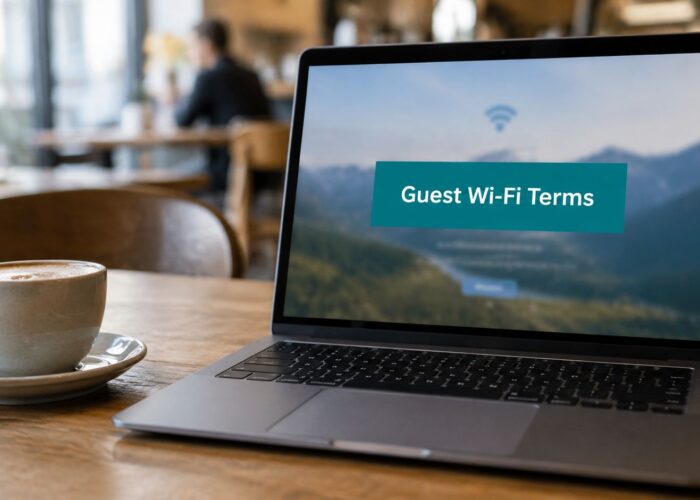
With Cisco Meraki hardware, restaurants can pair reliable connectivity with controlled access policies. Add Captive Portals, social wifi, and smart data capture, and the Wi-Fi layer starts supporting marketing directly. Guests can sign in through social login, email form fill, QR access, or voucher flow depending on the setting and your compliance requirements.
That same model works in other sectors too. In Education, schools and campuses often need segmented access for students, guests, and staff. In Retail, shopping centers can connect footfall insights to promotions. In BYOD Corporate spaces, access policies need to be secure without becoming a burden on IT.
For secure onboarding, Authentication Solutions such as IPSK and EasyPSK are especially useful where many device types need different access levels. In a restaurant, that may separate guest access from operational devices. In a campus or corporate cafeteria, it can support smoother BYOD access without giving away network control.
Connect access, identity, and follow-up
The value shows up when the Wi-Fi journey feeds marketing action. A guest connects. They see a branded splash page. They choose a login option. You capture consented data. Then your system can trigger follow-up based on visit behavior.
One example of that model is WiFi marketing for restaurants, where a branded captive portal on a Meraki network can support email capture, social follows, offers, and audience segmentation. That's not separate from your marketing plan restaurant strategy. It becomes the center of it.
When a guest asks for Wi-Fi, they're not interrupting the dining experience. They're giving you a chance to extend it.
What doesn't work is treating every channel as a silo. If your social posts drive traffic but your website stalls conversion, or your venue is busy but you collect no usable guest data, you're leaving value behind.
Building Your Promotional Calendar
Restaurants rarely struggle because they have zero ideas. They struggle because promotions happen irregularly, usually when sales feel soft. That creates a reactive calendar, and reactive calendars train customers to wait for random discounts.
A stronger approach is to build a promotional rhythm that reflects your real business patterns. Slow lunch periods, high weekend demand, seasonal menu changes, local events, birthdays, and lapsed visits all belong on the calendar.

Build around repeating moments
Start with the moments that happen every year, every month, and every week. Then add triggered campaigns based on guest behavior.
A useful calendar usually includes:
- Seasonal campaigns tied to menu changes, holidays, and local traffic shifts
- Weekly demand shaping such as quiet-night offers or lunch-focused reminders
- Lifecycle outreach like welcome messages after first visit
- Occasion marketing including birthdays and special-event dining
- Win-back campaigns for guests who haven't returned in a while
That last category is where guest wifi data becomes practical. If a returning device hasn't appeared for an extended period, you can create a “we'd love to see you again” offer rather than blasting the entire list with the same message.
Use automation where guests expect personalization
Birthday clubs are a perfect example. If a guest voluntarily shares their birthday during login or profile setup, you can schedule the message in advance and keep the offer simple. The same logic applies to first-time visit follow-up, return-visit nudges, and location-based campaigns in multi-site environments.
QR-based promotions also fit naturally here. Table tents, receipts, windows, and takeaway packaging can all send guests into a tracked flow. If you want to connect those scans to campaigns more deliberately, QR code marketing strategies for guest engagement gives a practical framework for using codes as part of the calendar rather than as random one-off tactics.
Operational note: Promotions should help you shape demand. They shouldn't train your regulars to only visit when there's a discount.
Keep the calendar balanced
A good calendar mixes three types of activity:
| Calendar type | Purpose | Example |
|---|---|---|
| Brand activity | Keeps the restaurant visible and recognizable | menu highlights, chef stories, atmosphere content |
| Revenue activity | Drives immediate action | weekday offers, event nights, direct order pushes |
| Retention activity | Encourages repeat behavior | birthday messages, welcome-back campaigns, loyalty invitations |
If every item on the calendar is promotional, guests tune out. If every item is brand-only, revenue impact gets fuzzy. The balance matters.
For food courts, retail centers, and mixed-use venues, this structure also keeps cross-promotion manageable. You can coordinate restaurant promotions with tenant events, mall footfall peaks, or property-wide campaigns without making your own brand feel generic.
Budgeting for Growth and Measuring Results
A restaurant marketing budget shouldn't be guessed at from what feels affordable that month. It needs a rule. It also needs a measurement plan, or the budget turns into a pile of disconnected expenses.
Industry guidance is fairly clear here. Established restaurants typically allocate 3% to 6% of revenue to marketing, while new restaurants may invest 10% to 20% in the first year, and that structured budgeting sits inside an industry projected to reach $1.55 trillion in sales by the end of 2025 according to this restaurant marketing budget benchmark.
Set goals that can survive contact with reality
Owners often make the plan too vague at this stage. “Increase sales” isn't a useful goal. “Get more regulars” isn't much better.
Use a S.M.A.R.T. structure so each goal is specific, measurable, achievable, relevant, and time-bound. If you can't tell whether the goal was met, the wording needs work.
Good restaurant goals usually focus on outcomes such as repeat visits, direct orders, weekday lunch demand, or campaign response. Then they tie those goals to visible KPIs.
A goal without a tracking method is just an intention you hope turns out well.
Sample Restaurant Marketing KPIs
| KPI | What it Measures | How to Track | Business Goal |
|---|---|---|---|
| Customer Acquisition Cost | What you spend to gain a new customer | Compare campaign spend with new customer count | Keep acquisition efficient |
| Website conversion rate | Whether site visitors become reservations or orders | Track bookings, orders, or form submissions | Improve owned-channel performance |
| New vs returning visitors | How many guests are first-timers versus repeat visitors | Use Wi-Fi analytics and visit history | Grow loyalty and retention |
| Dwell time | How long guests stay on-site | Use venue analytics tools where available | Understand engagement and traffic patterns |
| Email open and click activity | Whether your message gets attention and action | Review email platform reports | Improve campaign relevance |
| Social engagement | Audience response to your content | Track likes, comments, and shares | Improve reach and content fit |
| Repeat visit frequency | How often guests come back | Compare visit patterns over time | Increase customer lifetime value |
The point isn't to track everything. The point is to track the few metrics that connect to revenue behavior.
Tie budget decisions to operating reality
Marketing doesn't live in a vacuum. If labor is already tight, a campaign that fills every seat at the wrong time can create service problems that damage retention later. Owners should review labor, scheduling, and marketing together. If you're trying to connect promotion timing with staffing discipline, this guide on how to hit restaurant labor targets is a useful companion.
Monthly reviews are usually enough to catch patterns without overreacting. Weekly check-ins help spot sharp changes in traffic or campaign response.
To make that analysis easier, measuring marketing campaign effectiveness is worth using as a framework because it connects campaign goals to trackable outcomes rather than vanity metrics. That matters even more when your guest Wi-Fi system can show return rates, dwell patterns, and other on-site signals that standard ad reports can't.
What doesn't work is spending freely on awareness while ignoring conversion and retention. The budget gets justified emotionally. The results stay murky.
Putting Your Data-Driven Plan into Action
Friday lunch is slow, so you run an offer. The ad platform shows clicks. Sales tick up a little. Two weeks later, you still do not know which guests were first-timers, which ones came back, or whether the discount trained regulars to wait for a deal.
A usable restaurant marketing plan closes that gap. Guest Wi-Fi can sit at the center of it, because it connects acquisition, on-site behavior, and follow-up in one operating system instead of scattering the signal across disconnected tools.
The goal at this stage is not a large rollout. It is a controlled test you can manage well.
Pick one audience segment.
Pick one business problem, such as a weak lunch daypart or poor second-visit rate.
Pick one follow-up path.
Measure the same inputs and outcomes for at least a few weeks.
Good first campaigns are usually simple. A first-visit welcome series tied to captive portal sign-in works well. A birthday offer can work if redemption is tracked cleanly. A reactivation message for guests who have not returned in 30 or 45 days is often more useful than another broad awareness push. As noted in this guidance on restaurant S.M.A.R.T. goal setting, the value comes from setting a specific objective and tying the promotion to repeatable measurement.
The underlying network's importance becomes clear here. A restaurant using Cisco Meraki, branded Captive Portals, and secure Authentication Solutions like IPSK and EasyPSK is not just offering internet access. It is separating guest traffic from business systems, collecting permission-based guest data, and creating a cleaner way to connect visit behavior to marketing actions.
That matters because restaurant owners do not need more reports. They need usable signals. Who visited for the first time? Who stayed long enough to suggest a dine-in experience instead of a quick pickup? Who came back after a lunch offer? Those are practical questions that shape budget decisions, staffing expectations, and promotion timing.
Systems like Splash Access, which integrate with Cisco Meraki, are built for this kind of workflow. They support branded guest onboarding, social login, and repeat-visit tracking without treating Wi-Fi as a utility that sits outside the marketing plan.
Restaurants that learn faster usually market better.
That is the core shift. Instead of reviewing results after money is spent, the restaurant builds a feedback loop into the guest experience itself. Each visit adds context. Each campaign gets easier to adjust. Over time, the marketing plan becomes less about guesswork and more about measured behavior.
If you're ready to turn guest Wi-Fi into a usable marketing channel, Splash Access can help you connect branded captive portals, secure authentication, and guest data capture on Cisco Meraki networks so your restaurant marketing plan is driven by real visitor behavior instead of guesswork.