Hey there! Ever thought about what keeps your business humming along smoothly online? Think of network infrastructure services as the central nervous system of your entire operation. It's the whole shebang—all the hardware, software, and support that connects everyone and everything. From the guest Wi-Fi your customers love in your shop to the super-secure network your team counts on, these services are the unsung heroes making every click, tap, and swipe happen flawlessly.
Unpacking Your Digital Nervous System
At its heart, your network infrastructure is like the highway system for all your company's data. It’s a carefully planned mix of physical gear and smart software that makes sure information zips to its destination quickly and safely. Let's be honest, without these services, your digital world would grind to a halt.
Picture a busy university campus. Students need lightning-fast, reliable Wi-Fi for their laptops and phones. Staff need ironclad, secure access to internal systems. And visitors? They just want a simple, no-fuss way to get online. Network infrastructure services are the maestro conducting this whole orchestra, managing the flow of data just like a city’s road network handles rush hour traffic. It's the foundation holding everything else up.
Core Components Of Modern Network Infrastructure
This digital highway is built from several key pieces all working in perfect harmony. Here’s a quick and friendly look at the essential building blocks that make up a powerful network.
| Component | Its Role in Your Network | Why It's Essential for Business |
|---|---|---|
| Wireless Access Points (APs) | These are the gadgets that broadcast your Wi-Fi signal. | They provide the wireless coverage that connects everyone's devices to the network. |
| Switches | Think of switches as the traffic cops for your wired network, directing data packets. | They make sure data gets to the right device efficiently, preventing digital traffic jams. |
| Routers | Routers connect different networks together, like your internal network to the internet. | This is the gateway that lets your business connect with the outside world and vice-versa. |
| Authentication Systems | These are the digital gatekeepers that check everyone's ID at the door. | They stop unauthorized access, protecting sensitive company and customer data. |
| Security Protocols | These are the rules and secret codes (encryption) that protect data as it travels. | They ensure communications stay private and can't be snooped on by unwanted guests. |
| Monitoring & Analytics | These tools give you a window into how your network is performing and how people use it. | You can't fix what you can't see! Monitoring helps you proactively solve issues before they become headaches. |
Each of these parts plays a crucial role. From powerful wireless access points from trusted names like Cisco and Meraki to the managed Ethernet switches that let you fine-tune traffic, the hardware is just the beginning.
It's the intelligent software and services layered on top that truly bring a network to life:
- Authentication Solutions: These are your digital bouncers. They make sure only the right people get in, using everything from simple passwords to more advanced, secure methods.
- Captive Portals: This is the welcome mat for your guest Wi-Fi. It’s the branded login page users see first, often offering super-easy access through social login options.
- Advanced Security: This includes powerful protocols like IPSK and EasyPSK, which give each user or device a unique, secure "key"—perfect for managing BYOD Corporate environments where everyone brings their own gear.
Why Every Modern Business Needs This
Not too long ago, a basic internet connection was good enough. Today, the demands are worlds apart. Whether you're running a university, a retail chain, or a corporate office, a high-performance network is no longer a luxury—it's a core business requirement.
The global network infrastructure market drives this point home, growing from $89.925 billion in 2021 to a projected $143.973 billion by 2033. This explosion in spending shows just how critical strong, reliable connectivity has become for everyone.
A well-designed network isn't just an IT expense; it's a strategic asset. It powers customer engagement through features like social Wi-Fi, secures sensitive data in a BYOD world, and provides the rock-solid backbone needed for day-to-day operations.
From a shopper logging into a store's Wi-Fi to a student submitting an assignment from their dorm room, these services are working quietly in the background. They provide the secure, high-speed connectivity that modern users now expect and that businesses absolutely depend on. To see how all these pieces fit together, exploring https://www.splashaccess.com/enterprise-networking-solutions/ provides a much clearer picture of the complete architecture.
The Building Blocks Of A Powerful Wireless Network
So, what really makes a great Wi-Fi experience tick? Think of it like a high-performance car engine. It isn't just one single part, but a whole system of powerful components working together in perfect sync. A high-quality wireless network—the kind that can effortlessly handle hundreds of users in a bustling store or a packed lecture hall—is built on that very same principle.
It all starts with the hardware. The most visible players are the wireless access points (APs), the devices that actually broadcast the Wi-Fi signal. Top-tier hardware from vendors like Cisco Meraki is specifically engineered for high-density environments, ensuring everyone gets a fast, stable connection without the network breaking a sweat. But the APs are just the start of the story.
This diagram breaks down the main components, showing how hardware, software, and support services interconnect to create a single, cohesive system.
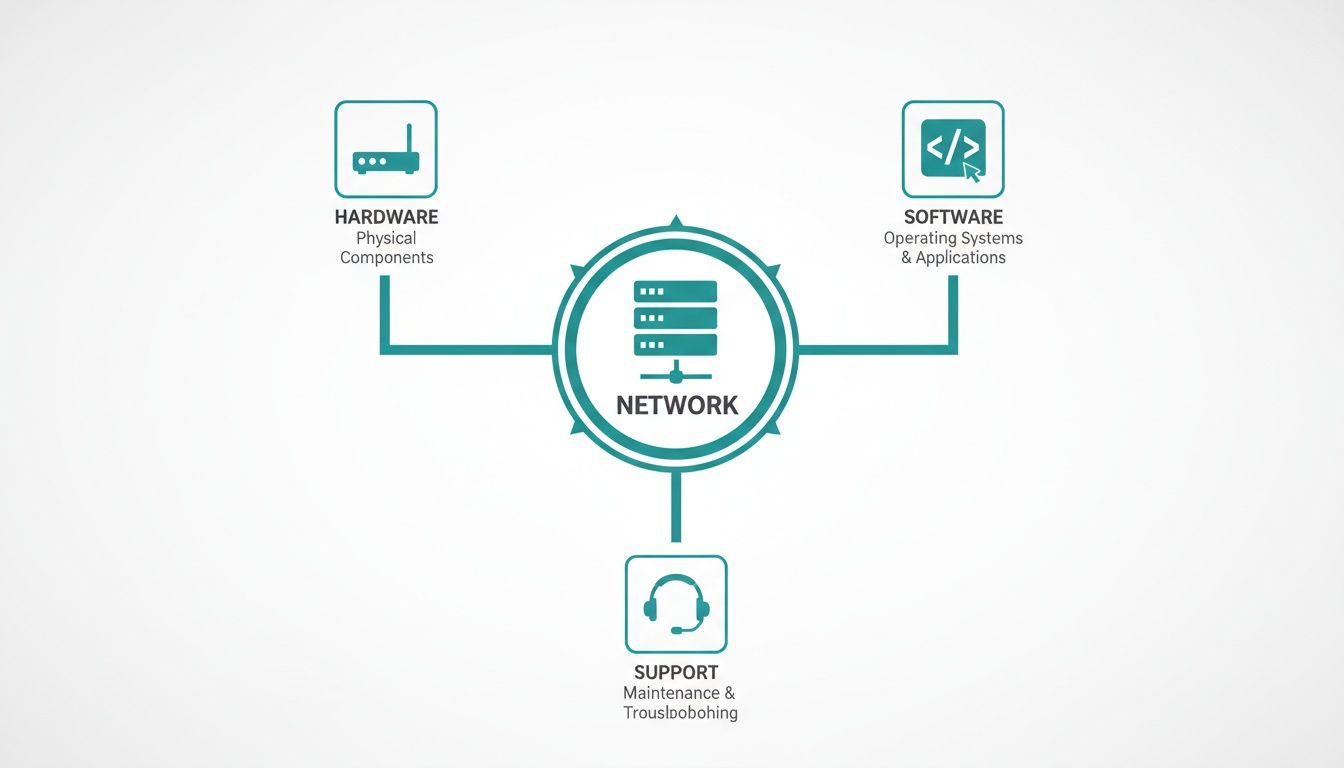
As you can see, a strong network is much more than just physical gear. It's a complete ecosystem where software intelligence and expert support are every bit as vital as the hardware itself.
The Brains Behind The Brawn
Working behind the scenes, switching and routing act as the network's intelligent traffic cops. Switches are like the local road managers, directing data efficiently within your building. Routers are the major highway interchanges, connecting your local network to the wider internet. This digital traffic control makes sure data packets move swiftly and avoid bottlenecks, keeping everything running smoothly for every user.
And this infrastructure is becoming more critical by the day. The wireless infrastructure market, which underpins all modern network infrastructure services, was valued at $280.39 billion in 2025 and is projected to explode to $625.34 billion by 2034. This growth is driven by our massive appetite for mobile data, a trend especially relevant for retail businesses analyzing foot traffic or corporate offices that need to secure guest wifi access. You can dive into the numbers yourself in the full wireless infrastructure market report.
The Invisible Layers Of Security And Monitoring
Beyond just moving data around, a truly robust network has crucial, often invisible, layers dedicated to security and monitoring. These systems work around the clock, 24/7, to shield your network from threats and ensure it's always performing at its peak. This is where the real power of sophisticated authentication solutions shines.
For any organization—especially in Education or BYOD Corporate environments—security isn't an option; it's the bedrock of the entire system. A single breach can be catastrophic, making strong authentication absolutely non-negotiable.
This is precisely why advanced security protocols are so essential. They act as the gatekeepers, meticulously checking credentials to ensure only authorized users and devices are allowed on the network. This secure foundation is what enables powerful, user-friendly features like:
- Captive Portals: These are the branded welcome screens for your guest wifi. By integrating simple social login options, they turn a routine connection process into a valuable marketing touchpoint.
- IPSK and EasyPSK: These innovative authentication solutions provide a unique, personal password for every single user or device. This is a game-changer for student housing or corporate offices, where you can grant or revoke access for one person without disrupting anyone else.
Together, these building blocks—high-performance hardware from brands like Cisco and Meraki, intelligent traffic management, and multi-layered security—form the reliable foundation you need. Without a strong core, even the most impressive features will fall flat. To learn more about optimizing the physical layout of your hardware, check out our guide on effective access point design. It's this solid base that makes a modern, secure, and engaging wireless experience possible for everyone.
Transforming Guest Access With Captive Portals
Your guest Wi-Fi is so much more than just an internet connection—it's a massive, untapped opportunity for engagement and marketing. With a smart Captive Portal and the right authentication solutions, you can transform a simple login into a valuable, branded interaction that works for both you and your visitors.
Think of a Captive Portal as your digital front door. It’s the very first thing someone sees when they hop onto your guest wifi network. Instead of a bland password box, they’re met with a custom splash page that shows off your brand, highlights a promotion, or shares useful info. Suddenly, an IT chore becomes a direct line to your audience.

This welcome experience is your chance to make a real impression. It doesn't matter if you're running a busy Retail shop or a huge Education campus; that splash page sets the tone for their entire visit.
Effortless Logins That Build Connections
One of the coolest features of a modern Captive Portal is offering social login options. This lets guests connect using credentials they already have, like a Facebook or Google account. The whole process is quick, familiar, and totally painless for them. No more trying to type a crazy, long password on a tiny phone screen!
This social wifi approach is a classic win-win. Your guests get online in just a few seconds, which immediately creates a positive experience. In return, you can transparently and ethically gather valuable, non-personal demographic data that helps you understand who is actually visiting your space.
A seamless login experience isn't just about convenience; it's about reducing friction. For a shopper in a mall or a visitor at a corporate office, a quick and easy Wi-Fi connection significantly improves their overall perception of your brand.
This data can be a game-changer. A retail center might analyze visitor demographics to bring in the right mix of stores, while a hotel can use the insights to personalize guest offers. If you want to see exactly how this works under the hood, you can explore what a modern Wi–Fi Captive Portal is truly capable of.
Advanced Security For The BYOD Era
While a great guest experience is crucial, security always has to come first. This is especially true in BYOD Corporate and Education settings where everyone brings their own devices. Just imagine handing out a single Wi-Fi password to hundreds or even thousands of people—it’s a security nightmare waiting to happen. If one person shares it or a device gets compromised, your whole network is exposed.
This is where advanced authentication solutions like IPSK (Individual Pre-Shared Key) and EasyPSK come into play. These systems, often running on reliable hardware from vendors like Cisco and Meraki, offer a much more intelligent and secure way to manage access.
Instead of one password for everyone, IPSK generates a unique, personal key for each user or device.
- For Students: Every student in a dorm gets their own private key, so their devices are secure without having to share a password with the entire building.
- For Employees: In a BYOD Corporate environment, each employee's phone and laptop gets a separate key, keeping their access isolated and secure.
- For Long-Term Guests: A visitor staying for a week can be issued a personal key that’s easily revoked when they leave, without impacting anyone else.
This approach gives you incredibly fine-grained control. You can grant, change, or revoke access for a single user instantly, without disrupting service for anyone else. It beautifully blends the simplicity of a password with the powerful security of individual user accounts, making it an essential tool for any organization managing a diverse network.
Tailoring Network Services For Your Industry
A powerful network strategy is never a one-size-fits-all solution. The best network infrastructure services are built to solve the unique challenges and goals of your specific industry. What works for a sprawling university campus is totally different from the needs of a busy retail center or a secure corporate headquarters.
Let’s dive into how these services are customized for different environments. This isn’t just about providing internet; it’s about building a strategic asset that drives specific outcomes—whether that’s boosting student engagement, increasing retail sales, or protecting sensitive corporate data. The key is using the right tools for the job, built on a solid foundation of hardware from industry leaders like Cisco and Meraki.
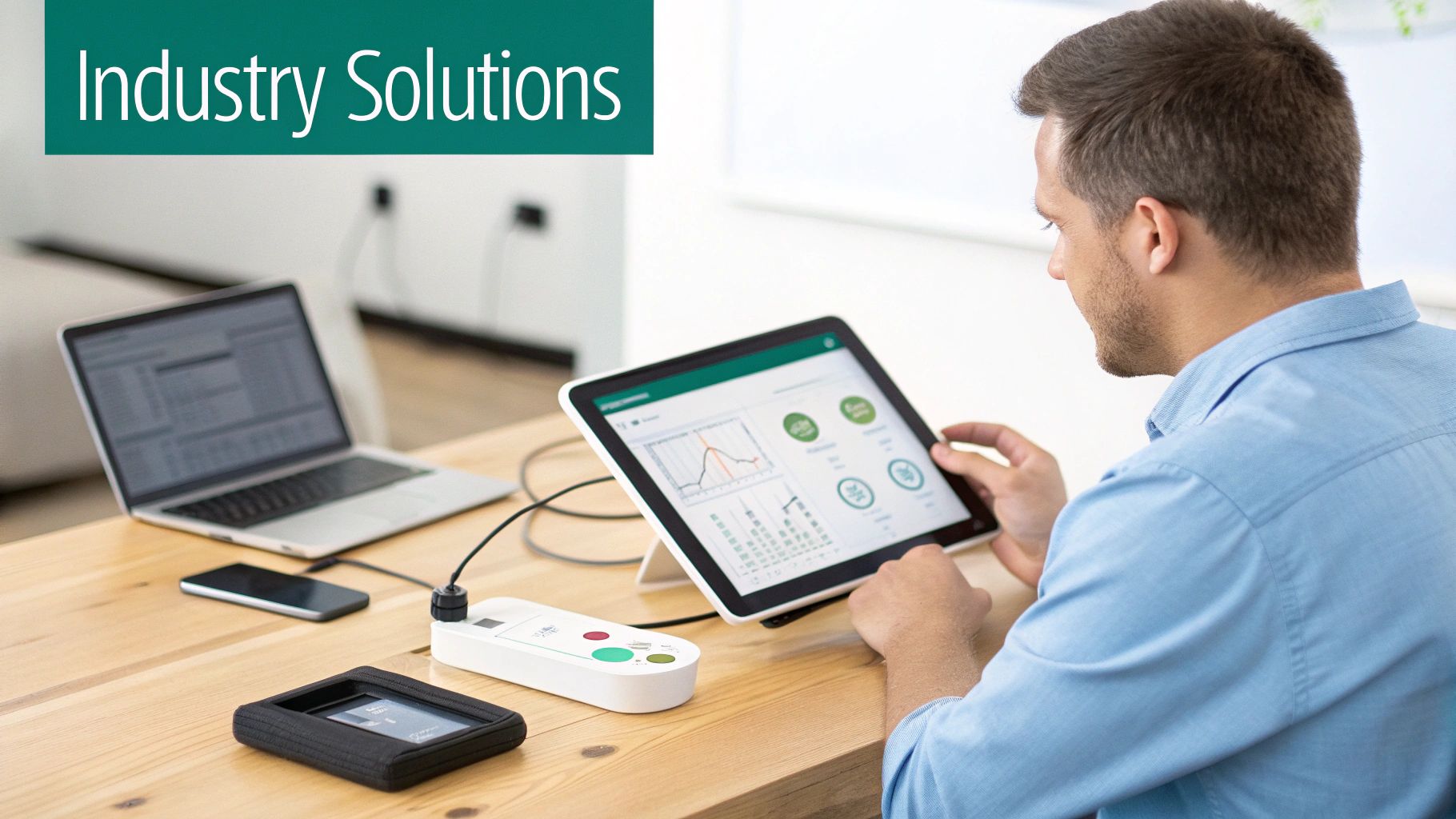
This focused approach is why the telecom network infrastructure market is growing so rapidly. It's projected to climb from $211.10 billion in 2025 to a massive $355.00 billion by 2035. This growth is fueled by booming demand in places like educational campuses and shopping centers, where high-speed, reliable connectivity is essential for supporting thousands of simultaneous users. You can find more on this explosive market growth in the full telecom infrastructure report.
To illustrate how this works in practice, let's compare a few key sectors. Each one has a distinct primary challenge that requires a very specific network solution.
Industry-Specific Network Solutions At A Glance
| Industry Sector | Primary Challenge | Key Network Solution |
|---|---|---|
| Education | Securely managing thousands of student-owned devices (BYOD) | Individual Pre-Shared Keys (IPSK) for per-user access control. |
| Retail | Understanding customer behavior to boost sales and loyalty | Social Wi-Fi with Captive Portals to gather analytics and engage shoppers. |
| Corporate | Providing seamless, secure guest access without compromising the internal network | Guest Wi-Fi with Azure AD integration for automated, time-based access. |
As you can see, the "right" network depends entirely on what you need it to accomplish. Now, let’s dig a little deeper into each of these use cases.
Education: Secure Networks For Modern Learning
In the Education sector, the challenges are immense. Campuses are often like small cities, with thousands of students, faculty, and staff all bringing their own devices (BYOD) and expecting seamless connectivity everywhere. The primary goal is to provide a fast, reliable network that’s also incredibly secure.
This is where advanced authentication solutions like IPSK (Individual Pre-Shared Key) become indispensable. Instead of a single, shared password for an entire dorm—a huge security risk—IPSK gives each student their own unique Wi-Fi key. This means if one student’s device is compromised, it doesn’t affect anyone else, and admins can grant or revoke access instantly.
Retail: Turning Wi-Fi Into A Marketing Engine
For the Retail world, the network serves a completely different purpose. Here, guest Wi-Fi is a powerful tool for understanding and engaging with customers. When a shopper connects via a Captive Portal using social login, they get quick internet access, and the retailer gets valuable, anonymized demographic data.
For a retailer, every Wi-Fi connection is a conversation. It's a chance to learn who your customers are, how long they stay, and how often they return—insights that are pure gold for marketing and operations.
This social Wi-Fi data allows store owners to see foot traffic patterns, identify peak hours, and measure the impact of marketing campaigns. A well-designed system can even deliver targeted coupons directly to a shopper’s device as they browse, creating a personalized experience that drives sales and loyalty. The same logic applies to other public-facing venues, as we cover in our guide on Wi-Fi solutions for hotels.
Corporate: Secure And Seamless Guest Access
In a BYOD Corporate environment, security is everything. While employees need access to internal resources, visitors and contractors require a separate, secure guest Wi-Fi network that keeps them completely isolated from sensitive company data. The trick is to make this process seamless for guests without compromising that security.
Modern network infrastructure services solve this by integrating with existing identity management systems. For instance, a Captive Portal can connect directly to platforms like Azure AD. When a visitor arrives, they can be granted temporary, secure access that automatically expires after their meeting. This automates guest onboarding, cuts down the administrative work for IT, and ensures the internal network remains protected. It's the perfect balance of professional hospitality and robust security.
Choosing The Right Partner For Your Network Needs
Building a powerful, secure network is so much more than just buying the latest hardware off a shelf. It’s a complex puzzle of design, deployment, security, and day-to-day management. That’s why picking the right partner for your network infrastructure services is one of the most critical decisions you'll make—it determines whether your investment pays off for years to come.
Think of it like building a custom home. You wouldn't attempt it without an experienced architect and a skilled construction crew. Your network is the digital foundation of your business, and it deserves that same level of professional expertise. A great partner doesn’t just sell you boxes; they become an extension of your team, genuinely invested in your success.
Look For Expertise In Leading Hardware
Your network is only as strong as its weakest link, which makes starting with top-tier hardware non-negotiable. You’ll want a partner with proven, certified expertise in industry-leading equipment from vendors like Cisco and its cloud-managed Meraki line. These brands are legendary for their reliability, security, and performance, especially in demanding environments.
A partner who lives and breathes the Cisco Meraki ecosystem can design a solution that’s perfectly matched to your specific needs. They get the subtle differences between deploying Wi-Fi in a busy Retail store versus a sprawling Education campus, ensuring you get flawless coverage and performance right out of the gate.
Beyond The Box: A Focus On Solutions
The best partners know that hardware is just the beginning. They’re laser-focused on delivering complete solutions that solve real-world business problems. This means they should be just as fluent in modern access control and user engagement as they are in routing and switching.
For instance, your partner should be able to expertly implement:
- Advanced Authentication Solutions: They need a deep understanding of technologies like IPSK and EasyPSK. These are absolutely critical for securing BYOD Corporate environments or student housing networks where countless personal devices connect daily.
- Engaging Captive Portals: They should have the chops to build and deploy branded Captive Portals that enable seamless social login and turn your guest wifi into a powerful marketing tool.
A true technology partner brings more than just technical skill; they bring a strategic mindset. They should be asking why you need a certain feature and how it aligns with your bigger business goals, whether that’s improving the customer experience or tightening up security.
This solutions-first approach guarantees your network isn't just a utility, but an active contributor to your objectives.
The Integration And Support Checklist
Finally, a great partner gets that your network doesn’t exist in a bubble. It has to play nicely with the other systems you rely on every day. As you evaluate potential partners, it’s crucial to ask the right questions to make sure they can deliver a cohesive, well-supported system that can grow with your business.
Before you sign on the dotted line, get clear answers to these key questions:
- Deployment and Design: Do you perform on-site surveys to guarantee optimal hardware placement? Can you provide a detailed network design plan before a single cable is run?
- Integration Capabilities: How will you connect the guest wifi system with our existing marketing automation or CRM platforms?
- Ongoing Management: What kind of ongoing support and monitoring do you offer after the installation is complete?
- Security Expertise: How do you make sure our network stays protected against new threats, especially in a BYOD environment?
Finding a partner who can answer these questions with confidence is a game-changer. For a deeper dive into what a comprehensive planning process entails, our guide on professional network design services breaks down these critical first steps. A partner who masters both the technology and your business needs will help you build a network that becomes a true strategic asset.
Your Network Is Your Greatest Business Asset
We've spent this guide breaking down the components of modern network infrastructure services, but now it’s time to look at the big picture. It’s easy to see your network as just another line item on the IT budget, but that’s a mistake. It’s actually a powerful strategic asset—one that can genuinely drive business growth.
A professionally built network is so much more than cables and access points; it's the central nervous system of your entire operation.
When you pair reliable, high-performance hardware from brands like Cisco and Meraki with smart software, you create a platform that delivers both connection and insight. Think about it: for a Retail store, this turns your guest Wi-Fi into a marketing engine using social login and customer analytics. For an Education campus, it means securely managing thousands of student devices in a BYOD environment with robust Authentication Solutions like IPSK.
From Utility to Strategic Tool
This shift in perspective is everything. A modern network doesn't just provide an internet connection; it actively strengthens your security, delivers critical business analytics, and creates fantastic user experiences. The main takeaway is this: your Wi-Fi network is a foundational tool for engaging with people—customers, students, or employees.
Investing in your network is investing directly in your customer relationships and operational intelligence. Every login, every connection, and every data point is an opportunity to learn, improve, and grow your business.
To make sure your network truly works for you, implementing concepts like network redundancy is crucial for achieving 100% uptime. By using smart tools like Captive Portals and secure access methods like EasyPSK, you can transform a simple utility into a powerful engine for success. It’s time to see how these services can build better experiences for everyone who connects.
Frequently Asked Questions
Still have a few questions about network infrastructure services? We get it. Let’s walk through some of the most common things people ask about guest Wi-Fi, modern security, and how it all fits together.
We'll tackle everything from what a Captive Portal really is to why advanced authentication is so important now. Let's get these questions answered.
What Is A Captive Portal And How Does It Help My Business?
A Captive Portal is simply that branded login page you see before getting onto a public Wi-Fi network. Think of it as a digital front door for your business. It's a fantastic tool that turns a basic internet connection into a genuine chance to connect with your customers.
Instead of just a password box, you can show off your logo, share a special offer, or ask for an email. By including easy social wifi login options, you make it a breeze for visitors to get online while you gather valuable, anonymous demographic info. In short, it turns an IT cost on your Cisco Meraki network into a smart marketing asset.
How Is IPSK Different From A Regular Wi-Fi Password?
Your typical Wi-Fi password is what’s known as a Pre-Shared Key—a single password that everyone uses. The problem? If that one key gets out, your whole network is exposed. IPSK (Individual Pre-Shared Key) is a much smarter and more secure way to handle access.
With an IPSK system, every person or device gets their own unique password for the same network. This is a huge deal for places like Education residence halls, BYOD Corporate environments, or even long-stay hotel guests.
You get the control to grant or revoke access for any single user at any time, without kicking everyone else off. It’s the perfect blend of serious, enterprise-grade security and the simple experience of using a personal password.
This approach, often managed with EasyPSK tools, gives you a level of control that's just not possible with a shared password, and it dramatically improves your overall security.
This image really drives home how much safer an individual key system is compared to the old-school, one-password-for-all model.
Can I Integrate Guest Wi-Fi With My Existing Business Tools?
Yes, absolutely! One of the best things about modern guest wifi platforms is how well they play with the other business tools you rely on. This is where things get really powerful, as it lets you automate tasks and put your data to work.
For instance, you can have email addresses captured from your Captive Portal automatically pushed into your marketing platform or CRM. In a corporate office, you can connect with identity providers like Azure AD to give visiting professionals secure, temporary access. This makes your network a core part of your business operations, not just another utility. The data you gather becomes useful right away.
Ready to turn your network from a simple utility into a strategic business asset? At Splash Access, we specialize in building intelligent, secure, and engaging Wi-Fi experiences on the Cisco Meraki platform. Learn how we can help your business thrive.