Hey there! Let's talk about your coffee shop’s internet. It’s so much more than just a utility—it's a seriously powerful tool for your marketing and customer engagement. The right software is the engine that runs your guest network, managing everything from secure logins to collecting customer insights. It's what turns a simple cost into a real business asset that helps you grow.
Turn Your Cafe Wi-Fi from a Cost into an Asset
Let's be real: just offering "free Wi-Fi" isn't a differentiator anymore. It's an expectation. The real magic happens in how you deliver that connection. Modern coffee shop internet software creates a seamless, secure experience that has a direct impact on how long customers stay, how much they spend, and how often they return.
This isn't just another line item on your budget. Think of it as a strategic investment. By managing Wi-Fi access through a smart system, you're building a professional, reliable environment that attracts a loyal following of remote workers, students, and regulars.
From Basic Wi-Fi to Smart Connectivity
Here's a quick look at how upgrading your Wi-Fi strategy impacts your business.
| Feature | Basic Free Wi-Fi | Smart Wi-Fi Software |
|---|---|---|
| Login Experience | Shared password scribbled on a board | Branded welcome portal, social login, vouchers |
| Security | Minimal, shared password is a weak point | Individual keys, device isolation, enhanced security |
| Marketing | None | Collect emails, run promotions, push surveys |
| Customer Data | Anonymous users | Demographics, visit frequency, dwell time |
| Business Impact | A necessary expense | Drives repeat business and increases sales |
As you can see, the shift is significant. It moves Wi-Fi from a passive amenity to an active part of your growth strategy.
It's More Than Just a Password
The difference between a generic, shared Wi-Fi password and a professional login experience is huge. A great guest Wi-Fi system moves beyond that single password to more secure and user-friendly authentication solutions.
- Captive Portals: Imagine a branded welcome screen greeting every user. This is your digital billboard—perfect for announcing daily specials, upcoming events, or your loyalty program.
- Social Login: Let customers connect using their social media accounts. This simple option, often called social Wi-Fi, is a low-friction way to gather marketing data and boost your online presence.
- Secure Access: You can implement much stronger security with options like IPSK (Individual Pre-Shared Key) or EasyPSK. This is especially important if you have a mix of users, from students to corporate guests in BYOD (Bring Your Own Device) settings.
Of course, this software needs a solid foundation. Reliable hardware from providers like Cisco Meraki ensures your network is stable and can handle the traffic, making your cafe the go-to spot. To truly turn your Wi-Fi into an asset, you need to think about the whole picture, and that starts with the physical setup. For a great overview, check out this guide on essential coffee shop equipment.
The goal is to make connecting to your Wi-Fi part of the customer experience, not a frustrating hurdle. A smooth, branded login builds trust and signals a level of professionalism that customers notice and appreciate.
In the fast-paced world of coffee shops, reliable guest Wi-Fi has become a non-negotiable. We've seen that when access is dependable, customer dwell times can increase by 20-30%. This directly leads to higher return rates and more chances for that extra pastry sale. As these internet cafe trends show, this small change turns your internet from a background utility into a core part of your business growth.
Build a Reliable Network with the Right Hardware
Even the best coffee shop internet software is useless without a solid hardware foundation. Think of it like a high-performance engine; it’s not going to get you very far if the car has flat tires. The standard router you have at home simply wasn't built to handle the demands of a bustling café, a busy retail store, or an education campus packed with BYOD corporate users.
This is where enterprise-grade hardware, especially from proven names like Cisco Meraki, makes all the difference. These systems are specifically designed for high-density environments. That means they can juggle dozens, or even hundreds, of simultaneous connections without breaking a sweat. Investing in this kind of gear is the only way to guarantee the reliable, fast connection your guests now expect.
The right Wi-Fi setup isn't just an expense; it's a direct driver of revenue.
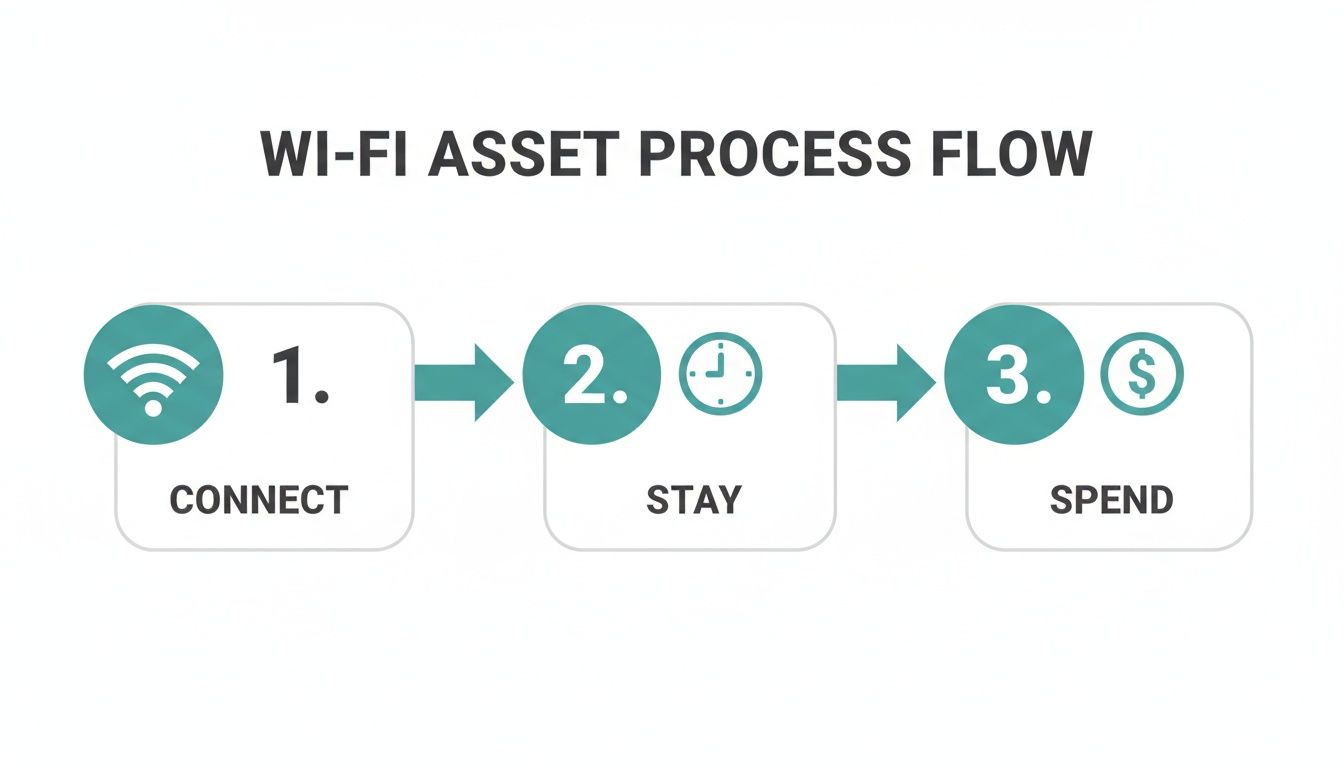
As you can see, the journey is straightforward: a seamless connection encourages customers to stay longer, which naturally leads to them spending more.
Designing a Network That Works
When you're mapping out your hardware setup, everything boils down to three core principles: coverage, capacity, and security. You have to kill the dead spots, make sure the network doesn’t crash during the lunch rush, and keep both your business and your customers safe.
- Coverage: This means strategically placing multiple access points to blanket your entire space with a strong signal—from that quiet armchair in the corner to the sunniest spot on the patio.
- Capacity: It’s about more than just raw speed. Capacity is the network's ability to support a ton of devices at once without the dreaded slowdown that sends customers running.
- Security: Professional hardware comes with security features that home routers simply don't have. This is crucial for managing different authentication solutions, whether it's a simple Captive Portal or more robust options like IPSK.
The goal isn't just to provide internet; it's to provide a consistently excellent connection. A guest who can't reliably join a video call or load a webpage is a customer who probably won't be back.
The Right Gear for a Modern Experience
Upgrading your hardware is what truly unlocks the potential of a modern guest wifi experience. It’s the platform that lets you roll out features like social login, which uses social wifi to effortlessly build your marketing lists in exchange for simple, one-click access.
Need more control? This is the hardware that enables secure authentication solutions like EasyPSK. With it, you can generate unique, temporary passwords for specific users or groups—an ideal solution for co-working spaces or private events. Without the right access points, these powerful software features are just out of reach.
For a deeper dive, check out our guide on selecting the right enterprise WiFi access points to see what hardware will best support your goals. At the end of the day, investing in quality hardware is an investment in the reliability of your entire digital customer experience.
Create a Welcoming First Impression with Captive Portals
Think of your Wi-Fi login screen as the first digital handshake you have with a customer. It's so much more than a simple gateway to the internet; it's your digital welcome mat. Using a Captive Portal as part of your coffee shop internet software turns this technical step into a powerful branding moment.
Instead of just asking for a password, you could greet every guest with a custom-branded page. This is your chance to show off your cafe's personality, promote the daily scone special, or even share a QR code for your loyalty app. The right software, running on solid hardware like Cisco Meraki, makes sure this experience is smooth, fast, and looks great on a phone every single time.
This strategy is incredibly versatile, too. A retail shop can flash a pop-up sale, a university education campus can post event reminders, and a corporate office with a BYOD policy can clearly display its terms of service. It’s all about making that first interaction meaningful.
More Than Just a Login Screen
A well-designed captive portal moves way beyond a single, shared password scribbled on a chalkboard. By offering a few different ways to log in, these flexible authentication solutions can meet your customers where they are while giving you some serious business-building tools.
Here are a few of the most popular options I've seen work well:
- One-Click Access: This is the path of least resistance. Customers simply accept your terms and are instantly online. Perfect for creating a frictionless experience.
- Email or Form Fill: Ask for a name and email address in exchange for free Wi-Fi. It’s a fantastic, low-effort way to build your marketing list for that weekly newsletter.
- Social Login: Let people connect using their existing social media accounts. This is a big win for social wifi, as it's super easy for the customer and can provide you with valuable (and anonymous) demographic insights.
A great captive portal is a chameleon. It adapts to your goals, whether you're focused on marketing, airtight security, or pure convenience. It ensures the guest Wi-Fi experience is a perfect extension of your brand.
Balancing Simplicity and Security
While a simple, one-click login is perfect for most coffee shops, some situations demand a bit more control. This is where more advanced authentication solutions shine. Your captive portal can act as the front door for more secure systems like IPSK or EasyPSK.
For instance, what if a local business rents your back room for a meeting? You could use the portal to issue them temporary, unique Wi-Fi codes (EasyPSK) for their team. This keeps your main network secure while still providing seamless, controlled access. You get the best of both worlds: a welcoming portal for general guest wifi and a secure, managed system for specific users or events.
Ultimately, the goal is to make connecting to your Wi-Fi a seamless and positive experience. For a deeper dive into designing a login page that really works, you can learn more about crafting a powerful captive portal for WiFi. That first impression really does set the tone for a customer's entire visit, making it a critical piece of your digital hospitality.
Secure Your Network with Smart Authentication
So, you’ve designed a beautiful digital welcome mat with your Captive Portal. Now, what happens next? You need to make sure the right people get on your network securely, but without turning the login process into a frustrating puzzle. The authentication method you choose is the digital key that unlocks your Wi-Fi, and it's a critical piece of your coffee shop internet software.
Let's be honest, a single, shared password scrawled on a chalkboard might seem easy. But it's a security headache waiting to happen. You have no idea who is on your network, and one disgruntled ex-employee can force you to change the password for every single customer. This is exactly where smart authentication solutions come into play, offering a huge upgrade in both security and the guest experience.
Beyond the Single Password
Modern systems, often powered by reliable hardware from providers like Cisco Meraki, offer far more elegant solutions. Instead of one key for everyone, you can give each user their very own. This is the core idea behind more advanced security protocols that are, believe it or not, surprisingly easy to manage.
- Individual Pre-Shared Key (IPSK): Imagine giving every regular customer or staff member their own private Wi-Fi password. With IPSK, you can. This method ties a unique key to a specific device, meaning you know exactly who is connected at all times. It’s a dramatic improvement for your network security.
- EasyPSK Systems: This takes the concept a step further. EasyPSK lets you generate unique, often time-limited, access codes on the fly. It's the perfect solution for managing temporary access for a private event, a business meeting, or even for students in an education setting.
These methods are especially important in mixed-use environments. A corporate office with a BYOD (Bring Your Own Device) policy or a busy retail space needs to separate guest traffic from its secure internal network. Individual keys are the simplest and most effective way to do it.
The blend of coffee culture and digital connectivity has totally reshaped the guest experience. Wi-Fi software has become an essential tool for understanding your customers and keeping them coming back. Solutions offering IPSK are perfect for corporate offices and educational campuses, while voucher printing can turn one-time visitors into regulars. In fact, as you can discover from these 2025 coffee statistics, footfall analytics can show a 15-25% jump in return rates when these systems are used well.
Finding the Right Balance for Your Business
Choosing the right authentication method really comes down to what your business needs. For a typical coffee shop, a social wifi login through a Captive Portal is fantastic for marketing. But for places that need more control, a more robust system is the way to go.
Think about a university campus providing secure internet for students in their dorms. By using an IPSK or EasyPSK system, the IT department can issue a unique, long-lasting credential to each student for their personal devices. This stops password sharing and makes sure only authorized students can access the network. To make this work smoothly, you often need a powerful backend system; you can learn more about how to setup a RADIUS server to manage these credentials efficiently.
This flexibility is what it's all about. Smart authentication solutions let you match the level of security to the user, ensuring your network is both welcoming for casual guests and properly locked down for sensitive operations.
Turn Your Wi-Fi into a Marketing Engine
Your guest Wi-Fi is so much more than a simple utility. With the right coffee shop internet software, it becomes a powerful tool that can directly boost your bottom line. It’s time to stop thinking of your internet as just a cost and start seeing it as the marketing goldmine it truly is.
When a customer logs into your network through a Captive Portal, you have their undivided attention. This is your chance to turn that connection into a lasting relationship. By integrating features like email collection directly into the login process, you can effortlessly grow your marketing list. Imagine automatically syncing new emails to your newsletter platform without lifting a finger.
This simple, automated process is the first step in creating a direct line of communication with your customers, allowing you to bring them back through your doors with targeted promotions and updates.
Build Your Audience with Social Wi-Fi
One of the most effective ways to build your audience is by offering social login options. Letting customers connect using their social media accounts, often called social wifi, is a win-win. It’s an incredibly simple, one-click process for them, and it provides you with valuable, anonymized demographic data.
You can use these insights to create highly targeted ad campaigns that reach people who are most likely to love your coffee shop.
- Promote to Lookalike Audiences: Find new potential customers who share traits with your current regulars.
- Retarget Past Visitors: Remind people who have visited before about your new seasonal drink or special offers.
- Understand Your Customer Base: Gain a better understanding of the age and interests of your typical visitor to tailor your marketing messages.
This data-driven approach, supported by a robust network from providers like Cisco Meraki, allows you to spend your marketing budget much more effectively.
Your Wi-Fi network is the single best tool you have for understanding who your customers are. By using the data it provides, you can move from generic marketing to personalized campaigns that get real results and build a loyal community.
Create New Revenue Streams
Beyond marketing, your guest wifi can also become a direct source of revenue. For many businesses—from busy coffee shops to retail centers and BYOD corporate environments—offering tiered internet access is a fantastic way to cater to different user needs while generating income.
A built-in billing gateway lets you create premium, high-speed internet packages for power users who need a reliable connection for video calls or large file downloads. This is also the perfect model for co-working spaces or education campuses that need to manage paid access. Just like more advanced authentication solutions like IPSK or EasyPSK offer enhanced security, a billing gateway provides a flexible way to monetize your network investment.
By combining marketing and monetization, your Wi-Fi becomes a self-funding asset. To get the most out of it, explore how these strategies fit into a larger plan with these effective coffee shop promotion ideas.
Navigate Data Privacy and Build Customer Trust
Collecting customer information through your coffee shop internet software is an incredible tool for marketing, but it comes with a huge responsibility. People are more aware of their digital footprint than ever, and how you handle their data directly shapes how much they trust your brand. Transparency isn't just a nice-to-have anymore; it's a must.
This means your privacy policy and terms of service need to be crystal clear. Customers connecting to your guest wifi should know exactly what data you're collecting—whether it's an email address from a captive portal or anonymous demographic info from a social wifi login—and precisely how you intend to use it. This isn't just good business sense; it's a legal necessity.
Meeting Modern Privacy Standards
Regulations like GDPR have raised the bar for data protection globally. Even if you aren't based in Europe, adopting these principles is a wise move. It sends a powerful message: you respect your customers' privacy and are serious about protecting their information.
If you're running on more sophisticated hardware like Cisco Meraki, it’s vital to understand how your specific system handles data. This gear is built with security at its core and includes features that help you manage everything responsibly. We've put together a detailed guide on Meraki and the GDPR that walks you through making sure your setup is fully compliant.
Building trust is about more than just a legal document. It's about showing your customers you value their privacy as much as they do. A clear, upfront approach sets you apart and fosters long-term loyalty.
Best Practices for Building Trust
Being upfront and responsible with data is a key differentiator. It shows you're not just a place to get coffee but a business that respects its community. This is especially true for environments like education, retail, and BYOD corporate sectors, where data sensitivity is a top priority.
Here are a few practical tips to live by:
- Be Transparent: Clearly state what information you collect and why. Ditch the legal jargon and use plain English.
- Provide an Opt-Out: Make it incredibly easy for users to unsubscribe from any marketing communications. No hoops to jump through.
- Secure Your Data: Use solid authentication solutions like IPSK or EasyPSK to protect user connections and the data they're sending over your network.
- Collect Only What You Need: If you don't need their phone number, don't ask for it. Keep your data requests minimal and relevant to the service you're offering.
In the end, how you handle data privacy is a direct reflection of your brand's values. When you put customer trust first, you're not just dodging legal headaches—you're building a stronger, more resilient business that people will want to come back to again and again.
Ready to transform your guest Wi-Fi into a secure, trusted, and powerful marketing asset? With Splash Access, you can build a seamless and compliant guest experience that grows your business. Visit Splash Access to get started today!