If you're running a care home, you've probably felt this shift already. A family still may hear about you through a hospital contact, a friend, or a local professional. But before they call, they search. They compare. They read reviews, scan photos, check your Google listing, and decide whether your website feels reassuring or dated.
That change matters because care home marketing strategies can't rely on brochures and reputation alone anymore. Families make high-stakes choices under pressure, and they want clear answers fast. The providers who win attention now are the ones who show up well online, answer questions honestly, and make every interaction feel trustworthy from first search to first visit.
The New Reality of Choosing a Care Home
A common scenario plays out like this. A care home manager invests in printed materials, attends local events, and maintains good relationships in the community, yet inquiries feel inconsistent. Occupancy pressure rises, families ask sharper questions, and the homes getting attention often aren't the oldest names in town. They're the ones that are easiest to find and easiest to trust online.

That's not a small market shift. The global caregiving market was estimated at $218.5 billion in 2024, and the U.S. home care market is projected to reach $176.3 billion by 2032, according to caregiver market statistics. More demand sounds good, but it also means more operators competing for the same family attention.
The journey starts before your phone rings
Families rarely arrive as blank slates now. By the time they contact you, they've usually formed impressions based on your search presence, your reviews, your photos, and whether your messaging sounds helpful or evasive.
That changes what good marketing looks like.
- Visibility matters first: If you don't appear when someone searches locally, you may never make the shortlist.
- Trust matters immediately: Families judge warmth, safety, and professionalism before they speak to a staff member.
- Conversion matters next: A confusing website, weak follow-up, or poor visitor experience can waste hard-won interest.
Many families are also trying to understand financial reality at the same time they're evaluating care quality. A practical resource on understanding assisted living costs can help explain the kind of questions they bring into that process.
Modern tools should make care feel more human
The answer isn't louder promotion. It's better alignment between what families need and what your care home presents. Your Google Business Profile, website, reviews, staff communication, and on-site experience should feel like one joined-up system.
Practical rule: Families don't separate marketing from care quality. If your digital experience feels disorganized, they assume your service may feel the same.
That applies on site too. When visitors tour the home, every touchpoint counts, including connectivity, convenience, and confidence in your environment. Even operational topics such as reducing technology-related hazards in nursing homes shape how modern families think about professionalism and resident wellbeing.
The strongest care home marketing strategies in 2026 do one thing exceptionally well. They build trust across a hybrid journey. Search, website, review profile, visit, follow-up. Every step has to work together.
Marketing to the Hearts and Minds of the Family
The biggest mistake in care home marketing is obvious once you see it. Many homes still market as if the resident is the only audience. In reality, the decision is often driven, researched, filtered, and emotionally processed by an adult child or another family decision-maker.
That's why generic messaging falls flat. A smiling stock photo and a broad promise of “excellent care” won't answer the real questions that stop a family from booking a tour. Guidance on marketing your care home with question-led content makes this point clearly. Content that addresses pricing clarity, care level fit, admission steps, and other family concerns tends to work better than broad promotional copy.
What families are really trying to solve
Most families aren't browsing casually. They're trying to reduce uncertainty. They want to know whether their loved one will be safe, whether the home is the right fit, how quickly admission can happen, what daily life looks like, and whether the staff will communicate clearly.
They also want emotional reassurance without being sold to.
Families don't need more slogans. They need fewer unknowns.
A useful mindset is to stop thinking in terms of demographics and start thinking in terms of decision pressure. The adult daughter juggling work, siblings, appointments, and guilt is not asking for clever branding. She's asking for clarity.
The Family's Decision-Making Journey
| Stage | Key Questions | Effective Marketing Touchpoints |
|---|---|---|
| Awareness | Is it time to consider a care home? What signs are we missing? | Educational blog posts, social posts that explain care options, referral partner recommendations |
| Consideration | What level of care does my parent need? What does daily life look like? What will this cost? | Service pages, FAQs, virtual tours, transparent pricing guidance, review profiles |
| Decision | Can we trust this team? How does admission work? What happens after the tour? | Strong follow-up, tour booking pages, staff introductions, clear contact options, visitor Wi-Fi with simple onboarding |
Build content for stressed decision-makers
Your best content usually answers practical questions in plain English.
A care home website should include:
- Pricing clarity: Explain how your pricing works, what influences cost, and what families can expect during assessment.
- Care level fit: Spell out who you're right for and who you're not right for.
- Admission steps: Show the process from first inquiry to move-in.
- Visiting policies and communication: Reassure families that contact and transparency matter.
- Proof of daily life: Use real photos, real routines, and real examples of support.
That same logic should shape your follow-up emails, social content, and tour experience. If families repeatedly ask the same questions, that's not a sales problem. It's a messaging problem.
A better visitor experience also reinforces confidence. Even details like easy access, clean digital sign-in, and simple connectivity affect perception. In healthcare environments especially, guest satisfaction improvements often come from removing friction rather than adding more information.
Stop writing for yourself
Many care homes describe what they're proud of. Fewer explain what families need to know. Those are not the same thing.
Write pages and campaigns around questions such as:
- How quickly can my parent move in?
- What if their needs change?
- Can we visit often?
- Who updates the family?
- What makes this home feel safe and calm?
If your marketing answers those questions well, your inquiry quality improves. Not because you pushed harder, but because you made it easier for the right people to say yes.
Building a Trustworthy Digital Front Door
Your website and local search presence are your round-the-clock reception team. If they look tired, confusing, or incomplete, families assume your operation may feel the same. That sounds harsh, but it's true.
Online discovery dominates the early stage of this decision process. Families often start with searches like “care home near me” or “best dementia care home near me,” and guidance for the sector consistently points to SEO, Google Business Profile optimisation, reviews, social media, and paid search as core priorities. One industry guide also recommends posting on social media 2 to 3 times per week and updating your Google Business Profile monthly in its advice on the future of care marketing.

Fix the basics first
A trustworthy digital front door has a few essential elements:
- Mobile-first pages: Families often research on phones during stressful moments, not from a desktop at leisure.
- Clear navigation: Services, care types, contact options, and tour requests should be easy to find.
- Real photography: Show your actual environment, residents' spaces, communal areas, and staff.
- Simple calls to action: “Book a tour,” “Speak to our team,” and “Download our admissions guide” beat vague contact pages.
If your homepage reads like a corporate brochure, rewrite it. Start with who you help, what care you provide, where you're located, and how to take the next step.
Own local search before buying more ads
A lot of care homes jump into paid media before fixing local visibility. That's backwards. Your Google Business Profile is one of the first things families may see, and it often influences whether they click through at all.
Here's the checklist I'd use:
Complete every core field
Add accurate categories, contact details, opening information, and service descriptions.Use current images
Upload recent, high-quality photos of rooms, communal spaces, dining areas, and exterior access.Request reviews consistently
Don't leave review generation to chance. Build it into resident family communication and post-admission follow-up.Respond like a human
Thank positive reviewers warmly. For negative reviews, stay calm, respectful, and specific.Publish updates regularly
Share community events, staff highlights, seasonal activities, and practical updates.
Answer search intent, not just keywords
Good SEO for care homes isn't about stuffing town names into pages. It's about matching what families ask. Build pages and articles around specific concerns, not abstract services.
Examples of useful topics include:
- what residential care includes
- how dementia support differs from general elderly care
- what happens during a care assessment
- what families should bring on move-in day
- how visiting works after admission
A useful test: If a page sounds impressive but doesn't reduce anxiety, it probably won't convert.
If you want to think about your website as an entry point, it helps to borrow the same mindset used in digital access design. A clean, guided experience matters online just as much as it does in connectivity tools such as an internet portal experience.
Reviews are part of your sales process
A review profile isn't just reputation management. It's sales enablement. Families use reviews to validate what your website claims.
Don't chase perfection. Chase responsiveness and credibility.
A strong review strategy includes:
- Asking at the right moments: after positive family feedback, after smooth move-in support, after a successful care milestone
- Making it easy: direct links, short instructions, and no unnecessary steps
- Using reviews on site: feature selected testimonials on relevant service pages, not only on a generic testimonials page
The best care home marketing strategies make the digital front door feel calm, transparent, and welcoming. That's the standard.
Turning Your Facility into a Smart Marketing Hub
Most care homes still treat Wi-Fi as a utility. That's a missed opportunity. In retail, education, and corporate BYOD environments, organisations already use guest access as part of a broader experience strategy. Care homes can do the same, and they should.
Cisco and Meraki are already familiar names in environments that need reliable, manageable connectivity across visitors, staff, residents, and mixed-device usage. That matters because care homes face a similar challenge. You need secure access, simple onboarding, and a visitor experience that doesn't create extra work for the front desk.

Guest Wi-Fi is more than an amenity
When a family visits for a tour, they often stay on site long enough to check messages, coordinate with siblings, look up details, or share impressions. If your guest Wi-Fi is clunky, password-protected with a handwritten code, or unavailable in key areas, that hurts the experience.
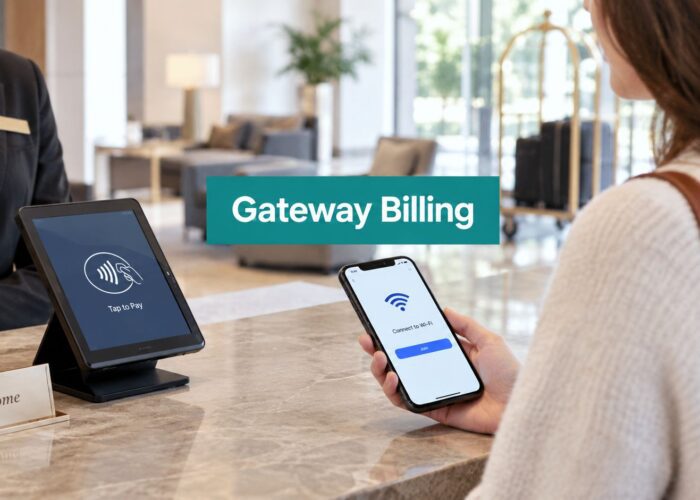
A captive portal fixes that. Instead of giving visitors a generic password, you can present a branded splash page with clear access options. That could be email login, social login, or another controlled method that suits your setting and privacy requirements. In practical terms, guest Wi-Fi becomes part of your marketing and service design.
The value is straightforward:
- Better first impressions: branded, professional onboarding feels modern and organised
- Lead capture opportunities: visitors can opt in through a simple access flow
- Cleaner analytics: you get a stronger sense of on-site engagement patterns
- Less reception friction: staff aren't repeatedly solving the same access problem
Social WiFi and social login emerge as useful terms, not buzzwords. They describe a smoother path for visitors to connect while giving your team a more structured way to understand engagement.
Separate visitors from long-term trusted users
Care homes don't only host one-time visitors. They also support relatives who return often, professionals who need access, residents with personal devices, and sometimes staff using BYOD policies. That's why a one-size-fits-all guest network creates avoidable risk and confusion.
Authentication solutions matter.
With Cisco Meraki environments, solutions built around IPSK and EasyPSK can help create more controlled access for different user types. A returning family member can have a more appropriate long-term access path than a one-time tour visitor. That separation improves usability and supports better security hygiene without making the process feel technical or intimidating.
Borrow what already works in other sectors
Education uses structured Wi-Fi access because campuses deal with changing users, guest access, and device diversity. Retail uses guest Wi-Fi because dwell time, repeat visits, and experience quality matter. Corporate offices use BYOD-aware onboarding because unmanaged access creates problems fast.
Care homes sit at the intersection of all three.
You have:
| Need | Comparable sector | Why it matters in a care home |
|---|---|---|
| Short-term visitor access | Retail | Tours and family visits should feel smooth and professional |
| Returning multi-device users | Education | Family members and residents often reconnect regularly |
| Policy-based device access | Corporate BYOD | Different users need different access rules and protections |
A smart Wi-Fi setup doesn't make your care home feel more technical. It makes it feel more considered.
Make the building work harder for marketing
This is the angle most care home marketing advice misses. The physical facility itself can support marketing if you design the experience properly.
A visitor who books a tour online, arrives at reception, joins branded guest Wi-Fi, receives a clean onboarding flow, and later gets thoughtful follow-up has experienced one coherent brand. The technology didn't replace human care. It reinforced it.
That's why I'd treat Wi-Fi marketing as a serious part of modern care home marketing strategies, not an IT afterthought. If your building already attracts prospects, families, and community visitors, your connectivity layer should help you capture insight, reduce friction, and support trust.
Engaging Your Community Online and Off
Some care homes post on social media like they're filing compliance paperwork. That doesn't build trust. It creates distance.
Families want to see life, not announcements. They want evidence that your home feels warm, active, safe, and attentive. That means your online presence should reflect your real community, not just your logo and holiday opening hours.
Share moments that reduce doubt
The most useful social content is simple and specific. Show a gardening session, a birthday celebration, a staff spotlight, a mealtime detail, or a quiet communal area prepared for family visits. Don't force sentimentality. Just show the environment as it is.
Good community-facing content often includes:
- Everyday routines: not only special events, but the normal rhythm of care
- Staff presence: the people families will trust with communication and support
- Helpful education: short posts answering common family concerns
- Local involvement: partnerships, talks, workshops, and events with nearby organisations
That approach turns social media into proof, not promotion.
Offline partnerships still matter
Digital visibility gets you found. Relationships still get you trusted. Care homes should maintain active contact with hospitals, discharge teams, geriatric care managers, local groups, and community organisations. Those relationships don't thrive on occasional brochure drops. They grow when your home becomes known as a useful, responsive local resource.
A practical mix might include educational events, carer support sessions, dementia-friendly community activity, or open informal visits for local professionals. Then your digital channels amplify what happened in person.
That loop works well:
- Host a useful local event.
- Capture real photos and practical takeaways.
- Share the story on social platforms and email.
- Give future families a richer sense of your community.
Don't ignore the on-site experience
Community engagement doesn't stop at the front door. If a family attends an event, tours the home, or visits regularly, their practical experience shapes your reputation. Fast, simple access to services matters, including connectivity.
In healthcare and senior living settings, better patient engagement strategy often comes from joining up physical experience with digital follow-up. That could mean a smooth guest Wi-Fi journey, a helpful event registration process, or an easy way to stay informed after a visit.
If your community outreach feels welcoming online but frustrating in person, families will remember the frustration.
The best care home marketing strategies don't split online and offline into separate worlds. They make them support each other.
Driving Action with Open Days and Paid Media
Once your foundation is solid, you need campaigns that prompt action. Not vague awareness. Action. That usually means tours, open days, assessment requests, and direct enquiries from families already close to a decision.
Run open days that feel useful, not salesy
A good open day lowers pressure. It gives families space to observe, ask questions, and picture their loved one in the environment.
Keep it practical:
- Offer guided and informal options: some visitors want structure, others want room to absorb
- Include the right people: admissions staff, care leads, and a familiar face from daily operations
- Answer common questions openly: care fit, admissions process, visiting expectations, and family communication
- Make follow-up easy: booking forms, take-home information, and a clear next step
Virtual tours can support this too, especially for family members who live further away or share decision-making across locations.
Use paid media with intent
Paid search and paid social work best when they support a clear next step. Don't run ads to a generic homepage. Send people to focused pages built around one action, such as booking a tour or requesting a callback.
There's also a useful planning benchmark here. Home care marketing guidance suggests agencies often allocate around 4% of revenue to sales and marketing, as discussed in home care marketing budget guidance. For care homes, that budget tends to work best when focused on high-intent channels such as local search, reputation management, and referral development.
That should shape your priorities.
A sensible paid media stack often looks like this:
| Channel | Best use | Common mistake |
|---|---|---|
| Google Ads | Capture high-intent local searches | Sending traffic to broad, unfocused pages |
| Facebook and Instagram Ads | Stay visible to adult children and promote events or guides | Targeting too broadly with generic creative |
| Retargeting | Reconnect with families who already showed interest | Running ads without a strong landing page or follow-up process |
Use visitor data more intelligently
A smart guest Wi-Fi setup can support paid media without feeling intrusive. If your visitor access flow includes compliant opt-in and clean data capture, you can build better follow-up audiences and remarketing sequences after tours or events.
That matters because many families don't decide on the first visit. They compare, discuss, delay, and return. If your home stays visible with relevant follow-up, you keep momentum alive.
Good campaigns don't force urgency. They reduce forgetfulness.
A practical sequence might include:
- Search ad or referral drives the tour booking.
- Family visits the home and uses guest Wi-Fi.
- Follow-up email answers common post-tour concerns.
- Retargeting ads reinforce trust with reviews, staff stories, or admissions guidance.
That's a much stronger system than running isolated ads and hoping the intake team can rescue weak leads.
Measuring What Matters for Sustainable Growth
A lot of care homes still evaluate marketing by feel. That leads to wasted spend and endless debates about what's “working.” You need a funnel view instead.
An effective marketing programme treats lead generation as measurable, tracking inquiries, referral performance, and conversion rates to identify which channels deliver the best return. Guidance on measurable home health marketing funnels also points to tracking inquiries, referral pipeline performance, satisfaction levels, hospitalisations, and risk events so teams can connect marketing effort with real outcomes.

Track the metrics that change decisions
Start with questions that management can act on:
- Which channels produce real inquiries
- Which inquiries progress to tours
- Which tours convert to admissions
- Which referral sources bring the best-fit residents
- Where follow-up slows down or breaks
Those answers are far more useful than vanity metrics such as likes or impressions on their own.
Connect digital and physical behaviour
The strongest insight comes when you stop separating online and on-site data. Website analytics can tell you what content families read before they enquire. Call handling records can show how quickly the team responds. Visitor systems and managed guest Wi-Fi can help you understand on-site engagement and repeat visits in a more connected way.
That joined-up view helps you spot issues fast.
For example:
| Funnel stage | What to examine | What the problem may be |
|---|---|---|
| Awareness | Search visibility, ad relevance, local profile quality | Weak discoverability or poor messaging |
| Consideration | Time on key pages, FAQ use, review engagement | Missing trust signals or unclear information |
| Conversion | Tour bookings, callback speed, post-visit follow-up | Intake friction or weak sales process |
| Retention and advocacy | Family satisfaction, referral activity, review flow | Service communication gaps |
If inquiry volume rises but admissions don't, don't assume demand is bad. Check your message, your follow-up, and your tour experience.
Measure clearly and improve monthly
You don't need a giant analytics stack to start. You do need discipline. Review channel performance, referral source quality, and conversion by stage on a fixed cadence. Then adjust budgets, pages, scripts, and follow-up processes based on what the data shows.
If you want a simple framework for that, this clear guide on ad measurement is useful for keeping campaign evaluation tied to outcomes rather than guesswork.
The best care home marketing strategies are measurable because they're operational, not decorative. When your marketing, admissions process, and visitor experience all feed the same system, growth becomes easier to manage and easier to repeat.
If you want to turn guest Wi-Fi into a practical part of your care home marketing strategy, Splash Access is worth a look. It helps organisations using Cisco Meraki create branded captive portals, support guest Wi-Fi journeys, and manage authentication options such as IPSK and EasyPSK. For care homes, that means a smoother visitor experience, cleaner lead capture, and a smarter bridge between on-site visits and digital follow-up.