Hey, have you ever imagined a hotel stay where everything just works? The room is set to your preferred temperature the moment you walk in, and personalized dinner recommendations that actually match your tastes pop up on your phone. This isn't some far-off future; it's what's happening right now with AI in hospitality. Artificial intelligence is quietly becoming the most valuable partner for hotels, resorts, and restaurants, making every guest’s visit smoother, more personal, and far more memorable.
How AI Is Redefining the Guest Experience
Let's think of AI less like a robot and more like the ultimate concierge for your team. It gives your staff the tools and insights they need to provide incredible service, which in turn delights guests and boosts your bottom line. We can skip the dense technical jargon—let's chat about how AI actually works behind the scenes to create these seamless stays, all built on a solid network foundation from technology leaders like Cisco.
The real power of AI in the hospitality world comes from its ability to understand guests on a much deeper level. It goes way beyond just knowing their name and booking dates, tapping into their preferences and past behaviors to craft a truly customized journey from check-in to check-out.

The Role of Smart Connectivity
None of this is possible without a powerful and secure network. A robust guest Wi-Fi system, especially one built on a reliable platform like Cisco Meraki, acts as the digital backbone that connects every intelligent service on your property. The moment a guest connects to your Wi-Fi, their personalized experience begins, usually at the Captive Portal.
This login screen is much more than just a gateway to the internet; it's your first digital handshake.
By offering simple social login or social Wi-Fi options, you can gather valuable, consent-based data that becomes the fuel for AI-driven personalization. This is where modern authentication solutions shine. For example, technologies like IPSK (Identity Pre-Shared Key) or EasyPSK can provide secure, individual network access for every user and all their devices.
This kind of managed security is absolutely critical, particularly when your property hosts a mix of different groups. You need a network that can seamlessly handle a BYOD Corporate event one day, an Education conference the next, and a pop-up Retail shop in the lobby—all without skipping a beat.
A seamless AI-powered experience is built on a foundation of seamless connectivity. The network isn't just a utility; it's the nervous system that allows intelligent guest services to communicate and deliver value in real time.
By linking a strong network with intelligent software, hotels are unlocking a completely new standard of service. The right technology for hospitality is what makes these "wow" moments a reality, transforming a standard visit into an experience guests will want to talk about and come back for.
Key AI Applications in the Hospitality Sector
To get a clearer picture, it's helpful to see how specific AI technologies are being applied across the industry. This table breaks down some of the most impactful applications and the direct benefits they bring to both guests and operators.
| AI Application | Primary Benefit | Example Use Case |
|---|---|---|
| Personalization Engine | Enhanced Guest Satisfaction & Loyalty | Suggesting local attractions or on-site spa treatments based on past behavior. |
| Dynamic Pricing | Maximized Revenue & Occupancy | Adjusting room rates in real-time based on demand, local events, and competitor pricing. |
| Chatbots & Virtual Assistants | 24/7 Guest Support & Staff Efficiency | Answering common questions instantly or processing room service orders via chat. |
| Predictive Maintenance | Reduced Downtime & Operational Costs | Scheduling HVAC maintenance before a system fails based on sensor data. |
| Computer Vision | Improved Security & Operational Analytics | Monitoring lobby traffic to optimize staffing or securing restricted areas. |
| Natural Language Processing (NLP) | Deeper Guest Insights | Analyzing online reviews and survey feedback to identify key areas for improvement. |
Each of these applications turns data into action. From the moment a guest connects to your Wi-Fi to the personalized offers they receive, AI is working in the background to perfect their stay.
Building the Smart Foundation for Hotel AI
Before an AI concierge can recommend the perfect local restaurant or a smart room can adjust the lights to a guest's liking, it all hinges on one critical element: a powerful, reliable network. Think of your hotel’s network as the central nervous system for your entire AI strategy. Without that solid, stable foundation, even the most sophisticated AI tools will simply fail to deliver.
This is why a high-performance network is the absolute, non-negotiable starting point for any hotel serious about AI. The sheer volume of data that AI applications generate—from smart room sensors to operational analytics—demands an infrastructure that can handle it all without breaking a sweat.
The Digital Front Door and Secure Handshake
Your guest Wi-Fi is so much more than a simple amenity; it’s the primary digital touchpoint for nearly every person who walks through your doors. This is where enterprise-grade solutions from industry leaders like Cisco and Meraki are essential, providing the robust connectivity and security that a modern hotel environment needs.
The guest's digital journey usually starts at the Captive Portal. This is your hotel's digital front door, and it's your first real chance to create a personalized experience. By offering simple login options like social login or social wifi, you can, with guest consent, start gathering the data that will eventually power your AI engines. To see this in action, check out our in-depth guide to modern hotel Wi-Fi solutions.
That first interaction sets the tone for the entire stay, making a seamless and secure connection vital.
Managing a World of Devices with Smart Authentication
In any hotel, you’re not just connecting with guests—you’re connecting with their collection of devices. This is especially true in a BYOD Corporate setting, where a single conference attendee might have a laptop, smartphone, and tablet. Your property could be hosting an Education seminar one day and a Retail pop-up the next, each with its own unique connectivity demands.
Trying to manage this diverse device ecosystem securely can be a real headache. That’s where advanced authentication solutions come in.
- Identity Pre-Shared Key (IPSK): This technology gets rid of the old, insecure "one password for everyone" model. IPSK assigns a unique, personal key to each user or device, which massively boosts security and gives you fine-grained control over network access.
- EasyPSK: Building on that idea, EasyPSK simplifies the whole process. It makes it incredibly straightforward for your staff to onboard new users and devices securely, without needing a dedicated IT team to manage it all.
These tools ensure that whether a guest is streaming a movie or a corporate client is accessing sensitive work files, their connection is both private and protected.
A smart network isn't just about speed; it's about intelligent, secure access. By authenticating every device individually, you create a trusted environment where both guest data and hotel operations are safeguarded.
Ultimately, this strong network foundation, built with trusted hardware from Cisco and managed with intelligent software, does more than just provide internet access. It creates the secure, high-capacity framework that AI in hospitality needs to truly shine, turning raw data into amazing guest experiences and smarter operational decisions. Without it, your AI ambitions are just a blueprint without a foundation.
Creating Personalized Journeys with Guest AI
This is where you see the real power of AI in hospitality. It’s about more than just efficiency; it’s about transforming a standard hotel stay into a memorable experience that makes every single guest feel understood. The magic happens when you use AI to drive personalization, fueled by data gathered (with consent, of course) through the guest Wi-Fi.
It all starts the moment a guest connects to your network. A modern guest wifi platform, especially one built on a solid foundation like Cisco Meraki, isn't just about providing internet access. It's a direct line to creating a bespoke experience, and the first touchpoint is the Captive Portal login page.
From Login to Loyalty
Think about what happens when you offer simple, secure login options like social login or social wifi. You immediately begin to get a clearer picture of your guest's preferences. This isn’t about being intrusive; it’s about spotting patterns that help you serve them better. If a guest always logs on super early, the AI can learn this and ping them with a special offer from your coffee shop.
Imagine an AI that remembers a guest from their last visit, recalling their preference for a room away from the elevator or their go-to morning coffee order. Proactively delivering on these small details is what turns a one-time visitor into a loyal regular. For a deeper dive into this, check out our post on customer experience personalization.
This kind of personalized touch is only possible with smart and secure authentication solutions. Tools like IPSK or EasyPSK ensure that every device—from a family's collection of tablets and phones to a professional's laptop at a BYOD Corporate event—gets its own unique, secure connection. That secure foundation is crucial for building the trust you need for guests to feel comfortable.
The 24/7 AI-Powered Concierge
AI isn't just learning in the background; it's also revolutionizing how you communicate with guests. AI-powered chatbots and virtual assistants have become go-to tools for providing instant support, day or night. They can handle common questions, book a spa treatment, or make a dinner reservation without anyone having to wake up a front-desk employee at 3 AM.
AI essentially becomes your digital concierge. It handles all the routine tasks, freeing up your human team to focus on creating those genuine, personal interactions that people remember long after they’ve checked out.
The results speak for themselves. Major hotel brands are already seeing a huge impact from these technologies. A staggering 89% of hotel properties now use AI chatbots to manage guest inquiries, which has led to a 73% reduction in response times. These aren't just clunky FAQ bots, either. They're sophisticated enough to handle multilingual conversations, process bookings, and offer customized travel tips, improving both guest satisfaction and operational agility.
AI in Different Hospitality Settings
This idea of AI-driven personalization isn't just for hotels. The same approach works beautifully across any sector where hospitality is key.
- Education: A university campus can use its Wi-Fi to guide visiting parents to the right building or send prospective students info about campus tours.
- Retail: A mall can analyze foot traffic patterns and send a shopper a coupon for a store they frequently walk past but have never entered.
- Corporate: At a large conference, AI can act as a networking assistant, suggesting relevant people for an attendee to connect with based on their professional profile.
In every one of these scenarios, a powerful Cisco network provides the stable backbone needed for these AI systems to run without a hitch. By connecting the data from the Captive Portal to an AI engine, any property can turn a simple internet connection into a powerful tool for creating truly personal and unforgettable journeys.
How AI Automation Powers Hotel Operations
While your guests are enjoying their stay, AI is hard at work behind the scenes, making sure everything runs like a well-oiled machine. This is where AI moves beyond the front desk and digs into the core of your hotel's operations. Think of it as the central nervous system of your property, creating efficiencies that help you run smarter and more profitably.
It’s all about fine-tuning the back-of-house jobs that guests don't see but definitely feel. From setting room rates to keeping the HVAC running, AI acts as a sharp, data-driven partner. It removes the guesswork from tough decisions and automates the tedious stuff, letting your team focus on what they do best: taking care of guests.
Smarter Revenue and Maintenance
One of the quickest ways AI impacts your bottom line is through dynamic pricing. Modern revenue management systems use AI to process a dizzying amount of data in real-time—market demand, what your competitors are charging, local events, even the weather. Based on that analysis, it automatically adjusts room rates to hit that sweet spot between maximum occupancy and revenue. This is something no human could ever do manually. For a deeper dive, check out our guide on hotel revenue management strategies.
Then there's maintenance. AI is completely changing the game here. Instead of waiting for something to break, predictive maintenance uses sensors on crucial equipment like elevators or air conditioning units. The AI looks for tiny signs of trouble and flags a potential failure before it happens. This lets you schedule repairs on your own time, avoiding guest complaints and expensive emergency call-outs.
Using Network Intelligence to Fuel Operations
So where does all this operational data come from? A lot of it is already flowing through your property's network infrastructure. A solid guest Wi-Fi network, especially one built on platforms like Cisco Meraki, does more than just provide internet access. It becomes a source of anonymous, real-time operational data.
For example, just by looking at Wi-Fi connection patterns, you can get a clear picture of foot traffic.
- Lobby Flow: Pinpoint your busiest check-in times and staff the front desk accordingly.
- Restaurant & Bar Traffic: Know exactly when your food and beverage outlets are packed to optimize staffing and stock levels.
- Conference Areas: See how attendees move between rooms during BYOD Corporate or Education events to improve layouts for next time.
This kind of insight, gathered from the moment someone logs on via a Captive Portal, helps you make smarter decisions. And with secure authentication solutions like IPSK and EasyPSK, every connection is properly managed, whether it's a business traveler's laptop or a customer's phone in your on-site Retail shop.
Think of your Wi-Fi network as the pulse of your property. When you turn it into a sensor, you give AI the data it needs to spot inefficiencies, from saving energy in unused areas to creating more efficient housekeeping routes.
Of course, smooth communication is the glue that holds it all together. AI can automate tasks, but your team still needs to be perfectly in sync. It's worth learning about achieving smooth hotel operations through a unified communication hub, as it's a key piece of the automation puzzle.
At the end of the day, weaving AI into your back-of-house operations creates a system that constantly learns and improves. It connects your people, your technology, and your physical building into an intelligent, responsive loop. The result? A more efficient and resilient hotel that delivers a fantastic guest experience, often in ways they’ll never even know.
From Network Data to Security and Insights
In today's connected world, your data is one of your most valuable assets—and keeping it safe is non-negotiable. This is where an intelligent network, supercharged by AI, becomes a real game-changer. It's not just about flashy guest-facing features; it's also your silent guardian, working behind the scenes to protect your property, your guests, and your business strategy.
Think about the modern hotel environment. It's a complex web of connections. You have guests logging in on personal devices, staff accessing operational systems, and smart devices all sharing the same digital space. This beehive of activity, while great for business, opens up countless doors for security threats. Proactive defense isn't just a good idea; it's essential.

Proactive Security with an AI-Powered Network
An intelligent network, like one built on the Cisco Meraki cloud-managed platform, uses AI to constantly monitor what's happening. It learns the normal rhythm of your property's network traffic and can instantly spot—and shut down—threats before they cause any harm. It's a massive leap forward from the old days of just reacting to problems after they’ve already happened.
This kind of airtight security is made possible through smart authentication solutions. When guests connect via your Captive Portal—whether for a BYOD Corporate event or a simple weekend stay—technologies like IPSK and EasyPSK assign a unique, private key to each device. This neatly isolates their traffic, preventing a single compromised device from taking down the entire network and protecting both your hotel and your guests' sensitive data.
Turning Anonymized Wi-Fi Data into Business Gold
Beyond just locking things down, your guest wifi network is also a goldmine of information about on-site behavior. The same AI that guards your network can analyze anonymized Wi-Fi data to reveal powerful patterns. To be clear, this isn't about tracking individuals. It's about understanding the collective flow of people, giving you a real-time heat map of how your space is actually being used.
With this data, you can start answering critical operational questions:
- Where are the bottlenecks? Pinpoint crowded areas in your lobby or restaurant to improve layouts and create a smoother guest experience.
- When are we busiest? Use foot traffic data to optimize staff schedules, making sure you have the right number of people on the floor during peak hours.
- Are our promotions working? See if that happy hour special or a promotion in an attached Retail space is actually drawing more people in.
This drive to use data for better, more efficient experiences is sweeping the industry. The numbers speak for themselves: 61% of hoteliers believe AI will impact their business within a year, and 73% expect its overall impact to be significant. To keep up, over 90% of operators are planning to increase their IT spending on this kind of technology. You can dig into these trends and learn more about the future of AI in hospitality and its adoption rates.
Building Trust Through Privacy and Transparency
Of course, using data this way demands a serious commitment to guest privacy. It is absolutely crucial that all analytics are based on completely anonymized and aggregated data. The goal is to see the forest, not the individual trees. By being transparent with your guests about how you use this information to improve their stay, you build the trust that forms the bedrock of true hospitality.
The real intelligence of an AI-powered network is its ability to protect and inform at the same time. It secures every connection while providing the anonymous insights you need to run a smarter, more responsive operation.
Whether you're managing a hotel, an Education campus, or a retail center, the data flowing through your Cisco network is an incredible resource. With AI, you can strengthen your security and unlock operational insights without ever compromising on guest trust. For a closer look at how to harness this data, check out our guide on using location analytics to understand visitor behavior.
Your Roadmap to Implementing AI in Your Hotel
So, you're ready to bring AI into your hotel but don't know where to begin? It's a common feeling. The key is to remember that this isn't an all-or-nothing tech overhaul. Think of it as a series of smart, manageable steps that build on each other, delivering real results along the way.
The entire strategy, however, hangs on one single, critical element: your network infrastructure. Before you even look at a single piece of AI software, you have to get your digital foundation right.
Start with a Rock-Solid Network
Every AI tool you can imagine—from a simple chatbot to a sophisticated analytics engine—needs fast, reliable, and secure connectivity to function. That’s why your first move is always to evaluate and, if necessary, upgrade your network with proven solutions like those from Cisco Meraki. A high-performance guest Wi-Fi network is more than just an amenity; it’s the central nervous system for your entire AI operation.
Your network needs the muscle to handle a huge number of connections securely, especially if you cater to BYOD corporate clients or host events for the education or retail sectors. This is where modern authentication solutions are non-negotiable.
-
Secure Access for Everyone: Technologies like IPSK (Identity Pre-Shared Key) or EasyPSK give every single device—from a guest’s phone to a conference speaker’s laptop—its own unique, secure key. No more shared passwords and the security headaches that come with them.
-
Your Digital Welcome Mat: The captive portal is your first digital handshake with a guest. By offering simple and secure login methods like social Wi-Fi or a one-click social login, you create a frictionless experience while gathering the consent-based data that fuels personalization.
Pilot Small, High-Impact Projects
Once your network is ready, don't try to boil the ocean. The best approach is to pick a small, manageable project with a clear, measurable payoff. This helps you score some quick wins, get buy-in from your team and leadership, and learn a ton before you commit to bigger things.
A great place to start is often with a guest-facing tool that delivers an immediate benefit. An AI-powered chatbot, for instance, can instantly handle common questions, cutting down on calls to the front desk. This frees up your staff to focus on guests who need more hands-on attention.
Other fantastic pilot projects could be using basic Wi-Fi analytics to understand guest foot traffic in the lobby and restaurants, or launching a simple, automated email campaign to bring back past visitors. The goal here is to prove the concept works and build confidence.
Integrate and Scale with Purpose
After a successful pilot, it's time to connect your new AI tools with your existing core systems, especially your Property Management System (PMS). A clean integration allows data to flow seamlessly between platforms, giving you a complete, unified picture of your guests and your operations. This is what allows your AI to start making truly smart, context-aware decisions.
As you grow, keep your focus on solving specific business problems. Whether you’re trying to optimize room pricing, predict when an HVAC unit might fail, or send incredibly personalized marketing offers, each new AI application should have a clear purpose. With a strong Cisco foundation and a thoughtful, phased rollout, you can start your AI journey with confidence.
Common Questions About AI in Hospitality
It's natural to have a few questions when you start exploring AI in hospitality. It’s a big shift, so let's walk through some of the most common things people ask to help clear things up.
Will AI Replace My Staff?
Not a chance. The real power of AI is in augmenting your team, not replacing it. Think of it as the ultimate assistant, taking over the time-consuming, repetitive work—like sifting through operational data or handling common guest questions with a chatbot.
This actually empowers your staff to do what they do best: focus on high-touch, personal service and create those memorable human connections that hospitality is all about.
How Does Guest Wi-Fi Power AI Initiatives?
Your guest Wi-Fi is the central nervous system for almost any modern AI application you'll use. A robust network, like one built with Cisco Meraki, isn't just for providing internet access; it's the secure backbone connecting all your AI-driven tools, from smart room controls to digital concierge services.
The Captive Portal, where guests log in using social Wi-Fi or other methods, becomes a critical, consent-based touchpoint for personalization. The anonymized data generated from guest traffic patterns gives your AI analytics the fuel it needs to improve everything from operational flow to marketing strategies. This applies whether your property serves guests in Education, Retail, or corporate BYOD environments.
What Is the Best First Step for Implementing AI?
Before anything else, you have to get your network in order. AI applications are hungry for data and need a secure, high-performance Wi-Fi network to function properly. Before you even think about buying AI software, make sure you have that solid foundation in place—like the kind offered by Cisco and Meraki with secure authentication solutions like IPSK or EasyPSK.
For a deeper dive, this comprehensive guide to AI in the hospitality industry is a great resource.
A simple roadmap makes the process much clearer.
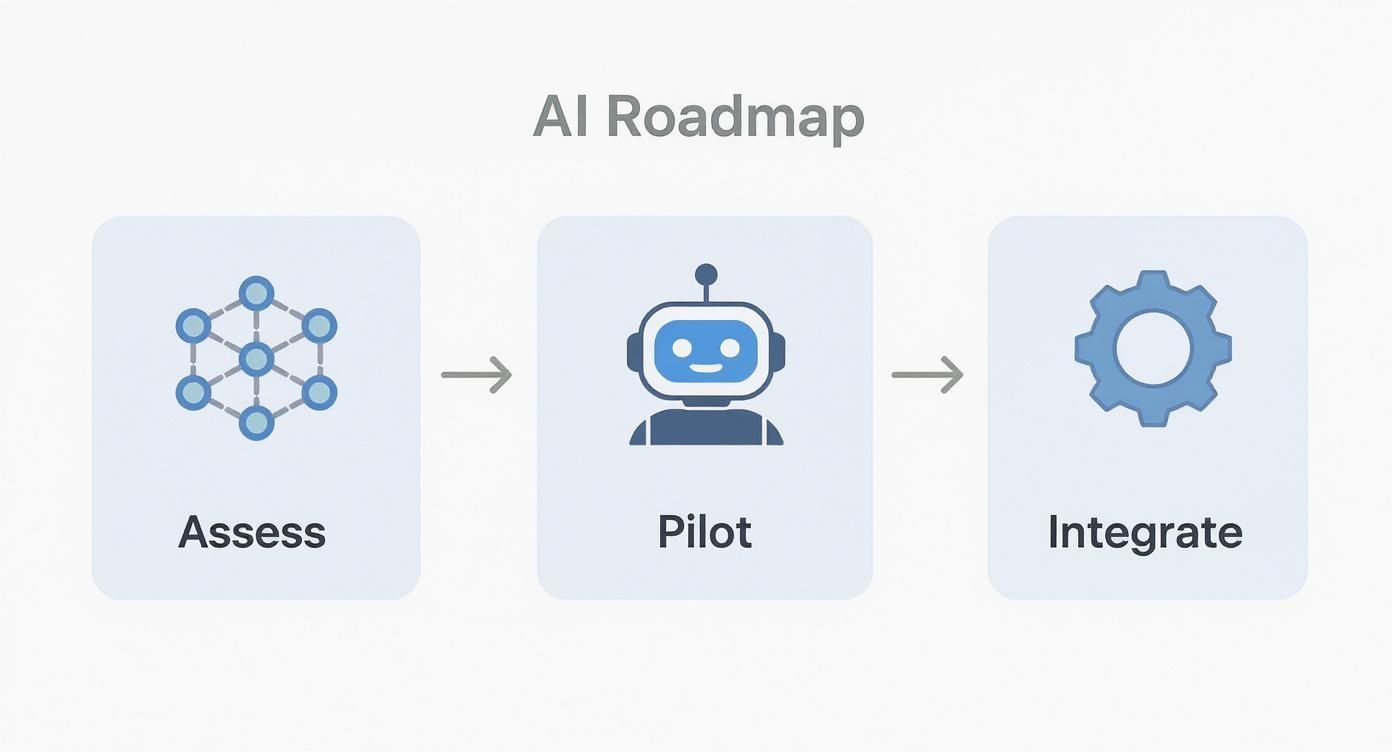
This approach emphasizes a proven path: first, assess your current network, then run a focused pilot program, and finally, integrate the new technology across your operations. Once your network is up to snuff, starting with a project that has a clear, measurable return—like an AI-powered chatbot—is an excellent way to begin.
Ready to build the smart foundation for your AI-powered guest experience? Splash Access provides instantly deployable captive portals and advanced authentication solutions for Cisco Meraki networks, turning your Wi-Fi into a powerful tool for personalization and operational intelligence. Learn more at https://www.splashaccess.com.