The email looked normal enough. The vendor name was right, the tone was right, and the payment run was due that afternoon. In a finance team, that's exactly why cybersecurity in accounting matters, because the danger isn't a dramatic hacker scene, it's a routine approval that feels safe until the money has already left the building.
A controller, CFO, or accounts payable lead usually isn't dealing with one isolated system anymore. They're moving between cloud ERP, payroll, document storage, banking portals, vendor inboxes, and a Wi-Fi network that may also carry guest traffic, BYOD laptops, and contractor devices. Once you see accounting that way, the core question changes from “How do we stop cyberattacks?” to “How do we make sure the right person, on the right device, on the right network, can approve the right thing at the right time?”
The Email That Almost Cost a Quarter Million
The request lands in the controller's inbox late in the morning. It's from a familiar supplier, asking to update bank details before the next payment cycle, and the signature block includes a phone number that reaches a voice that sounds uncannily real. The team has seen this kind of thing before, but the pressure of close week, the vendor relationship, and the ordinary rhythm of the day make the message feel safe.
That's the trap. In accounting, fraud usually succeeds because it fits the workflow, not because it looks obviously malicious. A single compromised approval path can touch payments, payroll, tax records, and bank data all at once, which is why the stakes are so much broader than a simple email inbox problem.
The practical question finance leaders should ask
The useful question isn't whether the message is “phishy.” It's whether the team has enough identity checks, device checks, and network checks to slow down a fraudulent request before it becomes a wire. A shared office Wi-Fi password, a broadly trusted vendor mailbox, and a fast-moving approval chain can all line up in the attacker's favor.
Practical rule: If a payment change can be approved from any inbox, any laptop, and any network, it's too easy to abuse.
A better model treats the approval as a controlled event. The vendor change is verified on a second channel, the approver's device is known, and the network segment used by finance isn't the same one used by guests or contractors. That is where tools built around captive portals, identity-based Wi-Fi, and authentication solutions start to matter, because they give you a way to know who is on the network before they ever reach the finance apps.
For a useful example of stronger authentication thinking in this space, see phishing-resistant authentication for finance workflows. In practice, that kind of control changes the default from “trust the inbox” to “verify the person, the device, and the route.”
What Cybersecurity in Accounting Protects

Cybersecurity in accounting protects three things at once, data, systems, and the people and networks that move both. The familiar CIA triad still applies, but finance gives each part a different weight. Integrity matters most for ledger entries and audit trails, confidentiality matters most for payroll and tax records, and availability matters most when month-end close is already under pressure.
The data layer
Accounting data is unusually sensitive because one file can contain bank details, payroll information, tax records, and invoice history together. The same record set that supports reporting can also expose identity information and payment instructions if it falls into the wrong hands. A systematic review of accounting cybersecurity frames the scope as protecting the integrity, confidentiality, and availability of financial information across systems like AIS, ERP, and blockchain-ledger environments, which is a useful way to examine the problem (financial.ac.id review).
The system layer
Many teams no longer rely on one accounting platform. They use cloud ERP, expense tools, payroll platforms, banking portals, document management, and vendor systems that connect in different ways. Cybersecurity in accounting is not just about locking down one app, it is about controlling every integration point that can carry a payment, a login token, or an approval trail.
A practical supplement here is remote IT support for tax season, especially when finance teams need extra hands during peak filing periods and cannot afford long response delays.
The people and network layer
Many finance guides go quiet here, but exposure often grows fastest at this layer. Controllers, auditors, vendors, contractors, and even guests on the same floor can all touch the same wireless environment if the network is badly designed. Guest Wi-Fi, captive portals, IPSK, EasyPSK, and BYOD policies can widen the attack surface fast when the finance team shares infrastructure with everyone else.
That is why network segmentation, role-based access, and identity-aware Wi-Fi belong in the accounting conversation, not just in IT architecture diagrams. Network controls shape who can reach finance systems, and identity controls shape how confidently they can be trusted once they connect. A useful primer on the network side is what network security means in practice.
The key point is simple. A secure ledger still fails if the wrong person can reach it from an untrusted device on an open network. Governance, identity, and network design have to work together, because finance data is only as safe as the weakest approved path into it.
The Modern Threat Environment for Finance Teams
A lot of accounting teams still picture cyber risk as phishing emails and the occasional suspicious attachment. That picture is too narrow now. The threat environment now combines familiar fraud tactics with newer methods that exploit cloud workflows, remote approvals, and AI-generated deception.
The attacks that show up in daily work
Phishing and business email compromise still do the most damage because they fit normal finance routines. A fake supplier message can alter a bank account, redirect a payment, or push a rush transfer while the team is under deadline pressure. In a systematic study of accounting threats, spear-phishing against ERP systems affected 75% of firms, and unauthorized access via remote work platforms affected 60%, with the incidents tied to unpatched ERP and SAP vulnerabilities and mobile devices without encryption (SEI study).
Credential theft is just as dangerous because SaaS sprawl gives attackers more places to reuse a stolen password or token. Once one account is compromised, lateral movement across connected apps becomes much easier than breaking into a single server.
A finance inbox is not the only target. An exposed vendor portal, a reused cloud password, or a shared approval account can be just as useful to an attacker.
Where AI changes the game
AI-driven fraud adds a layer that old checklist advice does not fully address. Voice cloning, deepfake video, and writing-style mimicry can make an urgent payment request feel personal and believable, even when the sender is not real. Old habits like “call the CFO” only help if the callback path is independent and the phone number is not part of the same compromised thread.
Why this matters operationally
Ransomware is still disruptive because it can lock both the ERP and the backups, which is enough to freeze payroll, invoicing, and close. Supply-chain attacks can also enter through payroll and tax providers, turning a trusted service relationship into an indirect path into the finance stack.
For a concise industry perspective on how teams are thinking about these evolving risks, the resource at another day, another ransomware outbreak is worth keeping in mind. The practical lesson is that finance teams need controls that look beyond the email itself and into the identity, device, and network path behind it. Guest Wi-Fi, captive portals, IPSK, EasyPSK, and BYOD are not side issues when the finance team shares wireless infrastructure with vendors, contractors, or visitors. A shared wireless password makes it harder to tell trusted users from everyone else, and that weakens the path to accounting systems before a single login prompt appears. That is also why find SOC 2 compliance costs and timeline often comes up once finance leaders start tightening access rules, because identity controls, device trust, and network segmentation tend to rise or fail together.
Identity, Access, and Network Controls That Actually Work
The best controls in accounting are the ones that slow down fraud without making month-end unbearable. That starts with identity. Phishing-resistant MFA, role-based access, separation of duties, and just-in-time permission for vendor changes all reduce the odds that one stolen credential can trigger a payment.
Identity controls first
A strong control set should separate the person who requests a change from the person who approves it. Access should be tied to role, not habit, and admin rights in the ERP should be reviewed often enough that old permissions don't linger after a reorg or promotion. For a practical overview of stronger login controls, multi-factor authentication in finance environments gives a useful framing.
The point isn't to make work painful. It's to make fraudulent shortcuts harder than legitimate work. That usually means device-aware access, better approval routing, and immutable logs that show who approved what, when, and from where.
Wi-Fi and network identity matter more than most finance teams think
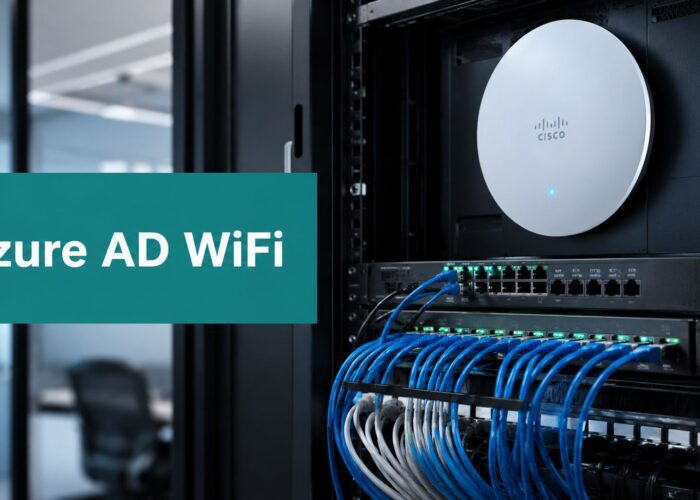
Accounting security often gets overlooked. If the finance team, guests, contractors, and BYOD laptops all share one wireless password, the network is doing too little to distinguish trusted users from everyone else. Cisco Meraki environments can support a more disciplined setup with captive portals, splash pages, and identity-based onboarding, so each user lands on the network with traceable access instead of a shared secret.
IPSK and EasyPSK are especially useful when you want each device to have its own unique key tied to a user or role. That matters for remote accountants and auditors using BYOD laptops, because a unique key is easier to trace, easier to revoke, and far cleaner than one shared password used by everyone on the floor.
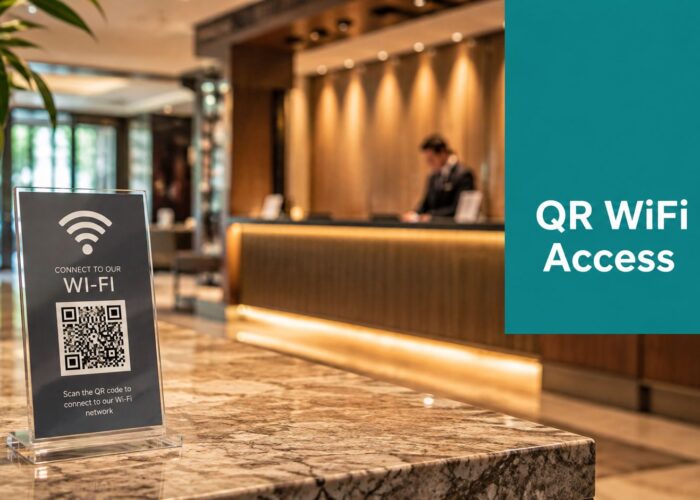
A branded guest experience can still be secure. Social login and social Wi-Fi flows can identify guests and contractors at the portal, then keep them off the same segment as the finance team. Splash Access is one option in this space, since it provides a customizable splash page layer for Cisco Meraki networks with captive portals and IPSK-based onboarding.
A useful implementation guide for teams evaluating process overhead is find SOC 2 compliance costs and timeline. The broader lesson is that identity should extend all the way to the wireless edge, not stop at the login screen.
How Different Industries Put These Controls to Work
The same control idea lands differently depending on the setting. A hotel finance office doesn't have the same exposure profile as a retail head office, and a university bursar's team faces different network realities than a co-working space with rotating contractors.
Hospitality and retail need clean separation
In hotels and resorts, the priority is keeping guest traffic away from back-office finance systems while still giving visitors a smooth sign-in experience. Guest Wi-Fi segmentation, branded captive portals, and social login can make that separation feel easy to use instead of awkward. If the site uses property systems like Opera or Micros, finance staff still need a distinct network identity from guest devices so payment and reconciliation work doesn't sit on the same wireless path.
Retail and shopping centers need the same discipline, but with extra attention on POS isolation, store manager BYOD, and finance users at head office. Store-level cash handling, banking access, and vendor payments should never share the same SSID used by customers or contractors moving through the premises.
Education, healthcare, and corporate environments need stronger role boundaries
Schools and universities often have student networks, faculty BYOD, research grants, and administrative systems living very close to each other. That makes wireless identity and segmentation especially important for finance teams handling grants, payroll, and procurement. In healthcare and senior living, billing teams and contractors add regulatory pressure, so access control needs to be tight without making care operations harder than they already are.
Corporate offices and co-working spaces have a different problem, which is constant turnover. Hot-desking auditors, visiting staff, and member-only networks all need distinct access rules, because a contractor should never drift onto the same SSID as the controller's laptop.
For a practical angle on transactions and screening workflows, secure payment compliance checks is a useful reference point for finance teams that need stronger controls around approvals and movement of funds.
Rule of thumb: If the same network experience is serving customers, contractors, and finance staff, the design is too loose.
The industry doesn't change the principle. It changes where you enforce it, at the door, at the portal, or at the approval layer.
Why Awareness Training Is Not the Whole Answer
A finance team can do everything right in a training module and still be exposed if the surrounding controls are weak. Staff can spot suspicious requests, understand escalation steps, and still be forced through a process that leaks risk through shared Wi-Fi, broad access, or sloppy identity handling.
Governance is the primary bottleneck
Research on accounting cybersecurity frames the field across risk identification, control design and testing, external reporting, and independent assurance, which is a much broader scope than “teach staff not to click.” A curriculum-gap report cited by UMGC found that I.T. governance and cybersecurity were excluded by half of accounting programs, which helps explain why many firms still lack people who can translate security requirements into accounting workflows.
That gap shows up in day-to-day operations. If guest Wi-Fi, BYOD devices, and finance laptops all sit on the same network without strong identity controls, the organization is relying on training to compensate for a design problem.
Accountants need control literacy, not security theater
Controllers and finance leaders do not need to become pen testers. They do need to know who owns cyber risk, what evidence a control should produce, and how to challenge vague assurances from a vendor or managed service partner. If the ERP logs do not show who approved a vendor change, or the wireless environment cannot separate a guest from a finance device, the issue is not awareness, it is design.
The most useful finance-friendly control is often the audit trail. An immutable record of who created, changed, or approved an invoice, journal entry, or payment gives accountants something concrete to test. It is also where network identity and accounting discipline meet, because the same standards that separate a contractor on a captive portal or an IPSK profile from the finance team should support the records behind approvals. For teams that need a practical reference point on account and device controls, patch management for accounting and finance systems helps show how maintenance, access, and identity decisions fit together.
The broader takeaway is encouraging. Finance teams do not need to own every technical detail, but they do need enough cyber literacy to demand evidence, ask sharper questions, and reject weak controls that only sound reassuring.
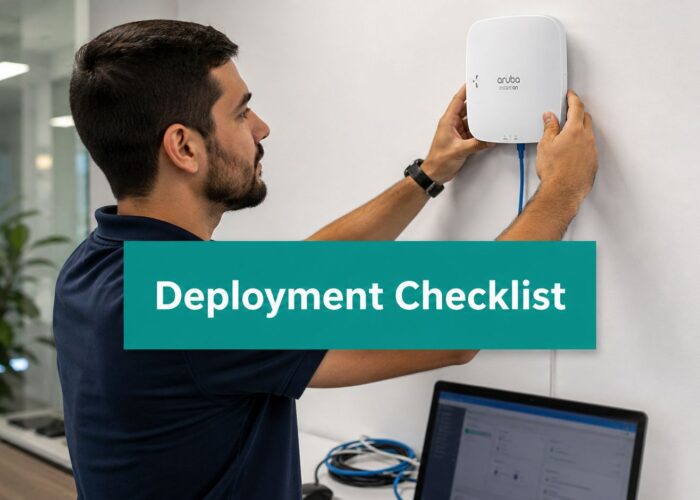
Your 30 60 90 Day Accounting Security Checklist

The fastest wins are the ones that reduce fraud paths without waiting for a full platform replacement. Start with identity, then close the network gaps, then test whether the controls hold under pressure.
Days 1 to 30
- Turn on MFA everywhere finance touches money: Cover ERP, banking portals, payroll, expense tools, and admin consoles first.
- Review admin access: Remove standing privileges that no longer match the person's role.
- Replace shared Wi-Fi passwords: Move guest and contractor access to a proper captive portal and IPSK or EasyPSK setup so each device gets its own identity.
- Document who approves vendor changes: If the process lives in someone's inbox, it's too fragile.
Days 31 to 60
- Add second-channel verification: Require a separate, trusted callback for bank-detail changes and unusual payment requests.
- Turn on detailed logging: Make sure approvals, edits, and access changes are recorded in a way finance can review.
- Use social login for guest Wi-Fi: Capture identity at the portal instead of relying on anonymous access.
- Lock down BYOD rules: Define what personal devices can access and what they can't.
Days 61 to 90
- Test ERP and document backups: Restore them, don't just assume they work.
- Run a tabletop exercise: Put finance and IT in the same room and walk through a fake fraud or ransomware event.
- Review cyber insurance for social engineering and funds-transfer fraud: Make sure the policy language matches your biggest exposure.
- Assign a named cyber-risk owner on the finance side: Someone needs to be responsible for follow-through.
For patching and endpoint hygiene, what patch management means for accountants is a practical companion topic. The best programs also keep a small evidence table that shows the control, the owner, and what proof gets captured.
| Control Area | Primary Owner | Evidence to Capture |
|---|---|---|
| MFA and access policy | Finance and IT | Login enforcement records, access review notes |
| Vendor change approval | Accounts payable | Approved change logs, callback verification record |
| Guest and BYOD Wi-Fi | IT and facilities | Portal logs, segment policy, unique key assignment |
| Backup testing | IT with finance sign-off | Restore test result, timestamp, issue list |
| Audit trail review | Controller or internal audit | Log extract, exception notes, follow-up actions |
Bringing It All Together Without Losing Heart
Cybersecurity in accounting can feel like a lot because it reaches across systems, networks, vendors, devices, and people. The good news is that the same structure that creates risk also gives you places to add control. Each layer, identity, network, workflow, and governance, can reduce exposure if you design it on purpose.
Three shifts matter most. First, treat accounting data as something that needs identity-based access everywhere, including Wi-Fi. Second, replace shared passwords and shared SSIDs with captive portals, social login, and IPSK or EasyPSK so every user and device leaves a traceable path. Third, treat governance and audit trails as core accounting controls, not IT extras.
A good next step is to pick one item from the 30, 60, 90 day checklist and make it real this week. Progress in this area usually comes from one better approval flow, one cleaner network segment, or one stronger login control, not from trying to fix everything at once.
| Quick Reference | Where Each Control Lives | Evidence to Capture |
|---|---|---|
| Identity and MFA | Finance systems and admin tools | Access policy, login enforcement |
| Wi-Fi segmentation | Network edge and guest portal | SSID policy, unique key records |
| Approval workflow | Accounts payable and treasury | Change logs, second-channel verification |
| Backup resilience | ERP and document storage | Restore test results |
| Audit trail review | Finance and internal audit | Immutable log extracts |
Splash Access helps organizations use Cisco Meraki networks with captive portals, IPSK, and identity-based guest access that can separate finance users from guests, contractors, and BYOD devices. If you're tightening accounting workflows and want the network to support stronger identity controls, visit Splash Access and see how its portal and authentication tools fit into a finance-friendly wireless design.