Hey there, savvy hotelier! In today's super-competitive market, the guest journey is a marathon, not a sprint. It starts way before they check in and keeps going long after they've checked out. Let's be honest, offering a comfy bed and a nice view isn't enough anymore. The real magic happens when you create smooth, personal digital experiences that make guests want to come back again and again. This is where modern digital marketing for hoteliers steps in, turning everyday amenities like your guest Wi-Fi into your secret marketing weapon.
This guide is your playbook for eight killer strategies that use powerful networking tech, like solutions from Cisco and Meraki, to connect with your guests in a way that truly matters. We're going to show you how to turn your Wi-Fi network into a revenue-generating machine. From the moment a guest signs in through your Wi-Fi's captive portal using a simple social login, to the friendly "see you soon" email, every touchpoint is a golden opportunity. To really hit a home run, you've got to know the unique landscape of the hospitality industry.
Think of this article as your blueprint for turning connectivity into cash. We’ll show you how to roll out secure and super-easy authentication solutions, like IPSK and EasyPSK. These not only give guests a great connection for all their devices but also give you amazing insights. Whether you're running a hotel, a retail shop, or even a corporate campus with a BYOD policy, these tips will help you collect data you can actually use, get more direct bookings, and build a loyal fanbase. Ready to make your hotel's digital game its strongest asset? Let's dive in!
1. Guest Wi-Fi as a Marketing Channel
Most hoteliers think of free Wi-Fi as just another box to tick. But what if I told you it’s your most powerful, direct-to-guest marketing channel? Smart digital marketing hoteliers know this secret. By turning the Wi-Fi login into a fun, interactive experience, you can chat with guests, grab valuable info, and boost revenue from the second they connect. The tool for this magic trick? A branded captive portal—that’s the cool login page guests see before they get online.
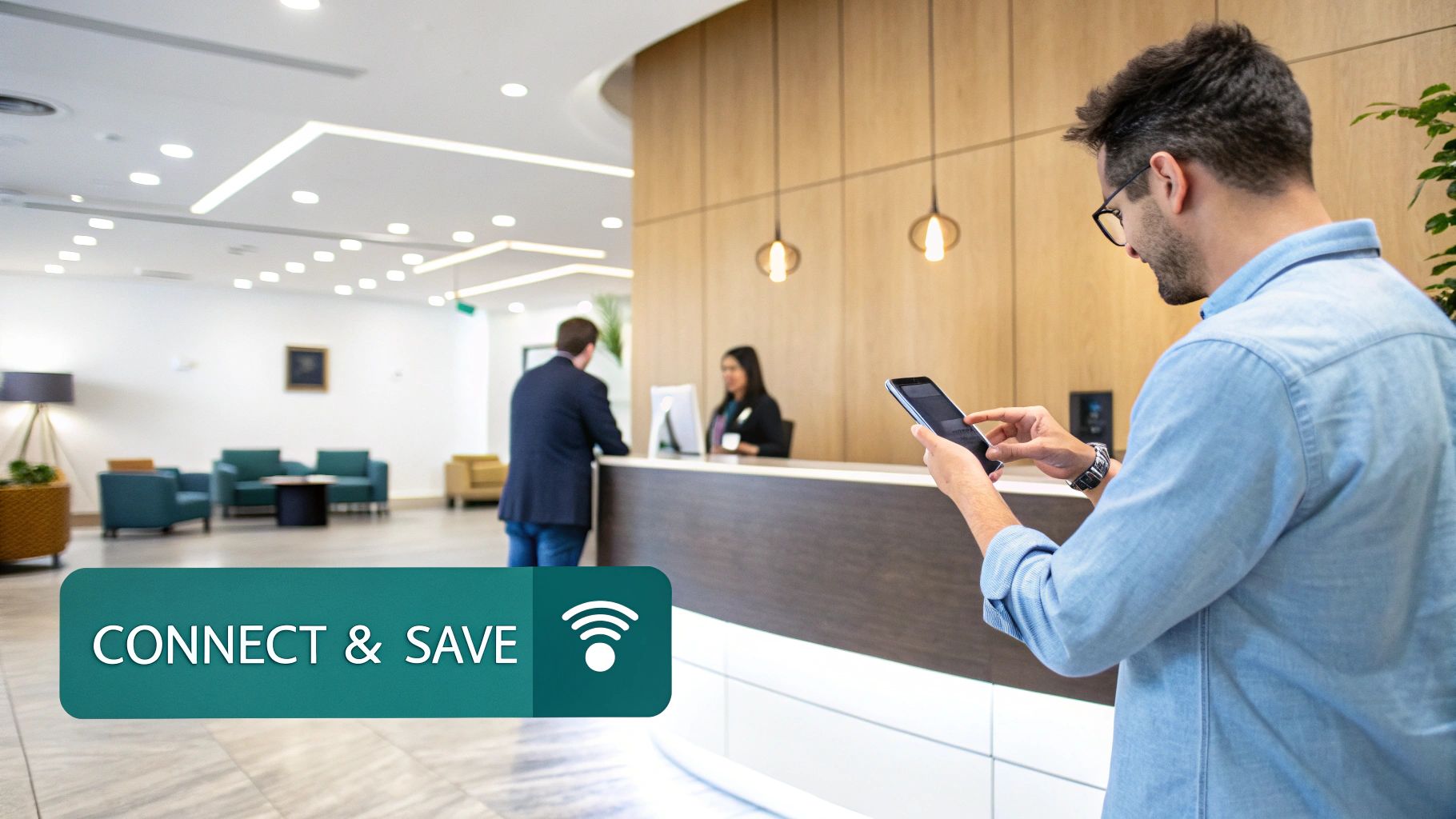
Instead of a boring login screen, imagine a beautiful splash page that shows off your restaurant, spa, or loyalty program. This is super effective because you're reaching guests when they're already on your property and paying attention. For example, a resort could flash a last-minute discount for a spa treatment on its captive portal. A business hotel? They could promote the executive lounge or happy hour specials. Just like that, a simple utility becomes a money-making machine.
How to Implement Wi-Fi Marketing
Getting this set up is easier than you think, especially if you're already rocking network gear from leaders like Cisco or Meraki. Platforms like Splash Access plug right into this hardware to create awesome captive portals.
- Customize Your Splash Page: Make your login page look like your brand. Slap on your logo, use your brand colors, and show off some gorgeous photos of your property.
- Offer Multiple Login Options: Let guests log in easily with options like social Wi-Fi (using their social media accounts) or a quick form. A smooth experience makes guests happy and helps you collect more data.
- Promote On-Site Services: Use the portal to show off targeted ads. Offer a 15% discount at the hotel bar or display tonight's dinner menu.
- Integrate and Automate: Connect the data you collect with your other systems. Hook it up to Mailchimp to automatically add guests to your mailing lists, or integrate with your Opera PMS to tailor offers based on guest profiles.
This isn't just for hotels! The same idea works wonders in sectors like retail, education, and corporate BYOD environments. By using secure authentication solutions like IPSK or EasyPSK, you provide safe access and a slick marketing experience. To see what’s possible, check out the power of Wi-Fi marketing solutions.
2. Guest Data Collection and CRM Integration
Great guest relationships are all about knowing your guests, and today, that means knowing your data. The best digital marketing hoteliers go beyond just saying hello. They systematically collect guest info and plug it into a Customer Relationship Management (CRM) system. This creates a powerful hub of guest profiles, letting you launch super-personal marketing campaigns, track loyalty, and even predict when they'll book again.
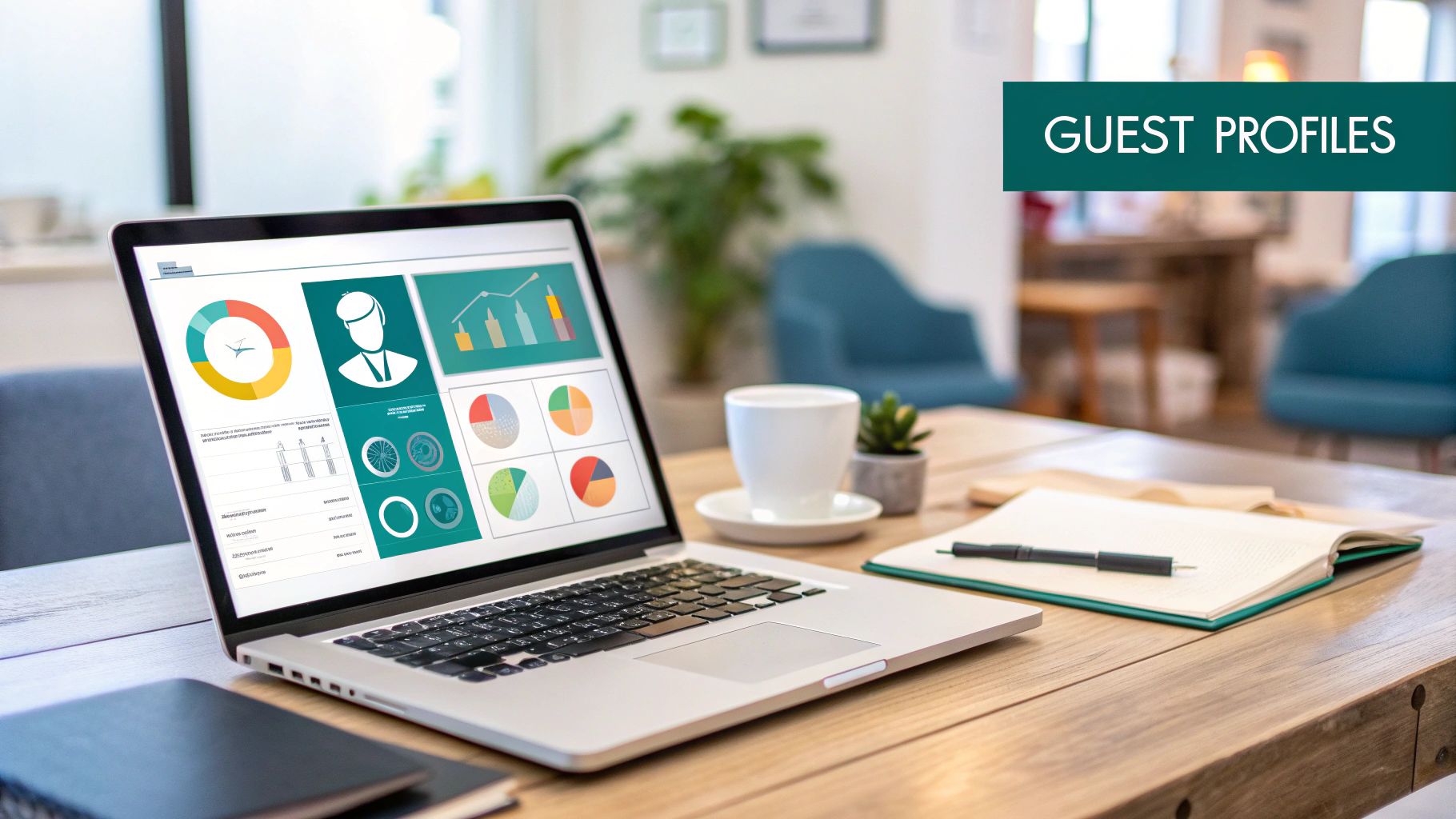
Your Wi-Fi captive portal is your number one tool for this. It's not just a gate to the internet; it's a data-gathering goldmine. For instance, by offering a social Wi-Fi login, you can ethically collect awesome demographic data. When you sync this with your CRM, you can group guests by how often they stay, what they spend, and what they like. This turns generic marketing spam into relevant, one-on-one conversations that guests actually appreciate.
How to Implement Data-Driven CRM Strategies
The key to unlocking this treasure chest is leveraging the network hardware you already have, like gear from Cisco or Meraki. Platforms like Splash Access are built to play nicely with this equipment, turning your Wi-Fi into a smart data tool that feeds your whole marketing machine.
- Automate Data Capture: Use your captive portal's login to grab essential guest data like names, emails, and social profiles. Just be sure to have a clear privacy policy to keep things transparent and build trust.
- Integrate Your Systems: Connect your captive portal right into your CRM. Splash Access makes it a breeze to link up with marketing platforms like Mailchimp and identity providers like Azure AD, so guest data flows where it needs to, securely and automatically.
- Segment and Personalize: Create detailed groups of guests in your CRM. You can sort them by how often they visit, what they spend on-site, or even what time of day they usually use the Wi-Fi. This lets you send targeted promos that actually work.
- Trigger Automated Campaigns: Set up marketing campaigns that run on autopilot based on what guests do. For example, you can send a "Welcome Back!" email with a special discount a few weeks after a guest's stay, encouraging them to book directly with you next time.
This data-first approach works great in all sorts of places, including retail, corporate BYOD, and education, where knowing your users is a game-changer. By mixing powerful authentication solutions with smart data integration, you can take your guest experience to the next level and see real results. Feel free to explore a deeper dive into the value of a strong CRM strategy in the hospitality sector.
3. Location-Based Marketing and Geo-Fenced Offers
Modern digital marketing hoteliers know that timing and location are everything. Location-based marketing lets you send super-relevant offers to guests at the perfect time and in the perfect place, right on their phones. Using geofencing technology, you can draw virtual fences around specific areas of your property—like the lobby, pool, or restaurant. When a guest who's opted-in walks into one of these zones, it triggers a marketing action, like a push notification with a special deal.
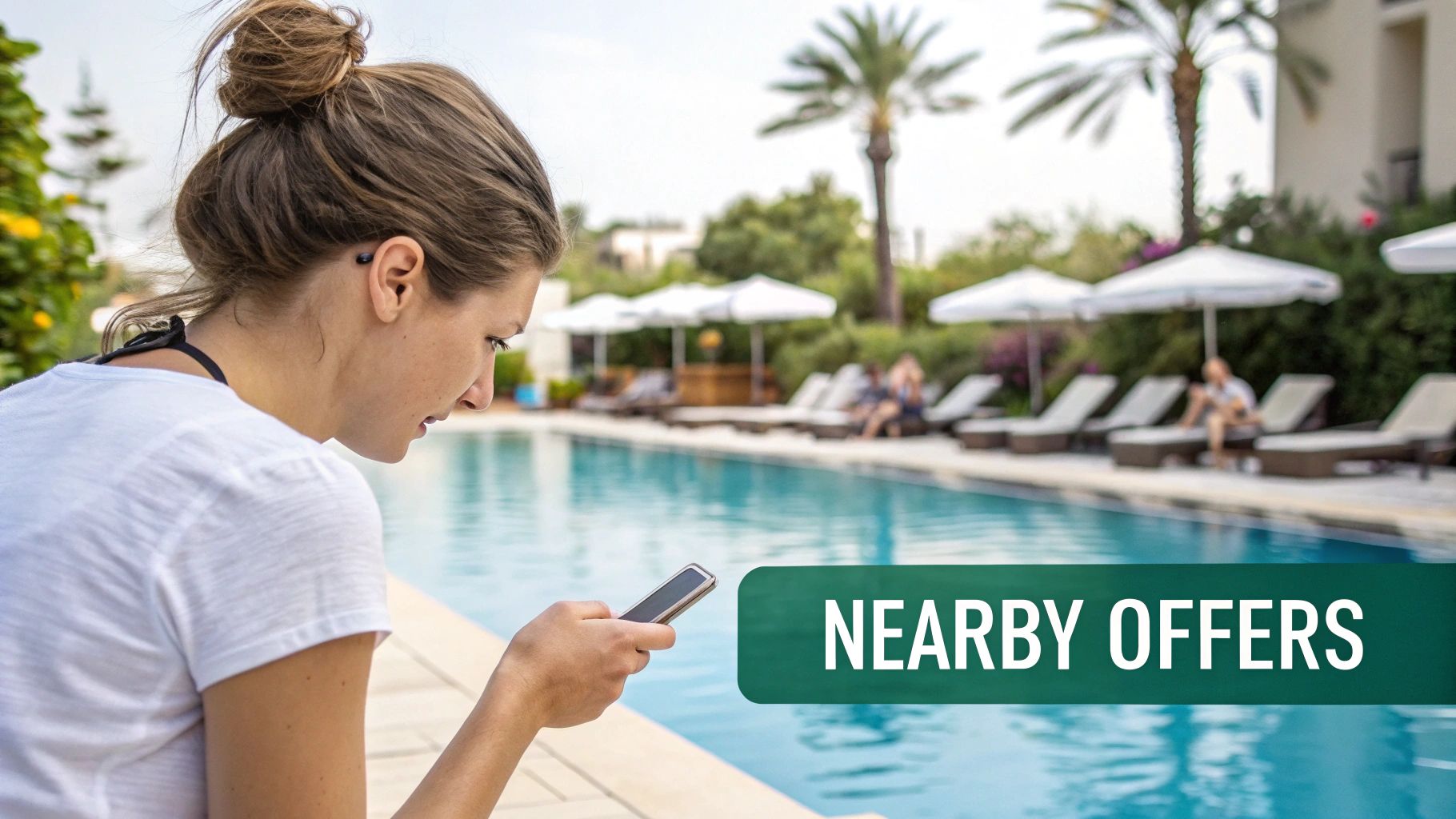
This turns your physical space into a dynamic marketing playground. Imagine a guest strolling past your spa and instantly getting a notification for 15% off a massage. Or a family heading to the pool and getting a "buy one, get one free" offer on poolside drinks. This level of personal, timely marketing can seriously boost your extra revenue and make the guest experience way better by knowing what they want before they do. It’s a total shift from shouting at everyone to having a friendly, one-on-one chat.
How to Implement Geo-Fenced Marketing
Rolling out this strategy is a natural next step for your guest Wi-Fi, especially if you’re using hardware from pros like Cisco or Meraki. Platforms like Splash Access can team up with your existing network to use location analytics and send out geo-fenced coupons, turning your Wi-Fi access points into smart marketing tools.
- Define Your Zones: Pinpoint key high-traffic or underused spots in your hotel. Set up virtual fences around the bar, spa, conference rooms, or even the lobby to target guests as they move around.
- Obtain Guest Consent: Always, always get permission from guests to use their location data. You can easily do this during the Wi-Fi login on your captive portal, where guests can opt-in to get cool, relevant offers.
- Create Compelling Offers: Cook up some juicy, time-sensitive, and location-specific promotions. For example, trigger a happy hour special when guests are near the bar between 4 PM and 6 PM.
- Analyze and Optimize: Use the built-in analytics to see which offers are getting redeemed in which zones. This data helps you figure out what's working so you can fine-tune your strategy and get to know your guests' on-site habits.
This approach delivers super-targeted messages that feel helpful, not creepy. To learn more about the tech and how it works, you can explore more about geofencing marketing solutions.
4. Social Media Integration and Social Wi-Fi
In a world where everyone’s connected, your guests' social media is a marketing goldmine. Smart digital marketing hoteliers tap into this by weaving social media right into the guest Wi-Fi experience. This strategy, called Social Wi-Fi, lets guests log into your network using their social media profiles, like Facebook or Instagram. This super-simple, one-click login makes life easier for guests and gives you permission-based access to awesome social data and a direct line to their social feeds.
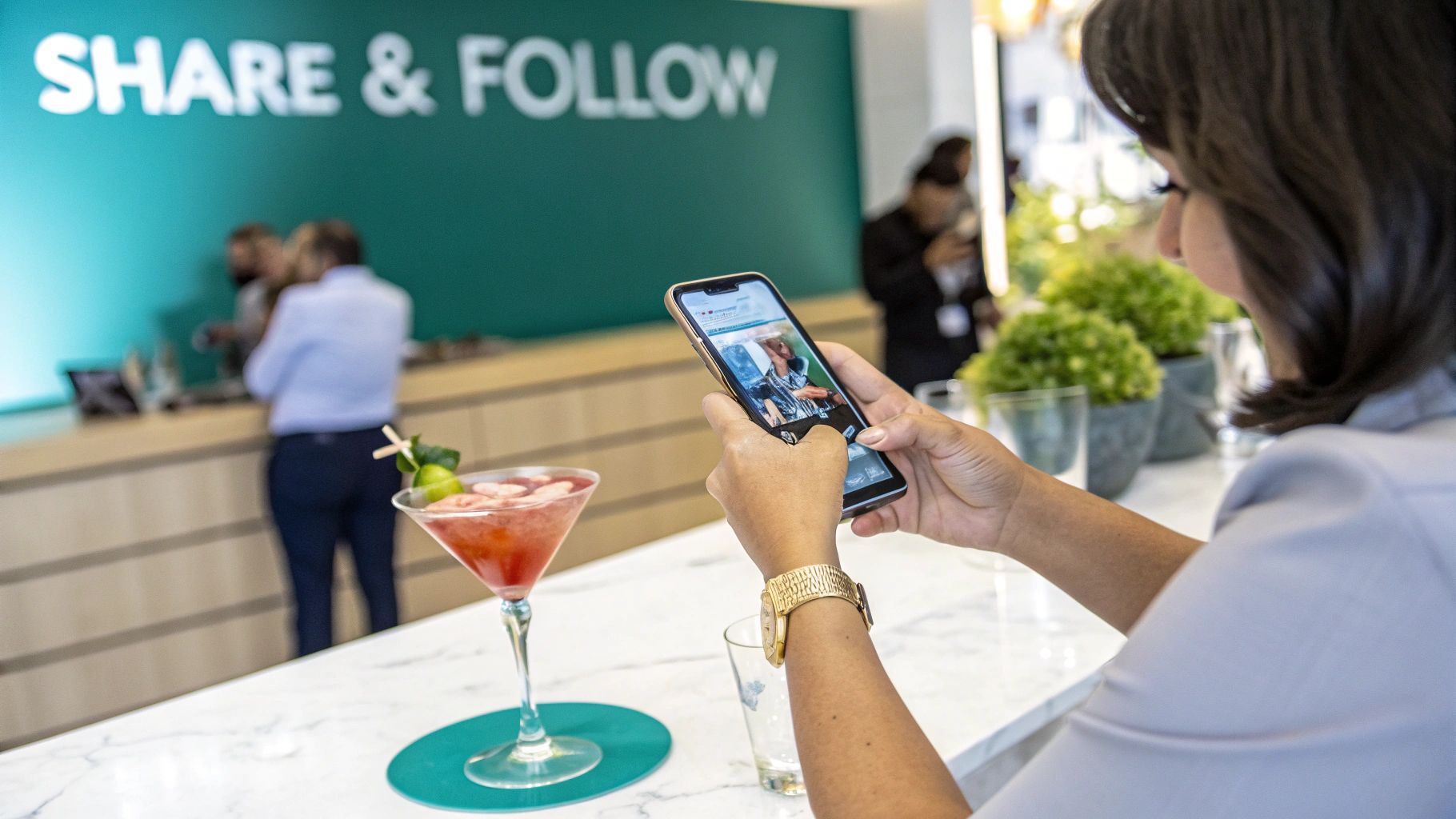
Instead of a clunky password, your Wi-Fi captive portal asks guests to connect via their favorite social platform. This turns a boring login into a fun tool for growing your audience and engagement. For example, a boutique hotel could ask guests to follow their Instagram page when they log in, growing their community instantly. A family-friendly resort could offer a free drink for a Facebook check-in, generating real social proof that reaches all of the guest's friends. You’re basically turning your guests into your best brand ambassadors!
How to Implement Social Wi-Fi
Adding social login is a piece of cake, especially with modern network gear from providers like Cisco and Meraki. Platforms like Splash Access are designed to work perfectly with this hardware, letting you launch a cool Social Wi-Fi strategy that's both secure and great for marketing.
- Offer Multiple Social Logins: Give guests options to connect with popular platforms like Facebook, Google, Twitter, and Instagram. More choices mean a better user experience and more people signing in.
- Incentivize Social Actions: Encourage follows, check-ins, or using a branded hashtag right on the splash page. You can offer perks like faster internet or a longer Wi-Fi session as a little thank you.
- Leverage User-Generated Content (UGC): Prompt guests to share their awesome experiences on social media. With their permission, you can re-share this authentic content on your own channels to build trust and show off what a great time people have at your place.
- Build Lookalike Audiences: Use the demographic and interest data you get from social logins to create super-targeted lookalike audiences for your social media ads. This helps you find more travelers just like your best guests and drive more direct bookings.
This powerful trick isn't just for hospitality. It works wonders in retail, education, and corporate BYOD settings where knowing your users is key. By pairing social login with secure authentication like IPSK or EasyPSK, you create a personalized, safe, and marketing-savvy network. You can check out a bunch of supported social login integrations to see how they can work for you.
5. Personalized Email Marketing and Automation
Let’s face it, generic email blasts are so last decade. For today's digital marketing hoteliers, the secret to building lasting relationships and getting repeat bookings is all about personalized, automated email campaigns. This means using guest data—grabbed from your Wi-Fi captive portal and PMS—to send super-relevant messages that are triggered by what guests do, what they like, and their booking history. Instead of a one-size-fits-all email, you're having tailored conversations that connect with each guest long after their stay.
This approach turns email from a simple broadcast tool into a loyalty-building, revenue-driving machine. Imagine automatically sending a special anniversary offer to a couple a year after they stayed with you, or a family-friendly package deal to guests who previously booked a few rooms. These targeted messages are way more effective because they show you remember and value each guest's unique journey with your brand.
How to Implement Personalized Email Automation
The heart of great email automation is rich guest data, which you can start collecting the moment a guest hops on your Wi-Fi. By connecting your captive portal with email marketing platforms, you can set up smart, timely campaigns that run on their own.
- Segment Your Audience: Use the data from your PMS and Wi-Fi logins to create different guest groups. You can sort them by travel type (business, leisure, family), booking history, how much they spent, or even their Wi-Fi habits, which can tell you a lot about their interests.
- Trigger Automated Campaigns: Set up email chains that are triggered by what guests do. This could be a welcome series after they first connect to your Wi-Fi, a post-stay email asking for feedback, or a "we miss you" campaign for guests who haven't booked in a while.
- Personalize Content at Scale: Go beyond just using their first name. Mention their last stay dates, the room type they loved, or services they used. For example, a guest who visited the spa could get targeted promotions for new treatments.
- Optimize and Test: Keep testing different subject lines, offers, and send times for each group to see what gets the best open rates and conversions. Keep an eye on your analytics to learn what your audience loves.
By connecting all your guest data, you can build a complete picture of your guests and power a truly personal marketing engine. To see how these systems fit together, you can find out more about the power of marketing automation integration.
6. Analytics and Visitor Insights for Targeted Marketing
For digital marketing hoteliers, data is the new gold, but so many overlook the treasure trove of insights right inside their own properties. By using advanced analytics from your Wi-Fi network and adding camera-based visitor insights, you can stop guessing and start knowing. This data-driven approach helps you understand what guests are doing, track their movements, and measure engagement in real-time, turning raw numbers into smart marketing moves.
Imagine knowing the busiest times in your lobby, which amenities are most popular, or how long guests hang out in the bar versus the business center. You can get this info by analyzing Wi-Fi connection data and using privacy-friendly camera tech. For example, a resort could check pool area dwell times to perfectly time a happy hour promo. This strategy gives you the power to make smart decisions that improve the guest experience and drive more revenue.
How to Implement Visitor Analytics
Setting up a solid analytics strategy is a breeze with the right tools, especially if you're using modern network gear from providers like Cisco and Meraki. Platforms like Splash Access can integrate with these systems and even use MV Sense camera analytics to give you a full picture of guest activity.
- Establish a Baseline: Before you launch any new campaigns, use your analytics to get a baseline. Understand your current foot traffic, average time spent in key areas, and how many visitors come back.
- Create Guest Personas: Go beyond basic demographics. Analyze behavior to create detailed guest personas. Do business travelers mainly use Wi-Fi in their rooms and the lobby, while leisure guests connect most from the pool?
- Optimize Staffing and Operations: Use foot-traffic data to schedule your staff and set operational hours. If the gym is packed from 6 AM to 8 AM, make sure it’s fully staffed and ready to go during that time.
- Correlate Data for Deeper Insights: Connect your Wi-Fi analytics with your Property Management System (PMS). Matching Wi-Fi usage with booking info can uncover powerful insights about your most valuable guests. For example, you might find that guests who book premium suites also spend more time in your fancy restaurant.
By tapping into the power of visitor analytics, you can create super-targeted marketing campaigns, streamline your on-site operations, and deliver personal experiences that keep guests coming back for more. This makes analytics a must-have tool for any modern digital marketing hotelier.
7. Mobile App Integration and Push Notifications
In a world where smartphones are a travel essential, having a dedicated mobile app is no longer a fancy extra—it's a powerful tool for talking directly to your guests. Smart digital marketing hoteliers use mobile app integration to create a personal channel that stays with guests long after their trip. By linking the app to the Wi-Fi login process, hotels can encourage downloads and use push notifications to send timely offers and updates right to guests' phones.
This strategy turns a guest's phone into a personal concierge and a revenue-generating powerhouse. For example, the Hyatt and Marriott Bonvoy apps are great at offering mobile check-in, digital keys, and personalized recommendations. A resort could send a quick push notification about a happy hour event, while a luxury hotel can use its app to handle concierge requests and room service orders. This creates a smooth, high-tech guest experience that builds loyalty and encourages them to spend more on-site.
How to Implement App and Push Notification Marketing
The trick to getting more app downloads is to tie your app strategy into your guest Wi-Fi network, especially with systems from providers like Cisco and Meraki. Your captive portal can be the perfect spot to promote your app and get the download started.
- Incentivize App Downloads: Use your Wi-Fi splash page to offer a sweet deal for downloading the app, like a free drink, a spa discount, or access to faster premium internet using solutions like IPSK.
- Segment Your Notifications: Don't just blast everyone with the same message. Use the data you collected during Wi-Fi login to group your guests. Send family-friendly activity ideas to guests with kids and business-focused offers to corporate travelers.
- Use Location-Based Triggers: Set up geo-fenced notifications to send relevant alerts when a guest is near a specific spot. For instance, a "10% off" coupon for the gift shop could pop up as they walk by.
- Make Notifications Actionable: Every push notification should have a clear goal. Instead of just announcing the dinner special, include a link that lets guests book a table right away.
- Enable Customization: Let guests choose what kind of notifications they want to get. This shows you respect their preferences and makes it less likely they'll turn off notifications or delete the app.
This approach of creating a secure, integrated digital space works great in corporate BYOD, education, and retail sectors too, where apps and notifications can deliver vital info and a better user experience. You can explore how to build these seamless connections through a mobile-first Wi-Fi experience.
8. Guest Testimonials, Reviews, and Social Proof Strategies
In the digital age, social proof is the new word-of-mouth, and for hotels, it's priceless. The sharpest digital marketing hoteliers know that actively collecting and showing off guest reviews, testimonials, and user-generated content is a must for building trust and getting more bookings. This strategy isn't about sitting around and waiting for reviews; it's about making the review process a natural part of the guest journey and turning great feedback into a powerful marketing tool.
The key is to ask for feedback when the experience is still fresh in their minds, and your guest Wi-Fi captive portal is the perfect place to do it. Instead of just being a gateway to the internet, it can pop up a friendly request for a review or even show a live feed of glowing testimonials from sites like TripAdvisor. This helps guests feel good about their decision to stay with you and nudges them to share their own positive experience, creating a cycle of awesome social proof.
How to Implement a Social Proof Strategy
Making review collection part of your marketing is a high-impact move that builds trust, and it's easy to do with your existing network gear from providers like Cisco or Meraki. Platforms like Splash Access can turn your captive portal into a review-generating machine.
- Prompt Reviews via Wi-Fi: Use your captive portal's splash page to ask guests for feedback when they log in again or as they're checking out. A simple, one-click link to your favorite review site can make a huge difference in how many reviews you get.
- Showcase Positive Feedback: Display a curated feed of your best reviews right on the Wi-Fi login page. This builds confidence from the get-go and sets a positive vibe for all your guests.
- Leverage in Email Marketing: Weave the testimonials you collect into your pre-arrival and post-stay emails. A "See what our guests are saying!" section in a promotional email adds a layer of realness that your own marketing messages just can't match.
- Enhance Direct Communication: If you have a dedicated app, guest feedback can help you improve what you offer. A big part of this is knowing how to effectively implement React Native push notifications to send timely, personalized messages based on guest preferences and feedback.
8-Point Digital Marketing Comparison for Hoteliers
| Item | 🔄 Implementation complexity | ⚡ Resource requirements | 📊 Expected outcomes | 💡 Ideal use cases | ⭐ Key advantages |
|---|---|---|---|---|---|
| Guest Wi‑Fi as a Marketing Channel | 🔄 Medium — captive portal + basic integrations | ⚡ Low — portal templates, branding, APs | 📊 High engagement & measurable leads; ⭐⭐⭐⭐ | 💡 Upsell F&B, promote offers at check‑in, loyalty signups | ⭐ 100% login touchpoint; low CAC; trackable ROI |
| Guest Data Collection & CRM Integration | 🔄 High — API, CRM & PMS integrations | ⚡ Medium–High — engineering, data ops, training | 📊 Deep personalization and lifetime value uplift; ⭐⭐⭐⭐⭐ | 💡 Loyalty programs, segmented campaigns, predictive offers | ⭐ Automated guest profiles; sophisticated segmentation |
| Location‑Based Marketing & Geo‑Fencing | 🔄 High — geofencing, zone mapping & triggers | ⚡ Medium — APs/sensors, analytics, app or messaging | 📊 Timely conversions and amenity uplift; ⭐⭐⭐⭐ | 💡 Drive traffic to spa/bar/pool with contextual offers | ⭐ Highly relevant, location‑timed promotions |
| Social Media Integration & Social Wi‑Fi | 🔄 Medium — social API auth & sharing flows | ⚡ Low–Medium — social incentives, minor dev | 📊 More followers & UGC; improved organic reach; ⭐⭐⭐ | 💡 Visual brands, influencer campaigns, guest sharing | ⭐ Low‑friction login; builds social audience and UGC |
| Personalized Email Marketing & Automation | 🔄 Medium — segmentation, trigger workflows | ⚡ Low–Medium — email platform, creative, data hygiene | 📊 High ROI and repeat bookings; measurable; ⭐⭐⭐⭐ | 💡 Post‑stay nurture, abandoned booking recovery, offers | ⭐ Scalable revenue channel; targeted retention |
| Analytics & Visitor Insights | 🔄 High — data pipelines, camera & Wi‑Fi analytics | ⚡ High — sensors, storage, analytics expertise | 📊 Actionable optimization & forecasting; ⭐⭐⭐⭐ | 💡 Layout/ops optimization, campaign measurement, pricing | ⭐ Data‑driven decisions; identifies high‑ROI changes |
| Mobile App Integration & Push Notifications | 🔄 High — app dev, APIs, push infrastructure | ⚡ High — development, maintenance, support | 📊 Very high engagement and direct revenue; ⭐⭐⭐⭐⭐ | 💡 Contactless services, frequent guests, concierge features | ⭐ Direct, real‑time channel; high conversion potential |
| Guest Testimonials, Reviews & Social Proof | 🔄 Low–Medium — review workflows & display widgets | ⚡ Low — prompts, moderation, management tools | 📊 Increased conversions and SEO value; ⭐⭐⭐⭐ | 💡 All properties, especially boutique and price‑sensitive | ⭐ Builds trust and booking confidence; low cost to implement |
Your Blueprint for a Smarter, More Connected Hotel Experience
Whew! We've covered a lot. The journey through these eight strategies reveals one powerful truth: modern hospitality is all about connections—both human and digital. For today's digital marketing hoteliers, success isn't just about occupancy rates anymore. It's about creating smooth, personal, and unforgettable experiences that start before a guest even arrives and last long after they leave. We've officially moved past seeing guest Wi-Fi as a basic utility. Now, it's the heart of a hotel's entire marketing and guest engagement strategy.
The strategies we've talked about, from turning your captive portal into a marketing powerhouse to using rich visitor analytics, aren't just separate tricks. They're all connected parts of one big plan. Each one builds on the others, creating a powerful cycle. A simple social Wi-Fi login doesn't just make signing in easier; it fills your CRM with awesome data. That data then fuels super-personal email campaigns, and location analytics let you send timely, geo-fenced offers that make a guest's stay even better. This is the new gold standard for hotel marketing.
From Blueprint to Reality: Your Actionable Next Steps
It might seem like a lot, but you don't have to do it all at once. The key is to start somewhere and build from there.
- Start with the Foundation: Your guest Wi-Fi network, especially if it's built on solid gear like Cisco Meraki, is your foundation. First things first: take a hard look at your captive portal. Is it just a boring login screen, or is it a branded, welcoming handshake? Setting up a branded portal with a social Wi-Fi login option is a high-impact, low-effort way to start.
- Activate Your Data: Once you start ethically collecting guest data through your Wi-Fi, the next move is to use it. Connect your system to your CRM or an email platform like Mailchimp. Set up a simple automated post-stay email asking for a review. That one small step uses two key strategies: email marketing and social proof.
- Scale and Personalize: With those first pieces in place, you can start to dream bigger. Introduce targeted offers based on guest behavior. Play around with geo-fenced coupons for your restaurant or spa. For your corporate clients in BYOD environments, use secure authentication methods like IPSK or vouchers to give them a smooth and secure connection. It shows you're serious about their needs.
Mastering these ideas isn't just for the big, fancy brands anymore; it’s a must for all digital marketing hoteliers who want to win. By embracing these strategies, you stop reacting and start proactively building relationships. You stop waiting for guests to find you and start creating a direct connection that builds loyalty, drives direct bookings, and opens up new ways to make money. You turn a simple amenity into your best tool for understanding and delighting every single person who walks through your doors. The future of hospitality is smart, connected, and super personal—and with this blueprint, you're ready to build it.
Ready to turn your guest Wi-Fi from a cost center into a powerful marketing engine? Discover how Splash Access can integrate seamlessly with your existing Cisco Meraki infrastructure to unlock these advanced digital marketing capabilities. Explore our solutions and book a demo to see your new blueprint in action at Splash Access.