Let's get one thing straight: hoping for walk-ins and relying on word-of-mouth just doesn't cut it anymore. Think of your hotel's digital marketing as your hardest-working employee—it's your front desk, concierge, and sales team all rolled into one, and it never sleeps. For any modern hotel or hospitality venue, building a powerful online presence isn't just a good idea; it's essential for survival.
Building Your Hotel's Digital Foundation
Hey, let's talk about your digital foundation. It's so much more than a pretty website! Think of it as a complete system built to attract, engage, and turn curious lookers into loyal guests. It all starts by accepting a simple truth: today's travel planning begins online, long before anyone even thinks about walking through your front door. A strong digital presence means you're there to greet them at the very start of their journey.
This requires a smart mix of a high-performance website, savvy SEO, and an active social media presence. But there's a secret weapon many hoteliers completely overlook: the tech running silently in the background. Specifically, your guest wifi. It's not just an amenity; it's one of your most valuable marketing assets.
Connecting Technology with the Guest Experience
The most effective hotel marketing strategies today seamlessly blend on-site technology with online campaigns. You start with a reliable network backbone, using powerful hardware from providers like Cisco and Meraki. But the real magic happens when you layer intelligent software on top of that foundation.
This is where Captive Portals and smart Authentication Solutions change the game. Instead of just handing out a generic password, you can greet guests with a branded login page. This portal can offer options like a one-click social login or a simple email sign-up. In that one small step, you've turned a basic utility into a powerful tool for gathering guest data, creating what's known as social wifi.
The goal here is simple: turn a cost center (providing internet) into a revenue driver. Every single guest who connects to your network is a potential repeat customer. A well-designed Captive Portal is your first, best chance to start building that relationship.
This isn't just a hotel-specific tactic, either. The same principles work wonders across different industries:
- Corporate Events & BYOD: In the BYOD Corporate sectors, you can securely manage network access for conference attendees with solutions like IPSK and EasyPSK. You provide a professional, secure connection that reflects well on your venue.
- Education: Campuses use this same tech to manage network access for students and visitors, keeping things organized and secure.
- Retail: Shopping centers capture visitor data to send out targeted promotions and gain a much better understanding of foot traffic patterns.
Understanding the critical website design and digital marketing synergy is key to making this all work together. When you integrate every digital touchpoint—from your website to your Wi-Fi login—you create a smooth, cohesive guest journey. This tech also plugs directly into your operational software. To see how this enhances the guest experience from start to finish, check out our guide on the modern reservation system for hotels.
Ultimately, a solid digital foundation makes every interaction meaningful, turning raw data into direct bookings and lasting guest loyalty.
Getting Found: Winning at Search and Social
Before a guest can even think about your thread count or room service menu, they have to find you. That’s where a smart, friendly approach to search engines and social media comes in. These aren't just marketing channels; they're the digital front doors to your property, placed right where your next guests are looking.
A modern hotel marketing plan has to be brilliant at two things: dominating local search and running social campaigns that actually connect with people. It’s about being impossible to miss, whether someone is Googling “hotel near the convention center” or daydreaming over travel photos on Instagram. Your job is to grab their attention and make booking with you the easiest, most obvious next step.
Own Your Local Search Footprint
Let's be blunt: your Google Business Profile (GBP) is your single most important piece of digital real estate. It's the first thing people see in Google Search and on Maps. A neglected profile is a missed opportunity, but a perfectly optimized one—full of stunning photos, current info, and great reviews—is a direct booking machine.
When you write your room and amenity descriptions, write for people first, but keep search engines in mind. Weave in those local phrases people actually use, like ‘boutique hotel in the arts district’ or ‘family resort with a lazy river.’ This isn't about keyword stuffing; it's about matching your language to a traveler's search.
Honestly, if you’re not on the first page of a local search, you’re basically invisible. Getting local SEO right isn't just a box to check—it’s about making your hotel the best and most compelling answer to a traveler’s immediate need.
Run Social Campaigns That People Actually Want to See
Platforms like Instagram and Facebook are the new travel brochures. They’re visual, they're instant, and they’re incredibly effective for reaching very specific groups of people. The game here is to use incredible photography and video to tell a story about your hotel that makes people need to be there.
This is where paid ads really shine. You can zero in on precise audiences, like couples planning a romantic weekend or event managers scouting venues for a corporate retreat. This level of targeting means your ad budget isn't just being spent; it's being invested in reaching the people most likely to book.
The numbers don't lie. Digital ad spending is now the engine of hotel marketing. It’s on track to eat up 34% of total budgets by 2025, a clear signal that online is where the bookings are. We’re seeing hotel ads on social media pull in impressive click-through rates (CTR) of 2-4%, which often beats what Google's own hotel landing pages can do. For a deeper dive into these trends, you can discover more insights about hotel marketing statistics on Influencer Marketing Hub.
Bridge the Gap Between Your Wi-Fi and Your Ads
Think about a guest who browsed your website but left without booking. Using retargeting ads, you can gently pop back up in their social media feed with a tempting special offer. It's a hugely effective way to pull them back in. If you want to put this on autopilot, looking into Facebook marketing automation can be a game-changer.
This kind of tech-driven marketing isn’t just for hotels. With powerful networking hardware from partners like Cisco Meraki, we see this strategy work everywhere:
- Retail: Malls use guest wifi data to map shopper flow and push real-time deals to their phones.
- Education: Universities manage secure network access for thousands of students and visitors with robust Authentication Solutions.
- Corporate Events: Venues provide secure, hassle-free Wi-Fi for attendees' devices using tools like IPSK and EasyPSK, all managed through user-friendly Captive Portals.
By mastering search and social together, you build a powerful engine that drives visibility and, more importantly, produces real, measurable revenue. It's all about being present, persuasive, and helpful at every single step of the modern guest journey.
Turning Guest Wi-Fi Into Your Strongest Marketing Asset
What if you could turn a daily utility into your most effective marketing tool? Let's chat about your guest wifi. Too many hoteliers still see it as just another line item on the expense report. In reality, it’s one of the most powerful, untapped digital marketing opportunities at your disposal.
It’s time to stop thinking of Wi-Fi as just a password you hand out at check-in. Instead, see it as a sophisticated engine for guest engagement, data collection, and direct bookings.
The whole game changes when you rethink the login process. Instead of a generic network that just gets people online, you can build a branded, interactive gateway. This is where a Captive Portal, especially when integrated with a network from a leader like Cisco and Meraki, becomes a massive advantage.
When guests connect, they shouldn't see a sterile password box. They should land on a custom splash page from a provider like Splash Access. Think of this page as your hotel’s digital welcome mat—your first chance to make a great impression and start a real conversation.
This first touchpoint is a crucial step in a guest's journey, which almost always follows a path of finding your hotel, getting attracted by what you offer, and ultimately, converting into a booking.
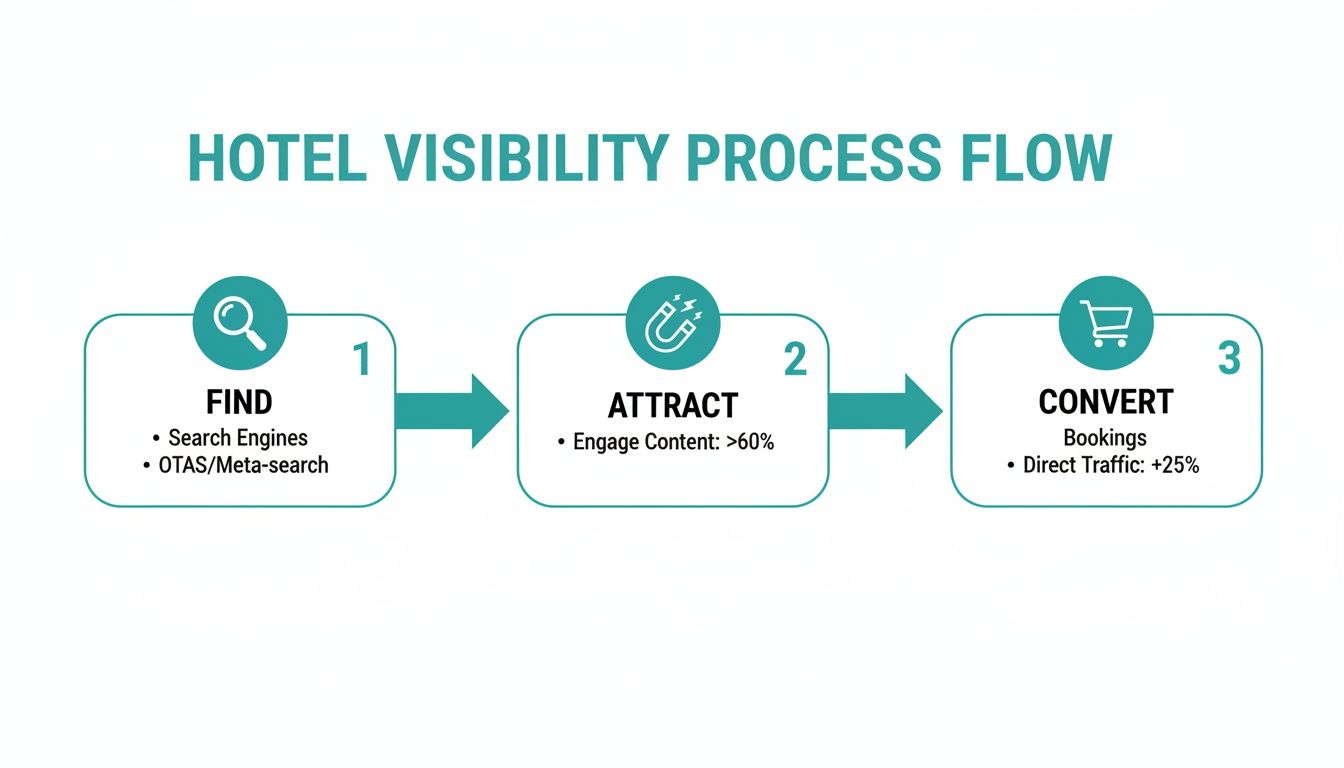
As you can see, every interaction, including the simple act of logging into the Wi-Fi, is a chance to guide a potential guest closer to their next stay.
Unlocking Marketing Data Through Smart Authentication
The real magic happens the moment a guest logs in. A modern Captive Portal gives guests multiple ways to connect, and each one is a golden opportunity to ethically gather valuable data. You're not just providing an internet connection; you're building your marketing list with every single person who logs on.
One of the most effective methods is social login. By letting guests connect using their social media accounts, you give them a seamless, one-click experience. In return, you get access to basic profile information you can use to personalize their stay and future marketing. This is the core of social wifi—turning a simple connection into rich, actionable insight.
Each Wi-Fi connection is a handshake. The guest gets fast, reliable internet, and you get a direct line of communication to build a relationship that extends far beyond their current stay. This simple exchange is the foundation of a powerful retention strategy.
This technology isn't just for vacationers, either. It’s incredibly versatile and adds immense value across different sectors:
- Corporate & BYOD Environments: For conferences and events, security is non-negotiable. Advanced Authentication Solutions like IPSK (Identity Pre-Shared Key) and EasyPSK let you issue unique, secure credentials for each attendee's device. This delivers the professional, secure experience clients in the BYOD Corporate sectors demand.
- Education Sector: Schools and universities use these same systems to manage network access for students, faculty, and visitors, keeping the network secure and organized.
- Retail Spaces: Shopping malls use guest wifi with social login to understand shopper demographics and foot traffic, which helps them send targeted promotions to people right in the building.
Guest Wi-Fi Authentication Methods and Their Marketing Benefits
Choosing the right login method for your Captive Portal directly impacts the marketing data you can collect. Here’s a breakdown of common options and how they can benefit your hotel.
| Authentication Method | How It Works | Key Marketing Benefit | Ideal for Sector |
|---|---|---|---|
| Social Login | Guests connect using their Facebook, Google, or other social media accounts. | Gathers rich demographic data (age, gender, interests) for highly personalized marketing. | Hotels, Retail, Restaurants |
| Email Capture | Guests enter their email address to gain access. | Directly builds your email marketing list for newsletters, promotions, and post-stay surveys. | All Sectors |
| Voucher/Access Code | Guests receive a unique code, often at check-in or with a purchase. | Controls access and can be used to track specific groups (e.g., conference attendees). | Conferences, Events, Paid Tiers |
| SMS Verification | Guests enter their phone number and receive a verification code via text message. | Collects mobile numbers for SMS marketing campaigns and provides a high level of user verification. | Hospitality, Healthcare |
Ultimately, a mix of these options often works best, giving guests a choice while maximizing your ability to connect with them later.
Turning Connections into Conversions
So, you've collected guest data through your Captive Portal—now what? This is where your digital marketing for hotel strategy really takes off. The information you gather, like email addresses, can be automatically synced with your marketing platforms, such as Mailchimp.
This direct integration means no more manual data entry and no more missed opportunities. A new email contact can instantly trigger a welcome sequence or be added to a segment for a post-stay feedback request. For a deep dive into how this all connects, our guide to Wi-Fi marketing breaks down how to turn this data into direct bookings.
This data is the fuel for hyper-targeted campaigns. Imagine sending a personalized offer to a guest for their next stay, maybe referencing a special occasion they celebrated with you. You can also use these email lists to create lookalike audiences for social media ads, reaching new potential guests who share the same characteristics as your very best customers.
It all starts with a simple Wi-Fi login, transforming a one-time stay into a long-term relationship, driving loyalty, and boosting those all-important direct bookings.
Using AI to Personalize the Guest Experience
In the hotel world, personalization is no longer a luxury—it’s the standard. Guests don't just want it; they expect it. Artificial Intelligence (AI) has moved beyond a buzzword and is now a practical tool in any hotelier's marketing kit, making it possible to create those one-of-a-kind guest experiences at a scale we couldn't dream of just a few years ago.
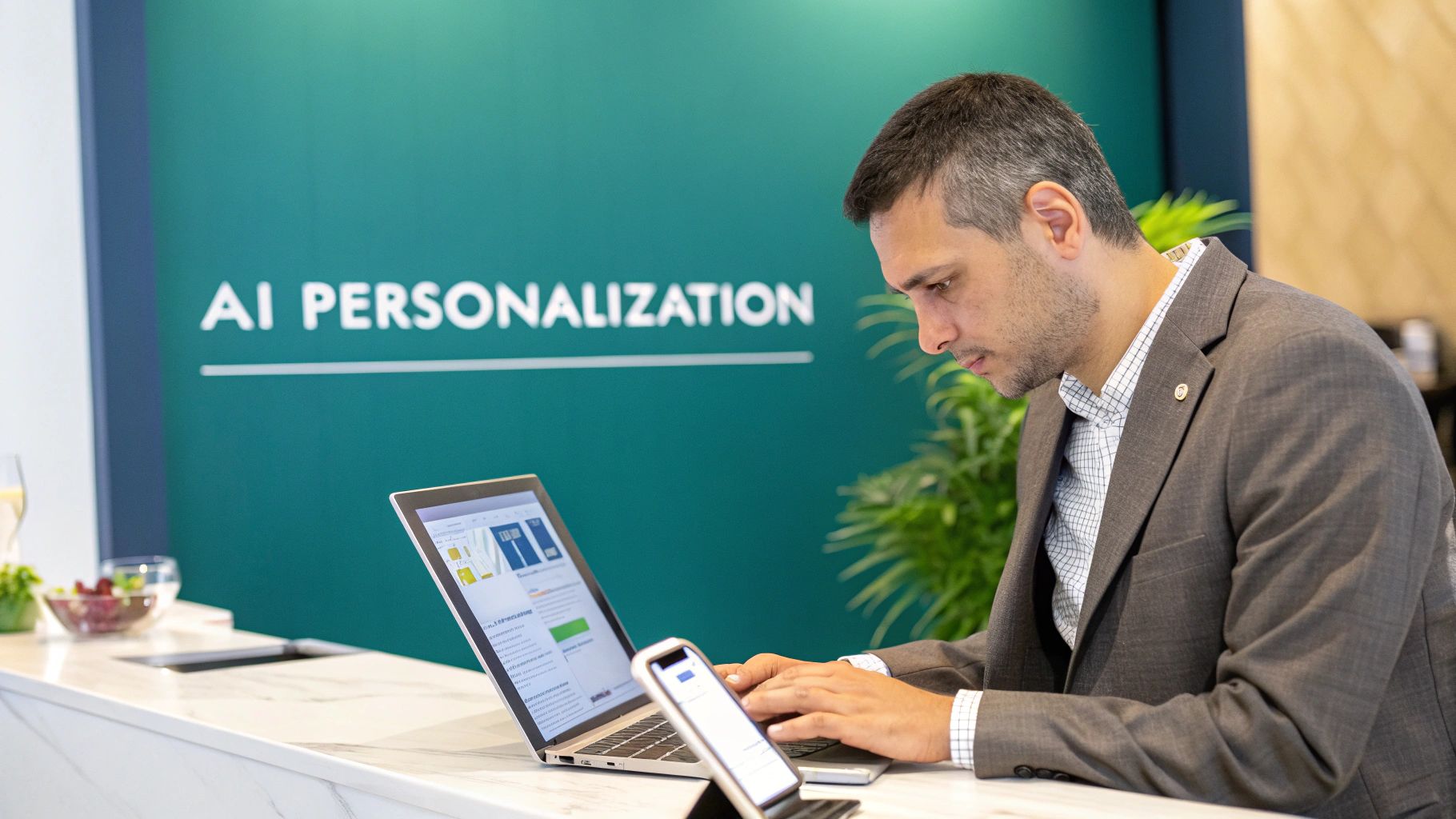
So, how does it work? AI sifts through massive amounts of guest data—everything from their booking history to how they use the on-site Wi-Fi. It then uses that information to craft offers that feel personal and perfectly timed. Imagine a returning guest getting a coupon for their favorite spa treatment the moment they connect to your network. Or an algorithm that automatically finds audiences that look just like your best guests and puts your ads in front of them.
From Data Points to Delighted Guests
The real magic of AI is its ability to connect dots you didn't even know were there. When you integrate it with your property management system and your guest wifi network (powered by reliable hardware from partners like Cisco Meraki), AI starts building an incredibly detailed picture of guest behavior.
For example, the data from your Captive Portal doesn't just show who is on your property; it shows where they are and what they're doing. This is a game-changer for sending relevant, timely promotions. See a guest hanging out near the poolside bar? You can send them a two-for-one drink offer. A family heading back to their room for the evening? A coupon for an in-room movie rental could be just the ticket.
This level of detail touches every part of their stay. AI-powered chatbots can handle guest questions 24/7, freeing up your front desk staff for more meaningful interactions. We're even seeing the rise of incredibly realistic, human-sounding AI voice agents that can manage calls and deliver personalized service that genuinely enhances the guest experience.
Adopting AI isn't about chasing a trend. It's about making smarter, data-driven decisions that cut acquisition costs, boost on-site spending, and build the kind of loyalty that turns first-time visitors into regulars.
The Real-World Impact of AI-Driven Marketing
This isn't just theory—the results are in, and they're impressive. Hotels that are weaving AI into their digital marketing are seeing tangible returns. In the first half of 2025, hotels using AI inside Google’s Performance Max for Travel Goals saw their customer acquisition costs plummet by an average of 19% year-over-year.
And here’s the kicker: this happened even as they increased their media budgets by 20-40%. The efficiency gain comes from AI's knack for finding high-value audiences with incredible accuracy. This led to a massive 262% jump in conversion rates and more than 4x increases in both bookings and revenue. For a deeper dive into the numbers, you can read the full hotel digital marketing performance index on Cendyn.com.
This strategy isn't just for hotels; it’s effective for any business focused on user experience:
- Retail: Shops use AI to track shopper paths and send personalized deals based on what they've been looking at.
- Education: Campuses can analyze student movement to optimize things like dining hall hours or library staffing.
- Corporate BYOD: For large events, AI can manage network resources and ensure everyone has a smooth, secure connection using Authentication Solutions like IPSK.
When you see how these technologies work together, the potential becomes clear. To explore this further, you can learn more about how to apply AI in hospitality in our dedicated guide. Ultimately, using AI to personalize the guest journey creates a powerful cycle: you drive engagement, which leads to satisfaction, which builds loyalty and brings people back.
Building Loyalty Long After Checkout
A guest's journey with your brand doesn't truly end when they hand in the room key. That post-stay period is a golden opportunity—a critical window where you can turn one-time visitors into lifelong advocates for your hotel. This is where smart retention and reputation management come into play, letting you spin the data you’ve collected into a powerful loyalty-building engine.
The insights gathered during their stay, especially from your guest wifi, are the fuel for this engine. Think about it: every time a guest connects to your network through a Captive Portal, you’re not just giving them internet access; you’re capturing a valuable piece of information. This is what allows you to move beyond generic "thank you" emails and start building powerful, personalized post-stay workflows.
Imagine sending a guest who logged in via social wifi a follow-up email that features images echoing their interests, paired with a special offer for their next booking. This kind of personalization makes people feel seen and valued, and it dramatically increases the odds they'll book with you again.
Nurturing Relationships with Data-Driven Communication
The data you pull from your Cisco Meraki network, managed through an intelligent Authentication Solution, gives you the power to craft highly relevant post-stay communication. Instead of a one-size-fits-all blast, you can segment your guest list and send targeted messages that actually mean something to the person opening them.
For example, a business traveler who connected to the Wi-Fi for a conference using a secure IPSK or EasyPSK key can get an email about your corporate rates and meeting spaces. A family that used the social login feature while hanging out by the pool? They could get a promotion for a summer vacation package. This isn't just good marketing; it's smart hospitality that anticipates what your guests might need next.
The goal here is to make every post-stay interaction feel less like a marketing blast and more like a personal invitation to return. This is how you build a community, not just a customer list.
This approach works wonders across any industry that depends on repeat business:
- Retail: A shopper connecting to mall Wi-Fi gets a follow-up email with offers from stores they spent the most time near.
- Education: Alumni receive targeted newsletters about campus events based on their graduation year and demonstrated interests.
- Corporate BYOD: Event attendees can be sent post-conference materials and invitations to future events, keeping the conversation going.
Proactively Managing Your Online Reputation
In hospitality, your online reputation is everything. Proactive reputation management is just as crucial as your email marketing. It’s all about encouraging those great reviews while professionally navigating the negative ones that will inevitably pop up.
A simple, automated email sent a day or two after checkout can be incredibly effective. Just ask guests about their stay and include direct links to major review sites like TripAdvisor or Google. By making it easy for happy guests to share their experience, you can steadily build a strong foundation of positive social proof.
We’re seeing AI-powered personalization make a huge impact here, with hotels that adopt these strategies reporting revenue increases of 10-30%. AI can analyze booking patterns and guest preferences to craft perfectly timed, behavior-triggered emails that encourage feedback. To see how AI is changing the game, you can read the full analysis on how AI is reshaping hotel marketing on HFTP.org.
When negative feedback does appear—and it will—respond quickly, professionally, and with empathy. A thoughtful response shows potential guests that you care about their experience and are committed to doing better. More often than not, this turns a negative into a net positive.
By focusing on the post-stay relationship, you create a loyal community of repeat guests. This strategy is foundational for improving customer lifetime value and turning satisfied customers into your most powerful marketing asset.
Frequently Asked Questions
When you're running a hotel, diving into digital marketing can feel overwhelming. You've got questions, and you need friendly, straightforward answers to build a strategy that actually puts heads in beds. Let's tackle some of the most common things we hear from hoteliers.
How Can My Hotel Use Guest Wi-Fi For More Than Just Internet?
Your guest wifi is probably one of the most underused marketing tools you have. Most hotels just see it as a necessary utility, but when you manage it with the right platform on top of your existing Cisco Meraki hardware, it becomes a goldmine.
The key is the Captive Portal—that's the branded login screen guests see when they first connect. Instead of just a password field, you can use it to create a real connection. By offering a login via social media (social wifi) or a quick email sign-up, you ethically capture guest data you can actually use. This isn't just about collecting emails; it's about opening a channel to send a post-stay survey, a special "welcome back" offer, or even building a custom audience for highly targeted ads.
What Is IPSK And Why Is It Important For Hotels?
IPSK stands for Identity Pre-Shared Key, and it's a game-changer for any hotel that hosts events or corporate groups. Think about it: when you host a conference, you don't want to hand out a single Wi-Fi password for everyone to share. It's insecure and unprofessional.
IPSK lets you generate a unique, secure key for every single attendee or device. This is a massive selling point for your meetings and events business, especially for any BYOD Corporate sectors that are serious about security. Using a tool like EasyPSK to manage this makes the whole process simple. Offering this level of professional, secure Wi-Fi can easily set your property apart from the competition when talking to event planners.
How Do I Measure The Success Of My Digital Marketing?
You need to look past the "vanity metrics" and focus on what directly impacts your bottom line. Getting a clear picture means tracking a few key performance indicators (KPIs) that tell you the real story.
Here's where to start:
- Website & SEO: Organic traffic is nice, but your direct booking conversion rate is what really matters. Are the people finding you online actually booking a room?
- Paid Advertising: For Google Ads or social media campaigns, it all comes down to Cost Per Acquisition (CPA) and Return On Ad Spend (ROAS). These two numbers tell you exactly how much it costs to get a booking and how much profit you made from that ad spend.
- Wi-Fi Marketing: If you're using your Captive Portal to collect guest info, track how many new contacts you're adding to your list. Even better, measure the redemption rate on any coupons or special offers you promote through it.
By looking at these numbers together, you stop guessing and start making strategic decisions. You get a clear, data-backed view of what's working, what's not, and where your marketing budget will make the biggest impact.
This data-first mindset isn't just for hotels. We see the same principles driving success in Education for managing student networks and in Retail for understanding shopper behavior through in-store Wi-Fi. It all starts with reliable Authentication Solutions that make every connection secure and create an opportunity to engage.
Ready to turn your guest Wi-Fi from a simple amenity into your most powerful marketing channel? Splash Access works directly with your Cisco Meraki network to build beautiful, data-driven captive portals that create loyal guests and drive more direct bookings. Learn how you can get started at https://www.splashaccess.com.