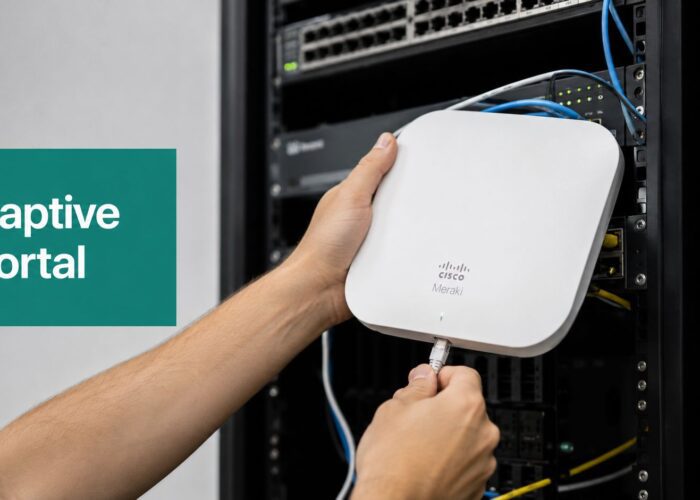
What if your free guest Wi-Fi could do more than just provide an internet connection? What if it could become one of your best friends for understanding and connecting with your customers? That’s the entire idea behind Wi-Fi marketing, and it's a total game-changer.
It’s a friendly strategy that turns that simple internet access you offer into a direct line of communication with every visitor who walks through your door. Let's dive in!
Your Guest Wi-Fi Network is an Untapped Asset
Think of your guest Wi-Fi as a digital welcome mat. For years, businesses treated it as a basic utility—a cost of doing business. But that mindset is changing. Now, smart businesses see it as a valuable touchpoint that creates a win-win for both you and your guests. This shift is proving especially powerful in sectors like Retail, Education, and even BYOD Corporate environments where the customer experience is everything.
The numbers back this up. The global Wi-Fi marketing market is projected to hit an incredible USD 7,747.3 million by 2033, growing at a healthy 15.9% each year. This boom is fueled by everyone carrying a smartphone, making your network the perfect place to engage with people right where they are.
And this isn't a niche strategy. Its flexibility is one of its biggest advantages.
- A retail store can send out a personalized discount the moment a shopper connects, all while learning which aisles are the most popular.
- An Education campus can give students seamless network access and push out important announcements through the Wi-Fi login page.
- A corporate office can easily and securely manage its Bring Your Own Device (BYOD) policy for employees and guests.
Building Your Wi-Fi Marketing Foundation
To make any of this happen, you need the right setup. It all starts with solid hardware from industry leaders like Cisco and its cloud-managed Meraki line, which gives you the reliable infrastructure for a great guest Wi-Fi experience.
When you layer intelligent authentication software on top of that hardware, you turn a simple amenity into a strategic business asset. Suddenly, you can gather insights, build loyalty, and drive real growth—all while giving visitors a fast, seamless connection.
The first piece of that software puzzle is the Captive Portal. This is the branded login page your guests see before they get online. It’s your chance to make a great first impression. Instead of a clunky password screen, you can greet them with a beautiful welcome page that offers easy access through social login or a simple email signup.
For environments that need more control, like corporate or education settings, you can use advanced Authentication Solutions like IPSK or EasyPSK to simplify access for trusted devices without sacrificing security. Figuring out how to improve customer experience is at the heart of any successful social wifi plan, and it's the first step in turning a necessary expense into a powerful engagement channel.
How Captive Portals Create Your Digital Front Door
At the very heart of any Wi-Fi marketing strategy is the Captive Portal. This is the branded login page your guests see right before they connect to your network. Think of it as the digital front door to your business. Instead of a bland password prompt, you're rolling out a welcome mat that can capture valuable information and completely shape a visitor's first impression.
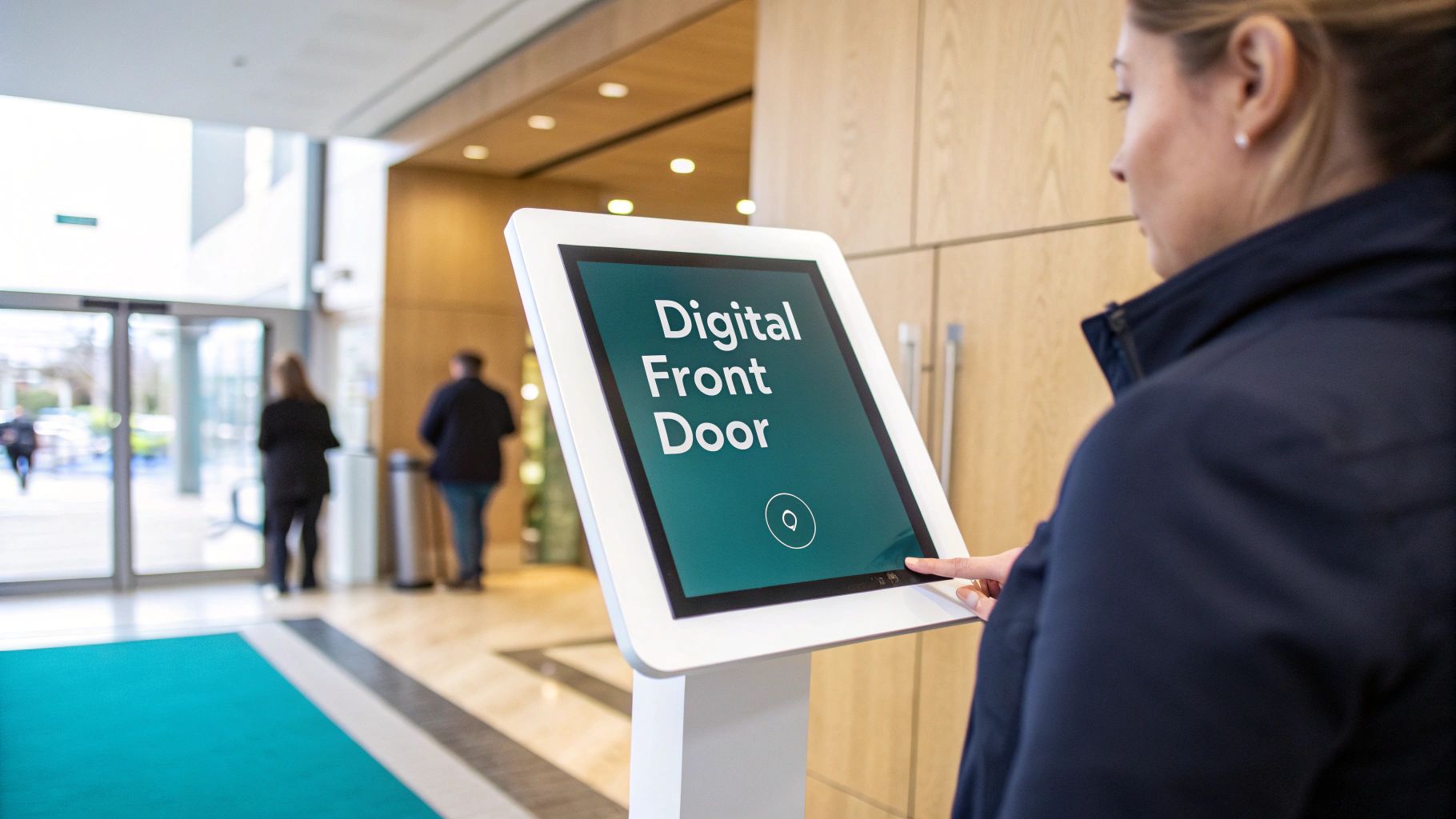
This portal, powered by reliable hardware from industry leaders like Cisco and the cloud-managed simplicity of Meraki, becomes your first—and arguably most important—point of interaction. It transforms a simple amenity into a powerful marketing channel, turning a passive connection request into a genuine opportunity for engagement.
The Art of the Welcome Mat
Your captive portal is so much more than a gatekeeper; it’s a dynamic branding and data collection tool. By designing an inviting and easy-to-use login page, you create a positive experience right from the start while gathering incredibly useful insights about the people in your space.
The beauty of a well-designed portal is its flexibility. You can customize the entire experience to reflect your brand's voice and aesthetic—from logos and colors to the specific messaging and calls to action you use. To get the most out of your digital front door, it's crucial to understand the principles of optimizing landing pages for conversions, which ensures your portal is actually effective at capturing guest information.
A captive portal isn't just about providing access; it's about starting a conversation. It's your chance to offer value upfront and begin building a relationship with your visitors from the moment they connect.
This approach lets you swap out an impersonal Wi-Fi password for a branded, interactive experience that actively serves your business goals.
Choosing the Right Authentication Method
Not all visitors are the same, so why should their login experience be? Different environments call for different levels of security and access. A robust guest wifi platform gives you a whole menu of options for getting users online, each designed for a specific purpose.
Let’s walk through some of the most effective choices:
- Social Login: A fan favorite, this method lets users connect with their existing social media profiles like Facebook or Google. Social wifi makes logging in a breeze for the user and gives you rich, permission-based demographic data.
- Email & Form Fill: The classic approach. Users simply enter their name and email address. It's a direct and effective way to build your marketing list, perfect for sending follow-up promotions or newsletters.
- Voucher Codes: Ideal for paid access or sessions with a time limit. Users enter a simple code to get online, which is a common sight in hotels, airports, and conference centers.
These methods are fantastic for public-facing sectors like Retail and hospitality, where the main goals are a frictionless connection and opening a channel for future marketing. You can see just how a Wi-Fi captive portal can be tailored to fit these exact needs.
Securing Your Network in Corporate and Education Settings
While a social login is perfect for a coffee shop, it’s not the right fit for environments where security and network integrity are top priorities. In BYOD Corporate environments and on Education campuses, the challenge is different: provide seamless access for trusted users while keeping the network locked down.
This is where more advanced Authentication Solutions come into play.
- IPSK (Identity Pre-Shared Key): This method ditches the shared password and assigns a unique one to each user or device. This is a huge security win because you can revoke access for one person without disrupting anyone else.
- EasyPSK: Building on the IPSK concept, EasyPSK systems make it simple to manage thousands of unique keys. It's the perfect solution for a large university, where every student and faculty member can get their own secure key for all their devices, streamlining connections across the entire campus.
These secure authentication methods, often deployed on Cisco or Meraki networks, strike the perfect balance. Employees, students, and trusted guests can connect their devices quickly and safely, all without compromising the robust security required in a modern BYOD environment.
Using Wi-Fi Analytics to Understand Your Physical Space
Once your visitors log in through the captive portal, your Wi-Fi network starts telling a story. This is where the real magic happens, thanks to analytics. Imagine having something like Google Analytics, but for your physical building. Suddenly, your Wi-Fi isn't just about providing internet; it's about understanding the flow of people through your space.
Wi-Fi analytics, especially when running on powerful platforms like Cisco Meraki, can anonymously track key metrics that reveal how people move and interact. This data is a goldmine for making smarter, evidence-based decisions that improve everything from daily operations to the overall visitor experience.
Uncovering Visitor Behavior Patterns
The true power of wi fi marketing analytics is its ability to translate anonymous device signals into practical business intelligence. It’s important to remember you're not tracking individuals; you're observing collective behaviors to spot trends and patterns that you can act on.
Here’s a taste of what you can discover:
- Foot Traffic Patterns: See how many people visit your location by the hour, day, or week. This is perfect for identifying your peak times and understanding seasonal rushes.
- Busiest Zones (Heatmaps): Get a visual map of which areas are the most popular. Are people gathering around a specific product display, or is one corner of your coffee shop always empty?
- Dwell Time: Measure how long, on average, visitors stick around. This is a crucial indicator of how engaged they are with your space.
- Return Visitor Rate: Find out what percentage of your visitors are brand new versus loyal repeat customers.
Think of it this way: your Wi-Fi network acts like a team of invisible observers, noting where the crowds are, how long they stay, and which paths they take—all without interrupting a single person.
This kind of data used to be the exclusive domain of large e-commerce websites. Now, thanks to smart guest wifi infrastructure from providers like Cisco, any physical business can get the same level of insight. To learn more about the technology behind this, check out our deep dive on location analytics.
Turning Data Into Smarter Decisions Across Sectors
The insights you get from Wi-Fi analytics aren't just interesting—they're incredibly practical. Different industries can use this information to solve unique challenges and find new ways to grow.
In Retail, this data is a game-changer. A store manager can use heatmap data to optimize product placement by moving high-margin items into the busiest zones. Dwell time metrics might reveal that customers who stay for over 20 minutes are twice as likely to buy something, which could inspire new in-store engagement strategies.
For Education, analytics can completely reshape how campus resources are managed. A university could analyze foot traffic to pinpoint the best hours for the library or cafeteria, then reallocate staff to match student demand. Understanding movement patterns can also help improve campus layout and signage for a better student experience.
Even in a BYOD Corporate environment, these analytics provide immense value. Office managers can see which conference rooms or common areas are used most, helping them design more efficient and productive workspaces. All of this can be done securely, with Authentication Solutions like IPSK or EasyPSK ensuring data is collected without compromising network safety.
The Mobile-First Reality of Wi-Fi Connections
The importance of these analytics is magnified when you realize how people connect. A staggering 90% of all devices connecting to Wi-Fi networks are mobile phones and tablets, turning every hotspot into a marketing goldmine. This stat highlights why savvy brands are embracing Wi-Fi portals—a massive 80% of global mobile data transfer zips through Wi-Fi, not cellular, keeping users connected longer and interacting more.
Putting Wi-Fi Marketing Into Practice
So, how does all this theory translate into the real world? Let’s get practical. A smart Wi-Fi marketing strategy takes your standard guest network—often just seen as a necessary cost—and turns it into a powerful engine for communication, customer engagement, and even smoother operations. The secret is tailoring the technology to the specific environment.
This is where having a rock-solid foundation from providers like Cisco, especially with the cloud-managed simplicity of Meraki, really pays off. They give you the stable, secure backbone needed to build these engaging experiences. With the right hardware humming away, you can start crafting unique digital moments for every single person who connects.
Tailoring the Experience for Retail Success
In the cut-throat world of Retail, making things personal is the name of the game. Picture this: a customer walks into your store and hops on the free Wi-Fi. Instead of a clunky password prompt, they’re greeted by a beautifully branded Captive Portal offering a one-click connection through a social login.
But that's just the start. The real magic happens once they’re online. Based on their past purchases or even their recent browsing history, a personalized digital coupon could pop up for a product they were just looking at. This isn't just a generic discount; it's a timely, relevant offer that makes the customer feel seen and drastically increases the chance of a sale. Suddenly, your guest wifi is less of an amenity and more of a personal shopping assistant.
Enhancing Engagement in Education
Now, let's switch gears and think about an Education setting, like a huge university campus. The priorities here are totally different. You need ironclad security, clear communication, and a frictionless experience for thousands of students, faculty, and staff. A robust network, often managed through Cisco Meraki, is non-negotiable.
Imagine a student connecting to the campus Wi-Fi. They're authenticated instantly and securely using a solution like EasyPSK, which assigns a unique key to each of their devices. The moment they're connected, the captive portal doesn't just disappear—it becomes a dynamic campus bulletin board, flashing timely alerts about class changes, library hours, or upcoming events. The network becomes a vital communication channel that keeps everyone in the loop.
By integrating authentication with communication, educational institutions can create a smarter, more connected campus. The Wi-Fi network becomes an integral part of the student experience, enhancing safety and community from the first login.
Securing the BYOD Corporate Environment
In a modern BYOD Corporate office, the big headaches are security and simplicity. You need a way for employees and guests to connect their own devices without poking holes in your security or burying the IT team in support tickets. This is the perfect job for advanced Authentication Solutions.
An employee can use IPSK to securely connect their laptop and smartphone, giving each device its own unique credential. When a guest arrives for a meeting, they can use a self-service portal for temporary access. As they connect, the captive portal can welcome them by name, share important company news, or even point them toward the right meeting room.
This approach keeps the corporate network locked down while providing a professional, efficient, and welcoming experience for everyone who walks through the door.
The Growing Market for Wi-Fi Intelligence
These real-world applications in retail, hospitality, and events are fueling some serious market growth. By 2025, the wi fi marketing landscape is being shaped by innovators who are turning simple connectivity into powerful business intelligence.
Just look at the numbers. Wi-Fi analytics alone was a USD 8.77 billion market in 2025 and is on track to hit USD 14.58 billion by 2032. In a world with over 6 billion internet users, this technology allows businesses to understand and connect with their customers on a whole new level.
These scenarios just scratch the surface of what’s possible with a smart Wi-Fi strategy. The real power comes when you connect these platforms to your other business tools. Our guide on marketing automation integration shows you exactly how to link your Wi-Fi data to a CRM or email platform. You can then automatically send follow-up offers, satisfaction surveys, and personalized content, truly closing the loop between a person's physical visit and their ongoing digital relationship with your brand.
Implementing Your Wi-Fi Marketing Strategy
Ready to turn your guest Wi-Fi from a simple amenity into a genuine marketing engine? It's a fantastic move, and getting started is more straightforward than you might think. The key is to break the process down into manageable stages, starting with a solid foundation.
And that foundation is all about your network gear. For a Wi-Fi marketing program to really sing, you need reliable, high-performance hardware. This isn't the place to cut corners. Solutions from providers like Cisco and its cloud-managed Meraki line are built to handle the demands of guest traffic while giving you the security and features you need for sophisticated Authentication Solutions.
Designing a Compelling Captive Portal
Think of your captive portal as your digital front door. It’s the very first interaction a visitor has with your brand online, so it has to make a great impression. A clunky, confusing portal is an instant turn-off, but a clean, welcoming one starts the relationship off right.
When putting your portal together, keep these essentials in mind:
- Strong Branding: Your logo, colors, and voice should be front and center. It needs to feel like an extension of your physical space.
- Clear Value Exchange: You're asking for their info. Be upfront about what they get in return—fast, free Wi-Fi is usually more than enough incentive.
- Simple Login Options: Don't make people jump through hoops. Offer easy choices like social login (social wifi) or a quick email form to get them online with zero friction.
This process flow shows how different businesses can adapt their Wi-Fi marketing to get the best results.
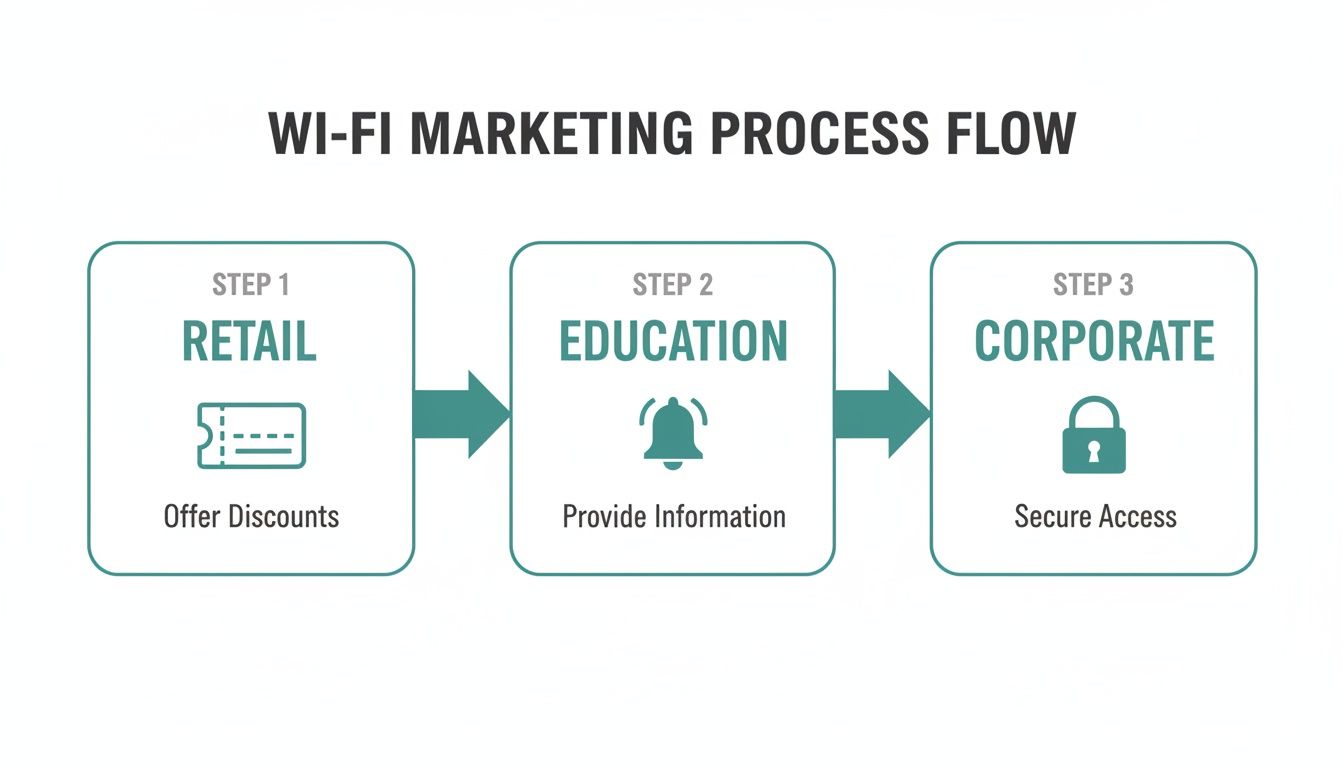
As you can see, a retail shop might push an immediate coupon, a university could prioritize campus alerts, and a corporate office would naturally focus on secure access.
Integrating Data With Your Existing Tools
Collecting customer data is just the first step. The real magic happens when you connect that information to the business tools you already rely on every day. This is where automation takes over, saving you countless hours and making your marketing campaigns smarter and more effective.
Integrating your Wi-Fi analytics with your CRM or email platform closes the loop between a visitor's physical presence and their digital journey with your brand.
For instance, by connecting your guest wifi platform to your CRM, every new person who logs on can automatically become a new contact. This opens the door for immediate, automated follow-up. You could send a welcome email, add them to a newsletter, or drop them into a specific marketing campaign without lifting a finger.
Launching Your First Campaign
Okay, your hardware is humming, your portal is live, and your integrations are set. It's time to launch! Don't overthink it—your first campaign should have a simple, clear goal. The idea is to get the ball rolling, test the system, and start seeing that valuable data flow in.
Here are a few simple ideas to get you started:
- A Simple Welcome Email: Set up an automated email that goes out to everyone who logs into your Wi-Fi for the first time. A simple "Thanks for stopping by!" goes a long way.
- A Post-Visit Survey: A day after someone visits, send them a quick survey asking for feedback on their experience.
- A Targeted Promotion: If you're in retail, try offering a small discount on their next purchase to bring them back. For a B&B, this strategy fits perfectly alongside other modern vacation rental marketing strategies to drive repeat bookings.
By following this roadmap—starting with a solid network from Cisco or Meraki, designing a great user experience, and launching a targeted first campaign—you can take your Wi-Fi marketing from a concept to a fully operational plan that delivers real, measurable results.
Building Customer Trust Through Privacy and Security
Let’s be honest: collecting customer data through your Wi-Fi is a powerful tool. But with great power comes great responsibility. People are more aware of their digital footprint than ever before, so privacy and security can't just be afterthoughts or legal checkboxes—they have to be the foundation of your entire approach.
Think of it this way: when someone connects to your guest wifi, they're trusting you with their device and their data. Honoring that trust by being transparent and secure isn't just about avoiding fines; it's about showing respect. Get this right, and you turn a simple Wi-Fi connection into a genuine relationship-builder.
Navigating Privacy and Compliance
Regulations like GDPR have changed the game for good. The core idea is simple: be upfront and get clear consent before you do anything with someone's data. No more burying the details in pages of dense legal jargon. Your Captive Portal is the perfect place to make this happen.
Your privacy policy isn't just a legal document; it's a promise to your customers. It should clearly and simply explain what data you're collecting, why you need it, and how you're protecting it.
When people feel informed and in control, they're much more likely to see your brand in a positive light. It’s a simple, but often overlooked, part of creating a great customer experience.
Best Practices for Your Captive Portal
Your captive portal is your front line for transparency. It’s the first thing people see, so it's your best chance to build that initial trust.
Here are a few practical tips to get it right:
- Use Clear Language: Ditch the legalese. Explain what you're doing in plain English that anyone can understand.
- Active Opt-In: Never use pre-checked boxes. Make sure users have to actively tick a box to agree to marketing messages. It’s a must.
- Provide Value: Be clear about the trade-off. If you're asking for data via a social login or form, tell them what they get in return (e.g., "Sign up for fast, free Wi-Fi and exclusive offers").
For businesses in Education, Retail, or corporations managing BYOD policies—especially those using Cisco or Meraki hardware—robust security is just as crucial as privacy. Using secure Authentication Solutions like IPSK or EasyPSK adds that vital layer of protection. For a deeper dive, our guide on how to secure a Wi-Fi network has you covered with practical steps.
By pairing clear, upfront privacy practices with strong security measures, you create an environment where customers feel safe, respected, and ready to connect.
Common Questions About Wi-Fi Marketing
As you start exploring Wi-Fi marketing, some practical questions are bound to come up. It's a powerful strategy, but it's natural to wonder what it actually takes to get it off the ground. Let's tackle a few of the most common queries so you can move forward with a clear picture.
Is Wi-Fi Marketing Difficult To Set Up?
You'll be happy to hear that, for the most part, it's not. Modern solutions built on robust platforms like Cisco Meraki have made setting up a Wi-Fi marketing system surprisingly straightforward. Cloud-based dashboards take the technical headache out of creating Captive Portals and viewing analytics.
The process is often as simple as dragging and dropping elements to design your login page, selecting your preferred Authentication Solutions, and connecting your favorite marketing tools. A retail store manager, for instance, could design a splash page with the company logo, add a social login option, and have the entire system live in a single afternoon.
Can I Use My Existing Wi-Fi Hardware?
This is a big one, and the honest answer is: it depends. A solid Wi-Fi marketing strategy needs hardware that can properly support captive portals and process data analytics. Enterprise-grade equipment from providers like Cisco is built for this exact purpose, giving you the stability and features you need.
Many standard consumer routers you'd buy off the shelf just don't have the horsepower for these advanced tasks. The first step is always to do a quick check of your current network gear to see if it’s up to the job.
How Does This Work in Different Industries?
One of the best things about Wi-Fi marketing is how adaptable it is. Different businesses use it in very different ways.
- Education: A university campus might use EasyPSK to give students secure, seamless access across all their devices (BYOD). The captive portal can also be used to push important campus-wide alerts or event notifications.
- Retail: Here, it’s all about creating a smooth guest wifi experience. By offering social wifi logins, a store can capture valuable marketing data and immediately send a "10% off today" coupon to a shopper's device.
- BYOD Corporate: In an office, security and efficiency are top priorities. Advanced authentication methods like IPSK keep the network secure while still providing a professional and branded welcome for visitors and clients.
Each industry shapes the tools to fit its own goals, turning a simple Wi-Fi network into a highly specialized business asset.
Ready to turn your guest Wi-Fi into your most powerful marketing tool? Splash Access provides an instantly deployable platform built for Cisco Meraki, making it easy to create beautiful captive portals, secure your network with advanced authentication, and gather actionable customer insights.